

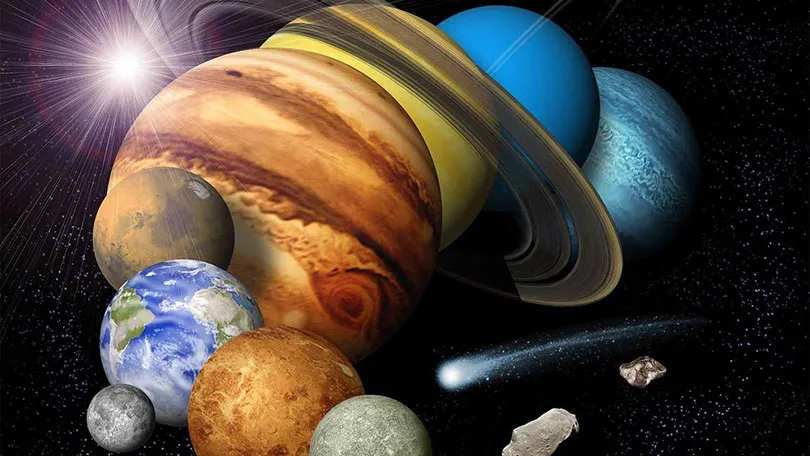
Looking up at the Moon’s craters, Saturn’s rings, and Jupiter’s bright moons has fascinated people for centuries. Today, you do not need a large professional observatory telescope to enjoy the Solar System from your backyard, balcony, or a dark open space.
With the right model, beginners can see detailed lunar surfaces, the cloud bands of Jupiter, Saturn’s rings, Mars during favorable viewing periods, and even a selection of brighter deep-sky objects.
Choosing the best telescope for viewing the Solar System depends on what you hope to see, where you plan to observe, and how simple or advanced you want the experience to be.
In this guide, we review the best telescopes for planetary and lunar observation, explaining what makes each model a strong choice for clear, enjoyable views. Whether you are buying your first telescope or looking for a more capable upgrade, this list will help you find an instrument that makes every night under the stars more exciting.
Key Features of a Good Telescope for Solar System Viewing
When selecting a telescope for observing the Moon and planets, it’s important to focus on performance and image quality rather than just size.
A good telescope for solar system viewing should include the following features:
- Clear and sharp images: to see fine details on planets and lunar surfaces
- High contrast optics: to distinguish planetary features like Jupiter’s bands and Saturn’s rings
- Stable mounting system: to avoid shaking and keep the image steady during observation
- Easy setup and operation: especially important for beginners and casual users
- High-quality optical system: to ensure accurate and detailed planetary viewing
The Moon can be seen clearly with almost any decent telescope, but planets require much better optical performance. Details such as Jupiter’s cloud bands, Saturn’s rings, and Mars’ surface features become much more visible when using a high-quality instrument.
Many beginners look for telescopes for the Solar System because they want more than just bright points of light; they want real, detailed views of planets. Choosing the right telescope can significantly improve your entire astronomy experience.
Refractor, Reflector, or Compound Telescope?
Before selecting a telescope, it helps to understand the main types. Choosing the right design depends on your observation goals, whether you want to view planets, the Moon, deep-sky objects, or the Sun. You can learn more about the different designs and their uses in this guide about Types of Telescopes.
Refractor Telescopes
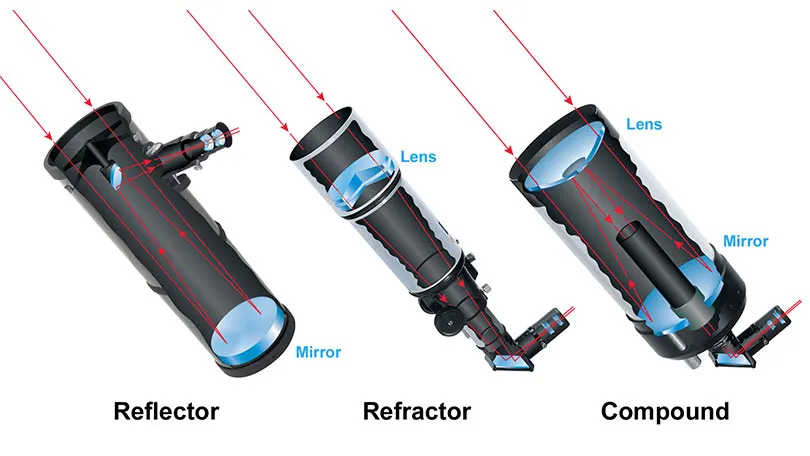
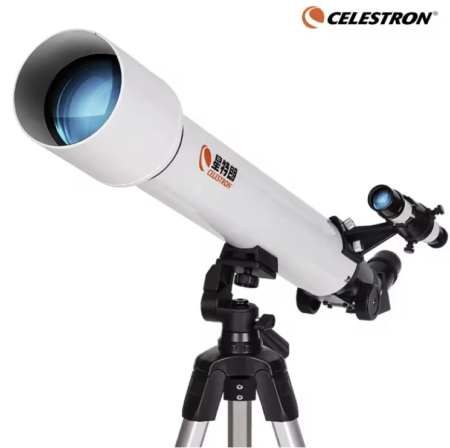
Refractor telescopes use a set of lenses to collect and focus light into a clear image. Their design is simple and sealed, which means they require very little maintenance over time.
These telescopes are especially good for viewing the Moon and planets because they produce sharp, high-contrast images with very good color accuracy. Many beginners prefer refractors because they are easy to set up, stable, and reliable for regular night sky observation.
Reflector Telescopes
Reflector telescopes use mirrors instead of lenses to gather and focus light. This design allows them to be built with larger apertures at a more affordable price, which means they can collect more light and show fainter details in the sky.
They are widely used by amateur astronomers who want stronger light-gathering power for deep-sky objects as well as planets. Reflectors require occasional maintenance, such as aligning the mirrors, but they offer excellent performance for their cost.
Compound Telescopes
Compound telescopes combine both lenses and mirrors in a single optical system. This hybrid design makes them more compact while still offering powerful magnification and good image quality. They are often preferred by more advanced users who want a balance between portability and performance.
Compound telescopes are versatile and can be used for both planetary observation and deep-sky viewing, making them a popular all-in-one option for serious astronomy enthusiasts.
10 Best Telescopes for the Solar System
The best telescopes for the Solar System in the world and at the Dubai Telescope are carefully selected to give you the highest quality viewing experience.
At Dubai Telescope, we provide these premium models to ensure clear, detailed, and reliable observations of planets, the Moon, and the Sun.
For those who want a dedicated solution for safe and detailed solar observation, our range of Solar Telescopes offers high-quality options for exploring the Sun.
1. Celestron NexStar 8SE
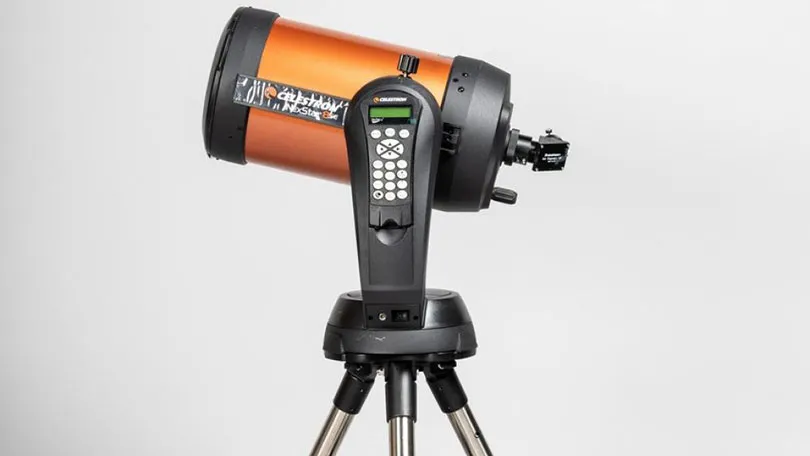
The Celestron NexStar 8SE is one of the most popular choices for serious planetary observation. With an 8-inch aperture and Schmidt-Cassegrain optical design, it offers excellent brightness and detail.
It is especially good for viewing:
- Jupiter’s cloud bands
- Saturn’s rings
- Lunar craters
- Mars during favorable oppositions
The computerized mount makes finding objects easier, which is helpful for beginners who want to spend more time observing and less time searching.
2. Sky-Watcher Classic Dobsonian 8-inch
The Sky-Watcher 8-inch Dobsonian is known for offering impressive performance at a reasonable price. Its large mirror collects plenty of light, making planets and the Moon appear bright and detailed.
This telescope is a great option for beginners who want strong optical performance without complicated electronics. The simple design also makes it easy to use and maintain.
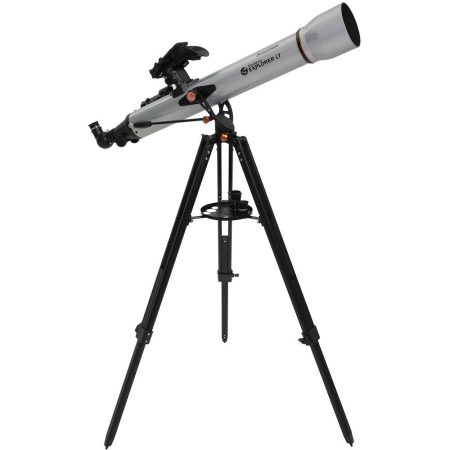
3. Celestron StarSense Explorer DX 102AZ
The StarSense Explorer DX 102AZ is designed for beginners who want a simple way to start astronomy.
Its 102mm refractor optics provide clear views of:
- The Moon
- Venus
- Jupiter
- Saturn
One of its biggest advantages is the easy object-finding system that helps new users explore the night sky without frustration.
4. Lunt LS60MT
The Lunt LS60MT is a high-quality solar telescope designed for observing the Sun in hydrogen-alpha wavelengths.
It allows users to see solar features such as:
- Solar prominences
- Surface details
- Active regions
For dedicated solar observers, a Lunt solar telescope is considered one of the trusted options because of its specialized design and optical quality.
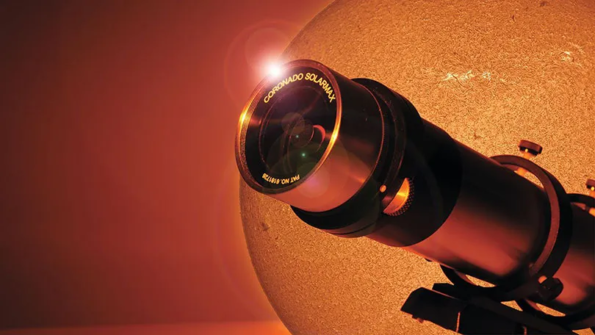
5. Coronado SolarMax III
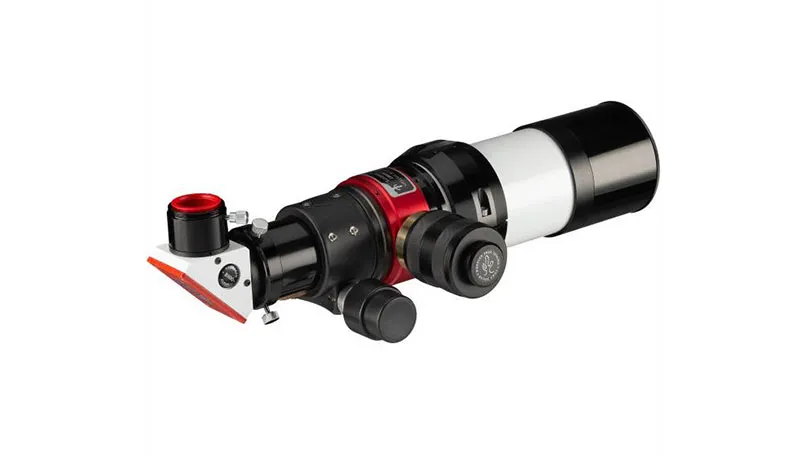
The Coronado SolarMax III is a dedicated hydrogen-alpha solar telescope designed specifically for observing the Sun in great detail. It uses a specialized narrowband filtering system that allows only a very specific wavelength of light to pass through, revealing solar features that are completely invisible in regular telescopes. With this system, users can clearly observe solar prominences, filaments, sunspots, and dynamic surface activity in real time.
This telescope is known for its strong optical precision and stable performance, making it suitable for both beginners who are serious about solar astronomy and advanced observers who want professional-level solar detail.
Its build quality and tuning system allow users to adjust contrast and clarity depending on solar conditions, which makes it highly flexible for different levels of observation. Overall, the Coronado SolarMax III is a powerful choice for anyone who wants to explore the Sun safely and with exceptional detail.
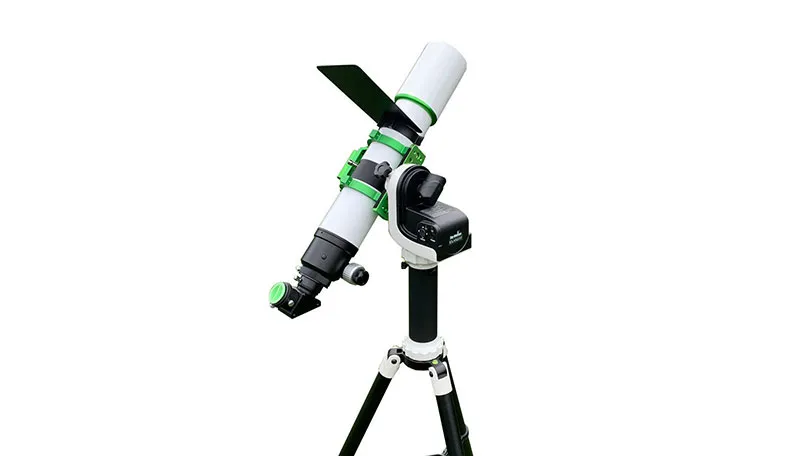
6. Sky-Watcher Heliostar 76 H-Alpha OTA
The Sky-Watcher Heliostar 76 H-Alpha OTA is a dedicated solar telescope designed specifically for safe and detailed observation of the Sun in H-alpha wavelength. It is built for users who want to see solar activity clearly and professionally.
Key Features & Uses:
- H-alpha solar observation: shows solar prominences, flares, and surface activity
- 76mm aperture: balanced size for sharp solar detail and portability
- OTA (Optical Tube Assembly): can be paired with compatible mounts for a flexible setup
- High solar contrast imaging: reveals details not visible in regular white-light telescopes
- Safe solar viewing system: designed specifically for observing the Sun safely
- Great for solar enthusiasts: ideal for tracking solar storms and active regions
- Lightweight and portable design: easy to transport and set up for daily solar viewing
This telescope is focused entirely on solar observation, making it a strong choice for anyone interested in studying the Sun in detail.
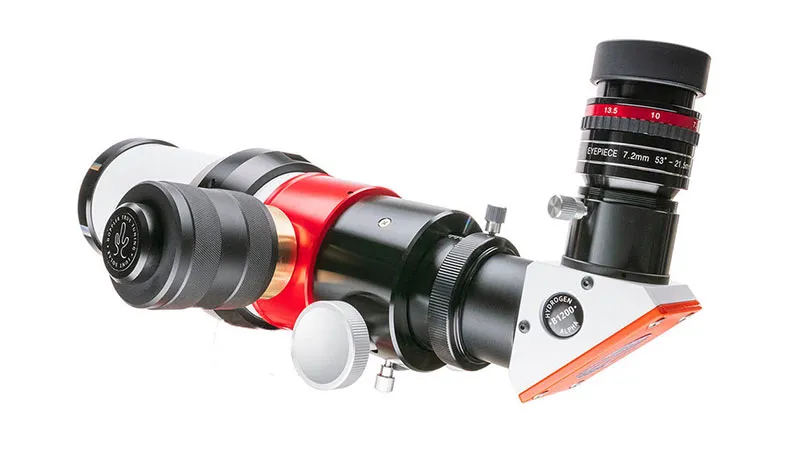
7. Lunt 40 mm H-Alpha Solar Telescope - B600, R&P Focuser
The Lunt 40 mm H-Alpha Solar Telescope is a compact and specialized telescope designed only for safe and detailed solar observation. It uses H-Alpha technology to show the Sun in a completely different way than regular telescopes.
Key Features & Uses:
- Designed specifically for solar viewing (not night sky use)
- Shows the Sun in H-Alpha light (deep red wavelength)
- Allows you to see solar prominences and surface activity
- Compact 40 mm aperture for easy portability
- Includes a B600 blocking filter for safe and clear viewing
- Equipped with R&P (Rack and Pinion) focuser for smooth focusing
- Provides great detail of solar flares and active regions
- Safe design for observing the Sun when used correctly
This telescope is ideal for users who are focused on serious solar observation and want to explore real-time solar activity in a safe and professional way.
8. Lunt 40 mm H-Alpha Solar Telescope - B600, Helical Focuser
Key Features and Uses:
- 40 mm aperture: compact and lightweight design for easy handling
- H-alpha filter system: reveals solar prominences, flares, and surface activity
- B600 blocking filter: provides a safe and clean solar image with a good field of view
- Helical focuser: allows very precise and smooth focusing for sharp solar details
- Dedicated solar viewing: designed only for observing the Sun safely (not for night sky use)
- High-detail solar observation: shows active regions, filaments, and solar edges clearly
- Portable design: easy to carry and set up for daily solar observation
This model is ideal for users who want a simple but high-quality entry into serious solar astronomy with clear and safe views of solar activity.
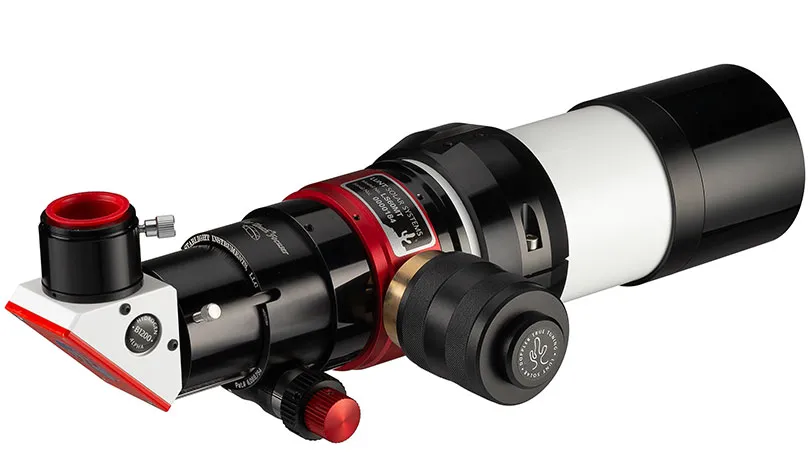
9. Lunt 60mm LS60MT/B1200 Universal Day & Night Telescope
Key Features & Applications:
- 60mm high-precision aperture: provides sharp and detailed solar images
- Hydrogen-alpha solar viewing (when configured): reveals solar prominences and surface activity
- B1200 blocking filter: improves image clarity and safety during solar observation
- Modular design: can be used for both day (solar) and night (astronomy) use
- High contrast optics: ideal for observing fine solar details
- Lightweight and portable: easy to transport and set up
- Professional-level solar performance: suitable for serious solar observers and enthusiasts
This telescope is especially popular among users who want a dedicated solar observation system with the flexibility to also explore the night sky when needed.
10. Lunt 80mm LS80MT/B1800 Universal Day & Night Telescope
The Lunt 80mm LS80MT/B1800 Universal Day & Night Telescope is a high-quality, versatile telescope designed for both solar and night sky observation. It features an 80mm aperture with excellent optical precision, allowing users to see fine details on the Sun when used with the proper hydrogen-alpha solar system, such as solar prominences and surface activity.
At night, it also works as a regular telescope for viewing the Moon, planets, and bright deep-sky objects with clear and sharp images. Its modular design makes it easy to switch between solar and night observation modes, making it a great choice for users who want a flexible, all-in-one instrument for serious astronomy use.
Choosing the Right Telescope for Your Needs
A common mistake is buying a telescope based only on magnification. High magnification does not always mean better views. A telescope with quality optics and good stability will usually perform better.
For beginners, a smaller refractor can be a great starting point. For those who want more detailed planetary views, larger aperture reflectors or compound telescopes are usually better choices.
If your goal is mainly observing the Sun, you need a specially designed setup. A proper solar filter telescope is essential because direct solar viewing without the correct filter can damage your eyes and equipment.
A complete solar scope system is designed specifically for safe solar observation and allows you to study features like sunspots and solar activity.
Need a Different Telescope? Find the Right Option
Choosing the right telescope is not only about selecting a famous name. What matters most is finding a telescope that matches your needs, provides good optical quality, and gives you a reliable experience for years.
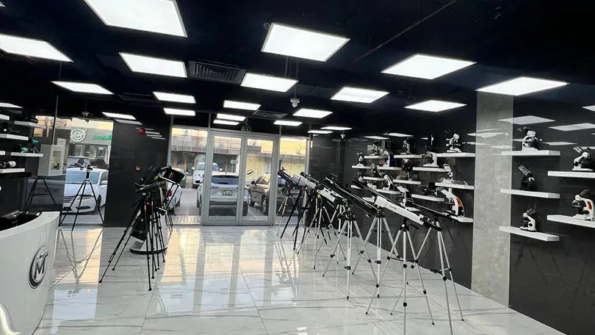
With more than 25 years of experience in Iran and 15 years of activity in Dubai, we have helped astronomy enthusiasts find the right equipment for exploring the night sky. We are known in Iran through dubaitelescope.com and in Dubai through Magic Shop, where our focus has always been helping customers choose quality astronomy products based on their real needs.
Some well-known brands in the telescope industry, such as Orion and Meade, have had a strong history and many popular models among amateur astronomers. However, some of their product lines have been discontinued over time. We can help fill this gap by offering high-quality alternatives and recommending similar products from reliable brands that provide the performance and features customers need today.
Our goal is simple: help you choose a telescope that gives you a clear, enjoyable, and lasting astronomy experience.
How to Choose the Best Telescope for the Solar System?
The best telescope depends on what you want to observe:
- For Moon Observation: Almost every good telescope can show beautiful lunar details. A refractor telescope with good optics is often a great choice.
- For Jupiter and Saturn, A telescope with good aperture and stable optics is important. Larger reflectors and compound telescopes usually provide more detail.
- For Solar Observation: Always choose equipment designed for the Sun. Never look directly at the Sun through a normal telescope without proper solar protection.
- For Beginners: A simple telescope that is easy to set up is often better than an advanced model that becomes difficult to use.
A good beginner telescope encourages you to observe more often and enjoy astronomy instead of struggling with complicated equipment.
What Should You Check Before Buying a Telescope?
Before buying, consider:
- Aperture Size: The aperture is the diameter of the main lens or mirror. A larger aperture usually means more light collection and better detail.
- Mount Quality: A stable mount is extremely important. Even a powerful telescope can provide poor views if the mount shakes.
- Portability: Think about where you will use your telescope. A smaller telescope may be better if you need to transport it frequently.
- Accessories: Good eyepieces, filters, and other accessories can improve your viewing experience. Choosing the right equipment, such as Solar Telescope Accessories, can help you observe the Sun safely and get clearer, more detailed views during solar observation.
Conclusion
The best telescope is the one that matches your personal astronomy goals. Whether you want to explore the Moon, watch Jupiter’s storms, admire Saturn’s rings, or safely observe the Sun, choosing the right equipment makes a huge difference.
Modern astronomy offers many excellent choices for every level, from simple beginner telescopes to advanced solar observation instruments. Brands and models may change over time, but quality optics, safe design, and reliable performance remain the most important factors.
By choosing carefully, you can enjoy years of discovering the beauty of our solar system and the universe beyond. A good telescope is not just a device; it is a way to connect with the sky and experience astronomy in a meaningful way.
FAQ
A telescope with good optics, stable mounting, and enough aperture is best for planets. Models like Schmidt-Cassegrain and quality Dobsonian telescopes are popular choices.
Yes. Beginners can clearly see the Moon, Jupiter, and Saturn with a good-quality beginner telescope.
Yes. Solar observation requires a proper solar telescope or certified solar filter system for safety.
Not always. Optical quality, stability, and ease of use are just as important as size.
A telescope with quality optics, available accessories, and strong manufacturer support is usually the best long-term choice.

No Comments