

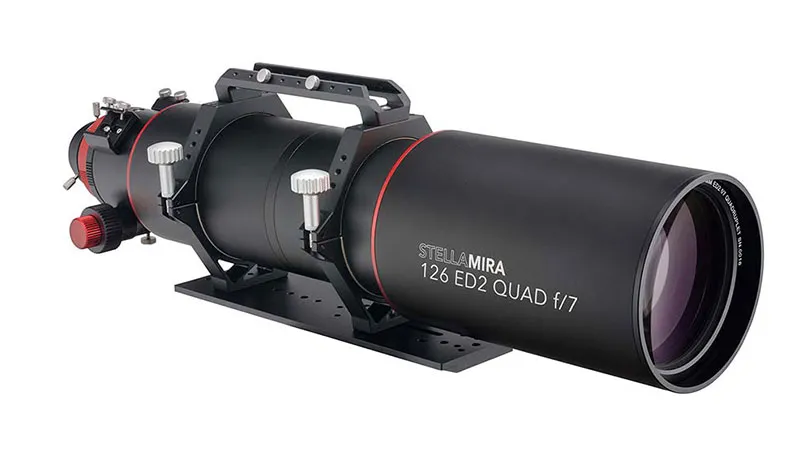
Imagine looking at the Moon and seeing every crater, mountain, and valley in stunning clarity. Or pointing your telescope at Jupiter and watching its cloud bands move while its four moons orbit around it. Picture Saturn's incredible rings appearing as if you could almost touch them.
This is what refractor telescopes do best. They deliver sharp, brilliant views of the night sky that have amazed astronomers for over 400 years. Even today, with all our modern technology, refractors remain one of the best ways to explore the universe.
Whether you're a complete beginner or someone looking for your next telescope, it is helpful to understand the different types of Telescopes available today. This guide will explain everything you need to know about refractors. We'll explore what they are, how they work, what makes them special, and most importantly, whether one is right for you. Let's get started.
What Is a Refractor Telescope?
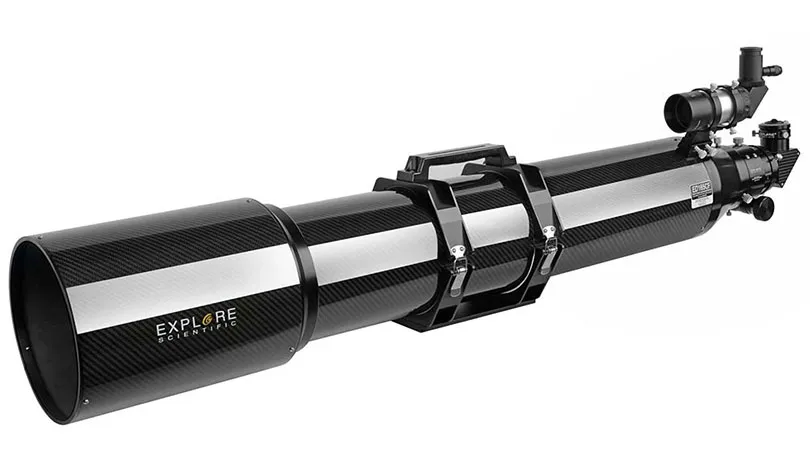
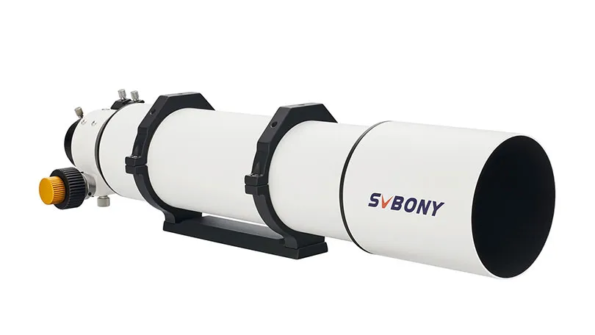
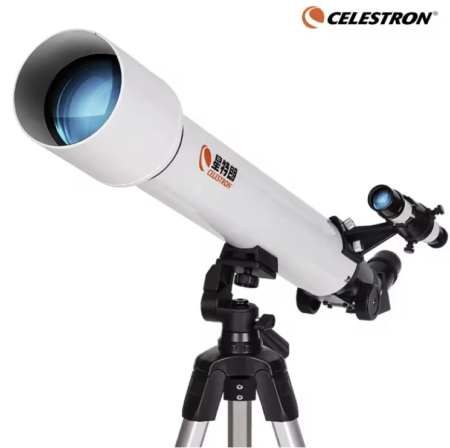
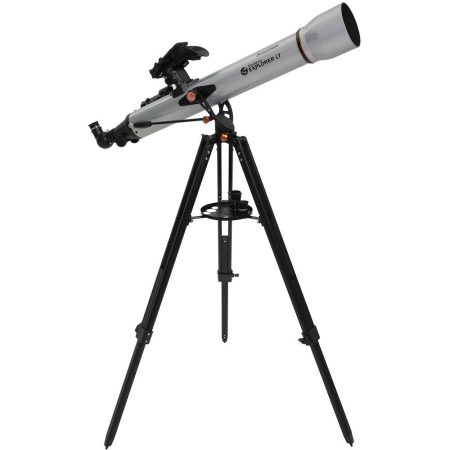
A Refractor Telescope is a classic optical instrument that stands as a testament to the power of simple, effective design. At its core, this device utilizes a primary glass lens, known as the objective lens, situated at the front of a long tube.
As light from celestial objects enters the telescope, this lens bends or "refracts" the light rays, causing them to converge at a single focal point. This straightforward mechanism eliminates the need for complex internal mirrors, offering a direct path for light that results in high-contrast views. If you are looking for a reliable way to explore the night sky, you can find a high-quality selection of Refractor Telescopes that are perfect for various skill levels.
The enduring popularity of the Refractor Telescope stems from its reliability and the crispness of the images it produces. Because the optical tube is typically sealed, these telescopes are less prone to internal dust and air currents, making them incredibly low-maintenance for both beginners and seasoned astronomers.
Modern iterations have evolved significantly, utilizing advanced glass coatings to virtually eliminate color distortion, ensuring that this historic design remains a top-tier choice for observing the moon, planets, and bright stars with stunning clarity.
How Refractor Telescopes Work
A refractor telescope works like an advanced magnifying glass. Here's how light travels through it to create the image you see.
Step 1: The Objective Lens Collects Light
The objective lens sits at the front of the telescope tube. Its main job is to collect as much light as possible from the object you're observing, whether it's a planet, star, or nebula, and bend those light rays inward.
The bigger the lens (we call this the "aperture"), the more light it collects. This means brighter, sharper images and the ability to see fainter objects. Think of it like opening a wider window; more light comes through.
Step 2: Light Converges at the Focal Point
As light passes through the objective lens, it bends inward until all the rays meet at a specific point inside the telescope called the focal point. This is where a tiny, upside-down image of the object forms.
The distance from the objective lens to this focal point is called the focal length. This number is important because:
- Longer focal length = higher magnification but narrower field of view (great for planets)
- Shorter focal length = lower magnification but wider field of view (good for nebulae and star clusters)
Step 3: The Eyepiece Magnifies the Image
The image created at the focal point is extremely small, too small for your eye to see clearly. This is where the eyepiece comes in. It's another lens (or group of lenses) that magnifies this tiny image so you can see it.
The beauty of this design is its flexibility. You can swap different eyepieces to change magnification:
- Use a low-magnification eyepiece for a wider view
- Switch to a high-magnification eyepiece to zoom in on details
One telescope, many possibilities.
The Color Challenge: Understanding Chromatic Aberration
White light isn't actually white; it's made up of many colors. Each color has a different wavelength, and here's the problem: when light passes through glass, different colors bend at slightly different angles. This creates something called chromatic aberration. In basic telescopes, you see this as a colored halo (usually purple or blue) around bright objects like the Moon or planets. It reduces sharpness and can be annoying to see.
Modern telescope designers found two ways to fix this problem:
| Feature | Achromatic Refractor | Apochromatic Refractor |
|---|---|---|
| Lens Elements | 2 glass pieces | 3+ glass pieces |
| Glass Types | Crown & flint glass | Crown + ED/Fluorite glass |
| Colors Corrected | Red & blue | Red, green, & blue |
| Remaining False Color | Slight violet halo | Almost none |
| Best Use | Moon & planets | Planets & astrophotography |
| Price Level | Budget-friendly | Premium price |
| Ideal Focal Ratio | f/8 or higher | f/5 to f/7 |
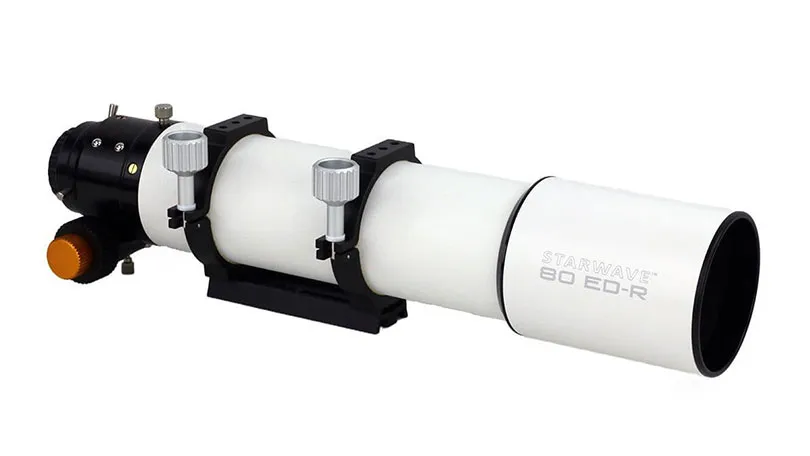
- Achromatic Refractors use two different types of glass to bring most colors to the same focal point. This greatly reduces color fringing. They're affordable and perform well for viewing planets and the Moon, especially at higher magnifications. You might see a faint violet halo around very bright objects, but it's much better than simpler designs.
- Apochromatic (APO) Refractors are the premium choice. They use three or more lens elements, often including special glasses like ED (Extra-low Dispersion) or Fluorite. APOs bring three or more colors to the same focal point, nearly eliminating chromatic aberration. The result is exceptionally sharp images with virtually no false color. The trade-off? They cost significantly more.
Refractors vs. Reflectors: How They Compare
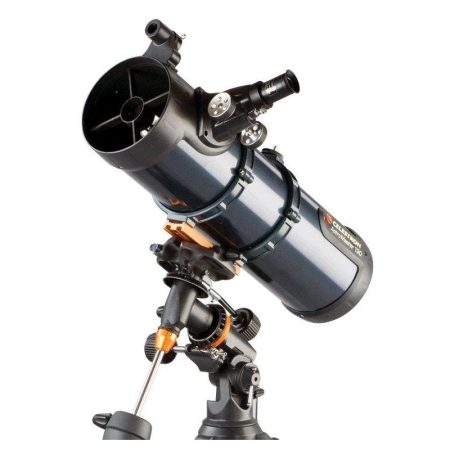
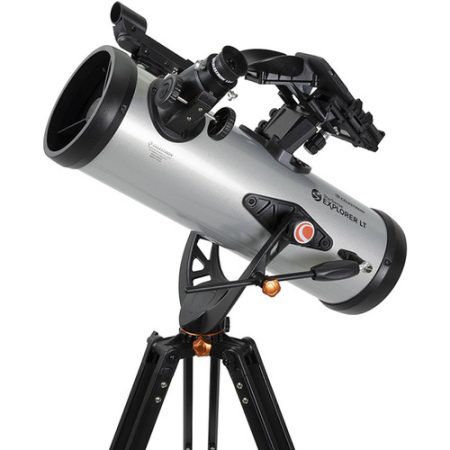
Reflector telescopes use curved mirrors instead of lenses. Both designs are excellent, but they work differently and have different advantages. If you are a beginner looking to buy your first piece of equipment, it is helpful to understand the various Types of Telescopes available to ensure you choose the one that best fits your stargazing needs.
Why Refractors Stand Out
- Unobstructed Light Path: Light travels straight from the objective lens to your eye with nothing blocking it. Reflectors use a secondary mirror in the light path, which slightly reduces contrast and creates diffraction spikes (star-shaped patterns) on bright objects.
- Sealed Tube Design: The optical tube is completely enclosed, protecting the lens from dust and atmospheric turbulence. This means sharper images and almost no maintenance. Unlike reflectors, you never need to realign (collimate) the optics.
- Superior Planetary Views: For observing the Moon, planets, and double stars, refractors deliver exceptional sharpness and contrast. The fine details pop.
- Minimal Maintenance: You'll never need to clean internal mirrors or realign optics. Just clean the front lens occasionally, and you're good. This makes refractors perfect for busy people.
Where Reflectors Excel
- More Light for Less Money: Reflectors gather significantly more light (larger aperture) for the same price. This makes them better for faint deep-sky objects like distant galaxies and nebulae.
- Less Bulky: Large-aperture reflectors are lighter and easier to transport than large refractors of similar power.
What Can You Observe with a Refractor?
The sharp, high-contrast views from refractors make them perfect for observing specific targets. However, if you are looking to capture more light for viewing distant galaxies, you might consider a Reflector Telescope, which uses mirrors instead of lenses to gather light.
The Moon and Planets: Refractors Excel Here
This is where refractors truly shine. You'll see:
- The Moon: Every crater, valley, and mountain ridge appears in crisp detail. You can spend hours exploring the lunar surface.
- Jupiter: Cloud belts, the Great Red Spot, and its four Galilean moons are clearly visible. Even changes in the cloud patterns become apparent over time.
- Saturn: The magnificent rings appear stunning. You might even see the Cassini Division (a dark line within the rings) and cloud details on the planet itself.
- Venus: You can observe the phases as Venus orbits the Sun, from thin crescent to nearly full.
- Mars: Surface features and polar ice caps become visible during favorable oppositions.
Even a small refractor delivers breathtaking planetary views. You don't need a large telescope to be amazed.
Double Stars and Brighter Deep-Sky Objects
The sharp, pinpoint star images from refractors are ideal for resolving close binary stars, an exciting observing challenge. You can also see:
- Bright star clusters like the Pleiades
- Globular clusters like M13
- Brighter nebulae like the Orion Nebula
- Bright galaxies like Andromeda (M31)
Refractors typically have smaller apertures than comparably priced reflectors, so faint deep-sky objects are more challenging. However, under dark skies, many beautiful targets are visible.
Easy to Transport
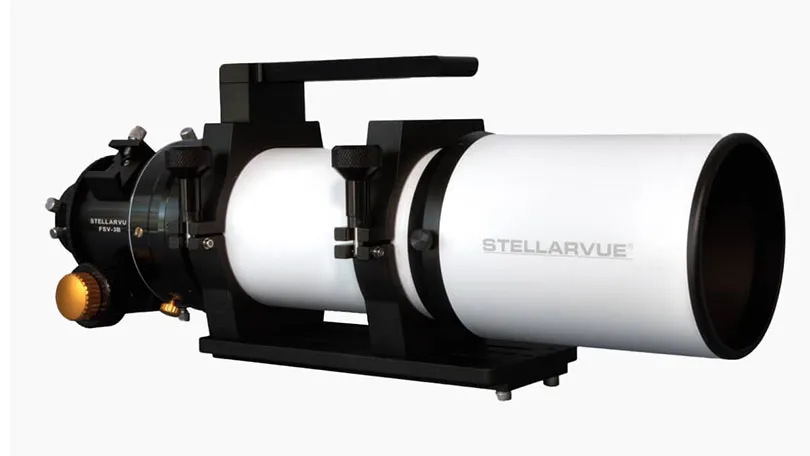
Many refractors, especially achromatic models in the 70mm to 100mm range, are compact and lightweight. This makes them perfect "grab-and-go" telescopes. You can set them up quickly in your backyard for a spontaneous observing session.
While these portable tools are great for Earth-based viewing, they use similar lens principles as the massive instruments used to study deep space, such as the James Webb Space Telescope. Their sealed tubes require virtually no maintenance, making them ideal for beginners and anyone who values convenience.
Refractors for Astrophotography: An Excellent Choice
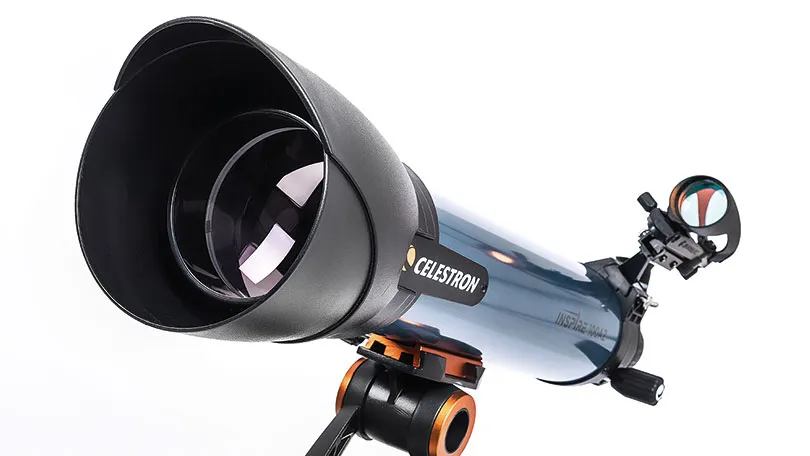
Apochromatic refractors have become increasingly popular for capturing deep-sky images. Here's why:
Why APO Refractors Are Perfect for Imaging
- Perfect Color Correction: Stars appear as crisp, pinpoint dots without distracting colored halos. Your images look clean and professional.
- No Diffraction Spikes: Unlike many reflectors, refractors don't produce the cross-shaped spikes around bright stars, resulting in aesthetically pleasing images.
- Wider Fields of View: APOs often have shorter focal lengths (f/5 to f/7), allowing you to capture large nebulae and galaxies in a single frame.
- Faster Imaging: Shorter focal lengths mean shorter exposure times, reducing the chance of tracking errors and requiring less exposure time overall.
For serious astrophotography, an APO refractor is often considered the gold standard.
Essential Equipment for Astrophotography
A quality refractor provides the foundation, but successful astrophotography requires additional gear:
- A stable equatorial mount to track the sky's rotation precisely and prevent star trails
- A field flattener (sometimes) to ensure stars remain sharp across the entire image, not just the center
- A focal reducer (sometimes) to widen the field of view and speed up imaging
Advantages and Disadvantages: Is a Refractor Right for You?
Key Advantages:
- Exceptional contrast and sharpness: Perfect for bright objects
- Virtually maintenance-free: Sealed design protects optics
- No collimation required: Optical elements don't need realignment
- Perfect for the Moon and planets: Unmatched detail and clarity
- Excellent for astrophotography: APOs produce stunning images
- Compact and portable: Smaller sizes are very portable
- User-friendly: Simple to use, even for complete beginners
- Long-lasting: Reliable instruments that last for decades
Important Disadvantages:
- Chromatic aberration: Present in budget models (though minor)
- Expensive per unit of aperture: APOs are especially costly
- Smaller apertures are common: Large refractors are very expensive
- The objective lens can fog up: On damp nights (dew shields help)
- Length and weight increase: With larger apertures
- Limited for faint deep-sky objects: Compared to larger reflectors
Is a Refractor Telescope the Right Choice for You?
Choose a Refractor If You Want:
- Sharp, clear views of the Moon and planets
- Minimal maintenance and hassle-free observing
- A reliable instrument that will last for years
- Excellent performance for astrophotography (APO models)
- Easy setup and use, even if you're a beginner
- Portability and convenience
Consider a Reflector If You Want:
- Maximum light-gathering power for your budget
- Better views of faint deep-sky objects
- Larger aperture without extra weight
- Lower price for a significant aperture
Conclusion: The Timeless Appeal of Refractors
With over four centuries of history and continuous modern innovation, the refractor telescope remains a cornerstone of amateur astronomy. Whether you opt for an accessible achromatic model or invest in a high-end apochromatic (APO) system, the refractor telescope consistently delivers the crisp, high-contrast imagery that enthusiasts crave.
Their legendary reliability and straightforward design make them an enduring favorite, offering a window into the cosmos that is as sharp as it is beautiful. For those seeking a seamless blend of tradition and optical excellence, the refractor telescope is truly the ultimate tool for falling in love with the night sky.
The universe is waiting. Clear skies!
FAQ
A refractor uses a lens at the front to bend light and focus it. A reflector uses a curved mirror at the back to reflect and focus light. Refractors typically offer better image contrast and require less maintenance, while reflectors provide more light-gathering power for the same price.
Yes, absolutely. Smaller achromatic refractors are excellent for beginners. They're easy to use, require minimal maintenance (no collimation), are portable, and provide great views of the Moon and planets right out of the box.
Yes, you can see brighter deep-sky objects. Star clusters like the Pleiades, nebulae like Orion, and galaxies like Andromeda are visible. However, refractors typically have smaller apertures than comparably priced reflectors, so very faint deep-sky objects are more challenging. Larger APOs perform better on these targets.
APOs use complex lens designs (often with 3 or more elements) and specialized, costly materials such as ED glass or Fluorite. Manufacturing these multi-element lenses to the precision needed for perfect color correction is demanding and expensive.
Very little. The sealed tube protects the optics from dust. Unlike reflectors, refractors don't require collimation (optical alignment). Maintenance usually involves occasionally cleaning the front lens if it gets dusty or smudged, and proper storage.
Neither is universally "better"; they excel in different areas. Refractors offer superior image quality per inch of aperture, require minimal maintenance, and APOs are excellent for astrophotography. Reflectors provide significantly more light-gathering power for the same price, making them better for faint deep-sky objects. The best choice depends on your budget, observing interests, and portability needs.

No Comments