

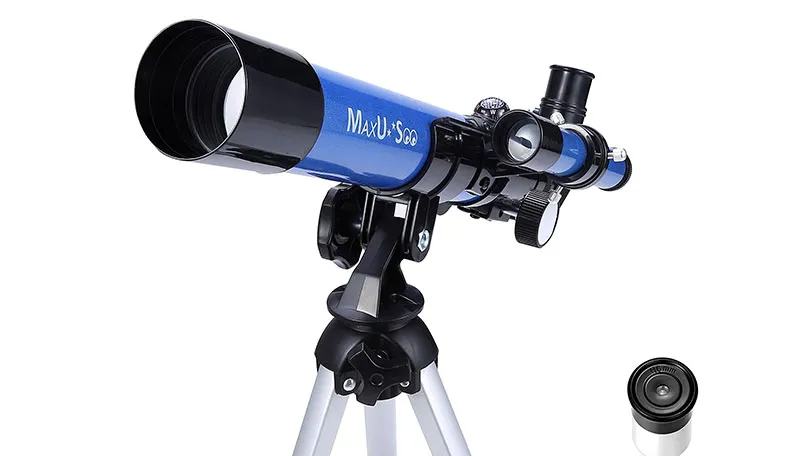
A child’s first look through a telescope can turn an ordinary evening into a small adventure. Seeing the craters of the Moon in sharp detail, spotting Jupiter’s bright moons, or learning that Saturn really has rings can make space feel closer, more real, and far more exciting than any picture in a book.
That is why choosing the right first telescope matters: a simple, well-made model can build confidence and curiosity, while a poorly designed one may make the experience difficult and discouraging.
In this guide, you will discover the best Telescopes for Kids, the features that truly make a difference, and practical options that keep stargazing easy, educational, and fun.
You can also explore Types of Telescopes to understand how different optical designs affect performance, setup, and usability. Instead of focusing only on exaggerated magnification claims, this guide explains why aperture, a stable mount, clear optics, and easy operation are the real keys to giving children rewarding views of the night sky.
What Makes a Good Telescope for Kids?
Before looking at specific models, it is important to understand what children actually need.
A good telescope for a child should be:
- Easy to assemble
- Lightweight and portable
- Durable enough for regular use
- Equipped with a stable mount
- Simple to point at celestial objects
- Capable of showing the Moon and planets clearly
- Affordable while still offering good optical performance
One of the biggest mistakes parents make is buying cheap telescopes that advertise extreme magnification. In reality, optical quality matters far more than high magnification. Astronomy communities consistently recommend larger apertures and stable mounts over flashy marketing claims.
Top Telescopes for Kids
Finding the perfect telescope for a child doesn't have to be complicated. The best telescope is the one that actually gets used, meaning it needs to be simple to set up, easy to aim, and durable enough for young explorers.
Whether your child is dreaming of seeing the moon's craters up close or discovering distant planets, we have gathered the top kid-friendly options that balance great views with hassle-free fun. Let's dive in and find the ideal telescope to spark your child's lifelong love for the stars!
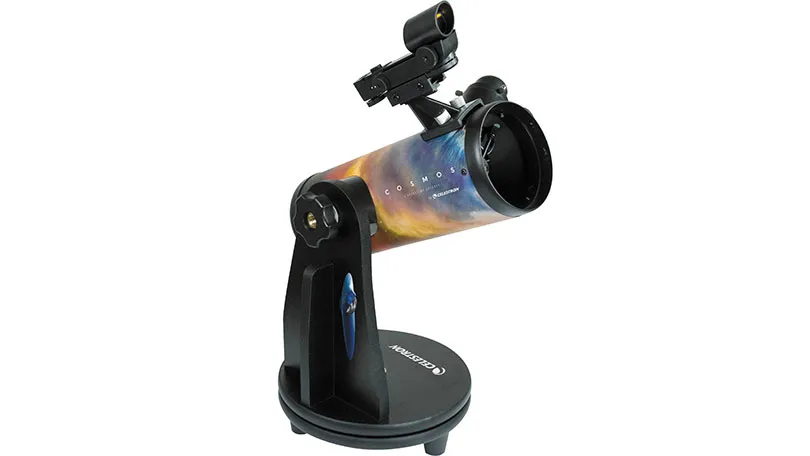
1. Sky-Watcher Heritage 130P
The Heritage 130P is widely regarded as one of the best beginner telescopes available.
Key Features:
- 130mm aperture
- Collapsible tube
- Dobsonian mount
- Excellent deep-sky performance
Best For: Older children and teenagers who want to explore beyond the Moon.
Why It Stands Out: The larger aperture collects significantly more light, allowing users to see star clusters, nebulae, and brighter galaxies. You can learn more about suitable options here: telescopes for Viewing Planets and Galaxies
2. National Geographic 70mm Refractor
This telescope is designed specifically for educational use.
Key Features:
- Refractor optics
- Lightweight tripod
- Educational accessories
- Easy setup
Best For: School-age children interested in science projects and astronomy clubs.
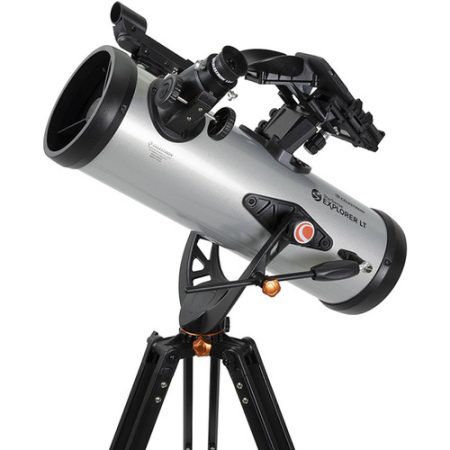
3. Celestron StarSense Explorer LT 70AZ
Smartphone technology has changed beginner astronomy.
Key Features:
- Smartphone-assisted navigation
- Refractor design
- Easy-to-use mount
- Educational app support
Best For: Tech-savvy children and families.
Why It Matters: The StarSense app helps locate celestial objects without requiring extensive astronomy knowledge.
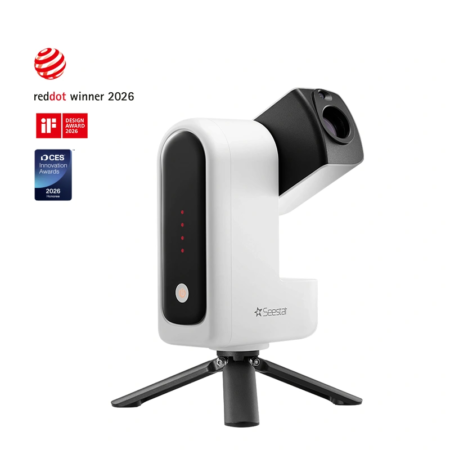
4. ZWO Seestar Smart Telescope
Smart telescopes represent the future of beginner astronomy.
Key Features:
- Automated object finding
- Smartphone control
- Astrophotography capabilities
- Portable design
Best For: Families seeking the simplest possible astronomy experience.
Recent astronomy discussions often recommend smart telescopes for children when ease of use is a top priority.
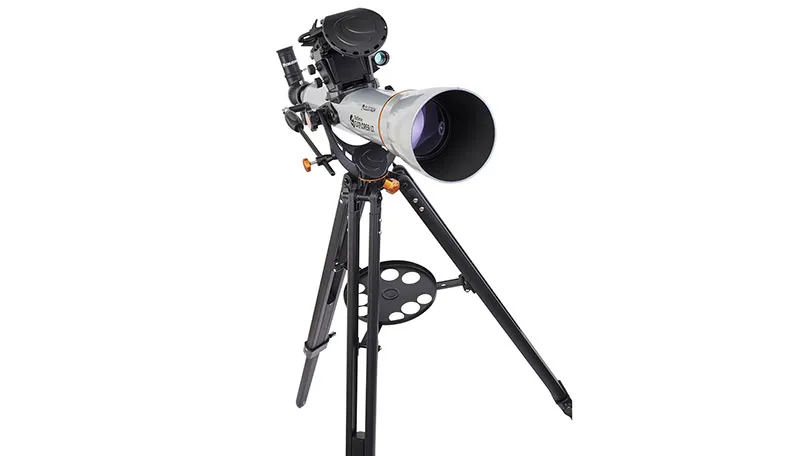
Top Kid-Friendly Telescopes Available at Dubai Telescope
If you are looking for quality beginner telescopes with local support and expert guidance, these products are among the best options currently available.
1. Acuter Newtony 50mm Educational Telescope Kit
A perfect first telescope for young children.
Features
- Educational design
- Compact size
- Easy assembly
- Affordable entry-level price
Best For: Children ages 5–8 are beginning their astronomy journey.
2. Celestron Kids 50mm Newtonian Telescope
Designed specifically for young astronomers.
Features
- Child-friendly operation
- Lightweight construction
- Quick setup
Best For: Families introducing children to space exploration.
3. Celestron FirstScope 76mm Reflector Telescope
The Celestron FirstScope remains one of the most recommended beginner telescopes worldwide.
Features
- 76mm aperture
- Tabletop Dobsonian mount
- Lightweight design
- No complicated setup
- Excellent Moon viewing
Best For: Children aged 7–12 who are starting in astronomy, beginners, and family astronomy nights using Telescope for Beginners.
Why Kids Love It: The simple tabletop design allows children to point and observe objects quickly without dealing with complex tripod adjustments. Experienced telescope users frequently recommend similar tabletop telescope designs for young beginners.
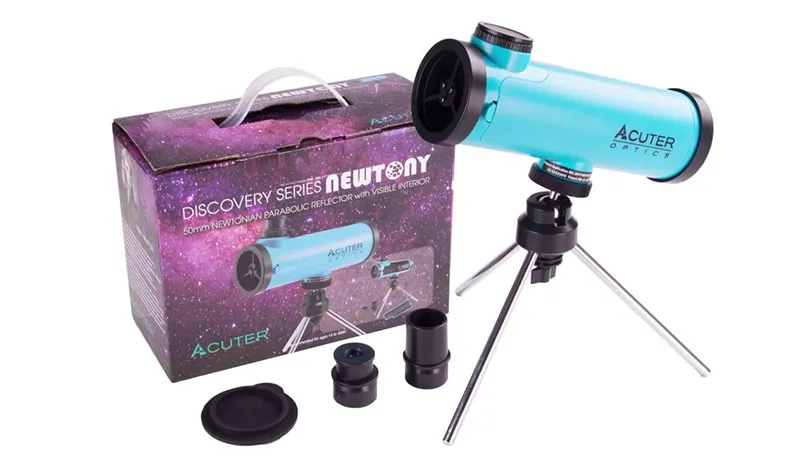
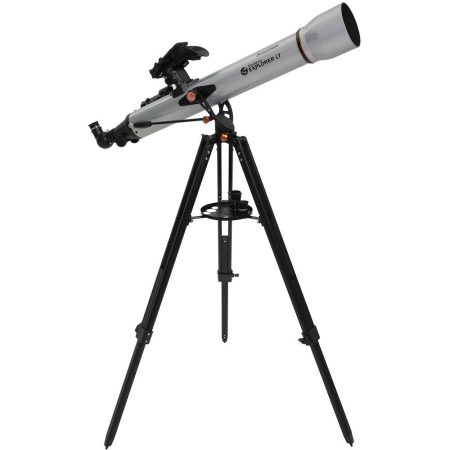
4. Celestron Inspire 80AZ Refractor Telescope
The Celestron Inspire 80AZ Refractor Telescope is an excellent beginner telescope for children, teenagers, and families who want a simple and enjoyable introduction to astronomy. It is best suited for kids aged 8 years and above, especially those who are curious about the Moon, planets, and bright deep-sky objects.
With its 80mm fully coated refractor optics, smooth Alt-Azimuth mount, and easy no-tool setup, young users can start observing within minutes.
The telescope provides clear views of the Moon’s craters, Jupiter and its moons, Saturn’s rings, bright star clusters, and even objects like the Orion Nebula under dark skies. It also includes useful accessories such as a smartphone adapter, red-dot finder, and two eyepieces, making it both educational and fun for beginners.
Its lightweight design and user-friendly controls help children learn astronomy without feeling overwhelmed, making it a great choice for family stargazing sessions and school-age astronomy enthusiasts.
5. Celestron StarSense Explorer LT 70AZ
A modern telescope that works with a smartphone.
Features:
- App-assisted navigation
- User-friendly operation
- High-quality optics
Best For: Families who want technology to simplify stargazing.
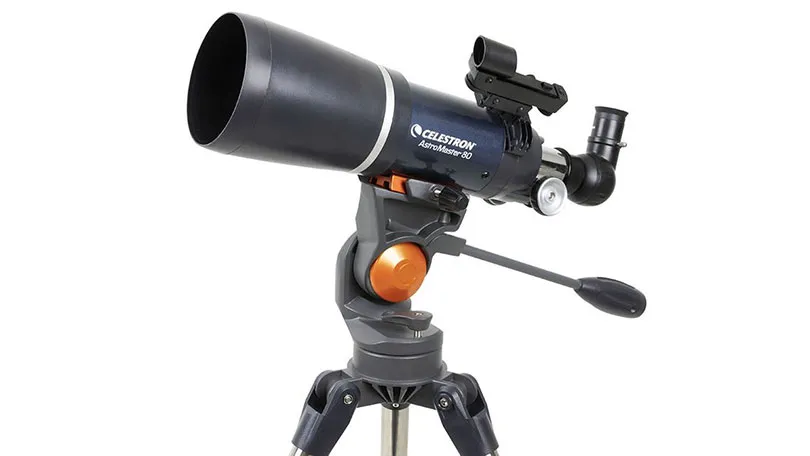
6. Celestron AstroMaster 70AZ Refractor Telescope
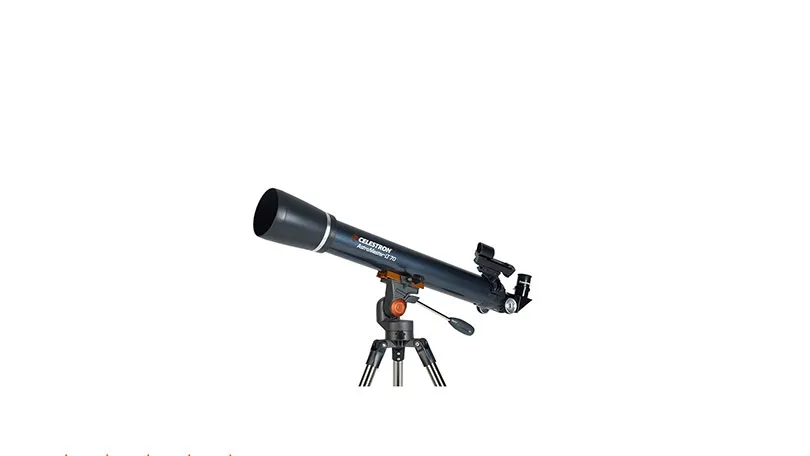
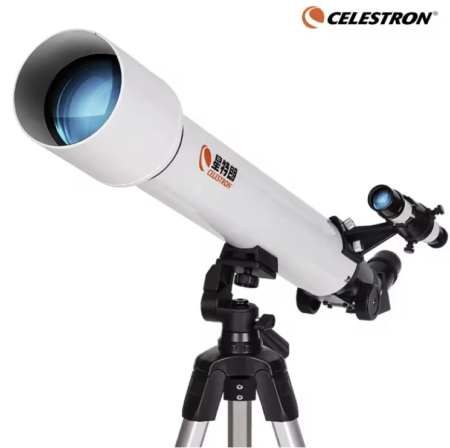
The Celestron AstroMaster 70AZ Refractor Telescope is an excellent beginner telescope for children aged 8 to 14 years, as well as families who want an easy and enjoyable introduction to astronomy. Its 70mm fully coated refractor optics provide bright and clear views of the Moon, Jupiter’s moons, Saturn’s rings, star clusters, and other bright celestial objects.
For users who want to explore more advanced optical designs beyond entry-level refractors, you can also check our range of Catadioptric Telescopes, which offer a compact structure and powerful performance for more detailed planetary and deep-sky observation.
The lightweight design, adjustable tripod, and simple Alt-Azimuth mount allow children to point and track objects smoothly without complicated setup procedures. The telescope comes with two eyepieces, a red-dot finderscope, and astronomy software, making it a complete starter package for learning about the night sky.
It is ideal for young stargazers who want a telescope that is easy to carry, quick to assemble, and capable of delivering rewarding views of the Solar System from the very first night.
7. Celestron StarSense Explorer LT 80AZ
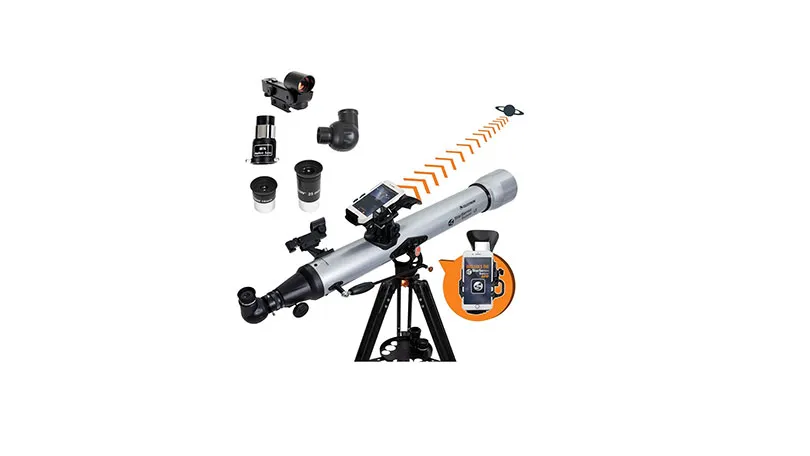
The Celestron StarSense Explorer LT 80AZ is one of the best beginner telescopes for children, families, and first-time stargazers. It is most suitable for kids aged 8 years and older, especially those who enjoy technology and learning about space. This 80mm refractor telescope delivers bright and sharp views of the Moon, Jupiter, Saturn, Venus, star clusters, and some bright nebulae.
Its biggest advantage is the award-winning StarSense smartphone technology, which helps children locate celestial objects by simply following arrows on their phone screen, making astronomy much easier and more enjoyable.
The telescope includes a stable alt-azimuth mount, a full-height tripod, two eyepieces, and a 2x Barlow lens for different magnification options. It can also be used during the daytime for observing birds, wildlife, and landscapes.
With its simple setup, smartphone-guided navigation, and high-quality optics, the StarSense Explorer LT 80AZ is an excellent choice for young astronomers who want to explore the night sky without the frustration of finding objects manually.
How to Choose the Right Telescope for Your Child
Choosing among many Telescopes for Kids can feel overwhelming, but focusing on a few key factors simplifies the process.
1. Age of the Child
Ages 5–8
- Small tabletop reflectors
- Educational telescope kits
- Lightweight designs
Ages 9–12
- 70mm–130mm telescopes
- Dobsonian models
- Smartphone-assisted telescopes
Teenagers
- Larger aperture telescopes
- Smart telescopes
- Entry-level astrophotography systems
2. Aperture Matters More Than Magnification
A larger aperture gathers more light.
Benefits include:
- Brighter images
- Better planetary detail
- Improved deep-sky viewing
Always prioritize aperture over advertised magnification.
3. Stable Mounts Are Essential
A shaky telescope quickly becomes frustrating. Experienced telescope users repeatedly recommend tabletop Dobsonian designs because they are easier for children to use and significantly more stable than many inexpensive tripod-mounted telescopes.
4. Ease of Use
Children should spend their time observing rather than struggling with complicated controls.
Look for:
- Dobsonian mounts
- Alt-azimuth mounts
- Smartphone guidance systems
Avoid overly complicated equatorial mounts for first-time users.
Trusted Advice & Modern Telescope Options
Over the years, brands like Orion and Meade played an important role in introducing many beginners to astronomy, but many of their older product lines have now become discontinued or harder to find due to changes in manufacturing and business direction.
As a result, users looking for these models can now turn to modern and more widely available alternatives from brands such as Celestron, Sky-Watcher, Acuter, and ZWO, which often provide better optics, easier setup, and improved user experience with newer technology.
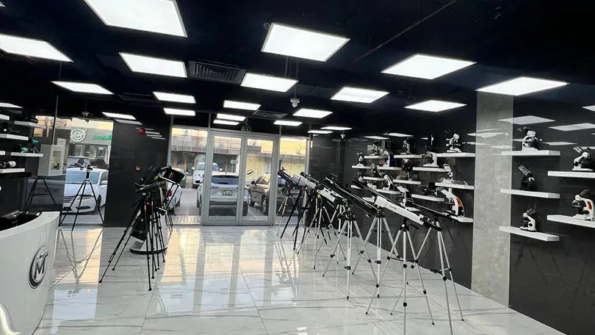
With more than 25 years of experience serving astronomy enthusiasts in Iran and over 15 years of activity in Dubai, we have supported thousands of beginners, families, and educators in choosing the right telescope for their needs.
Known as the Dubai Telescope in Iran and the Magic Shop in Dubai, our focus is on helping customers replace outdated options with high-quality modern telescopes that deliver a smooth, enjoyable, and reliable stargazing experience.
Common Mistakes Parents Make
- Buying Based on Magnification: High magnification numbers often create unrealistic expectations.
- Choosing the Cheapest Option: Poor optics and unstable mounts often cause disappointment.
- Ignoring Portability: A telescope that is too heavy may rarely be used.
- Buying Without Considering Guidance: Children often benefit from parental involvement during their first observing sessions.
What Can Kids Actually See?
With a quality beginner telescope, children can observe:
- The Moon's craters
- Jupiter and its major moons
- Saturn's rings
- Venus phases
- Mars during favorable oppositions
- Bright star clusters
- Orion Nebula
- Double stars
These observations often create unforgettable moments and help develop an interest in science and exploration.
Are Smart Telescopes Worth It for Kids?
Smart telescopes have become increasingly popular.
Advantages include:
- Automatic object finding
- Smartphone integration
- Astrophotography capabilities
- Reduced learning curve
For busy families who want quick results, smart telescopes can be an excellent investment.
Conclusion
The best telescope for a child is not necessarily the biggest or most expensive one. It is the telescope that encourages exploration, sparks curiosity, and makes astronomy enjoyable from the very first night.
When evaluating Telescopes for Kids, focus on ease of use, optical quality, stability, and long-term value. Whether you choose a simple tabletop reflector, a smartphone-guided telescope, or a modern smart telescope, the goal remains the same: helping a young explorer discover the wonders of the universe.
A carefully chosen telescope can transform an ordinary evening into a journey through space. The right model will not only show the Moon and planets, but it may also inspire a lifelong passion for science, technology, and discovery. That is why investing in quality Telescopes for Kids is often one of the most rewarding educational purchases a family can make.
FAQ
Most children can begin enjoying telescopes around ages 6–8 with adult guidance.
In many cases, yes. Tabletop Dobsonian telescopes are usually more stable and easier for children to operate.
They can view the Moon, Jupiter, Saturn, bright star clusters, and some nebulae.
If you want a quick setup, easy object finding, and smartphone integration, a smart telescope can be an excellent choice for family astronomy sessions.

No Comments