

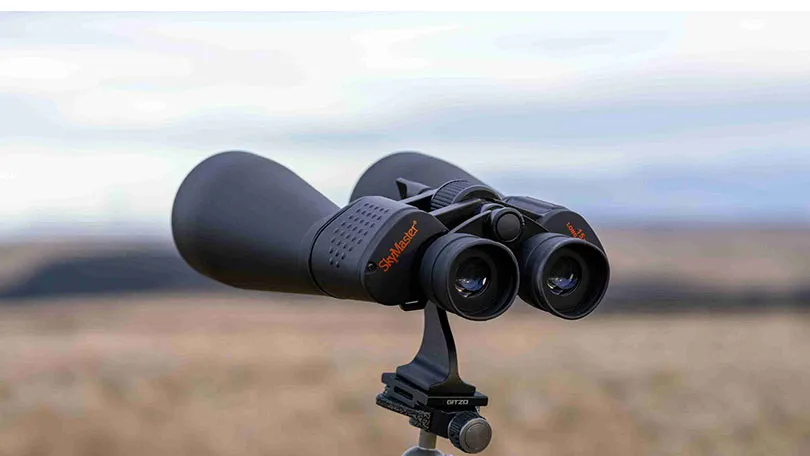
Long before binoculars became a familiar tool for travel, wildlife watching, and sports, their roots were closely linked to the early development of the telescope in the seventeenth century. By placing two small telescopic systems side by side, inventors created a more natural and comfortable way to view distant scenes with both eyes.
Over time, improvements in lenses, prisms, coatings, and optical design transformed binoculars into compact instruments capable of bringing the night sky closer with impressive clarity. Today, they remain one of the most accessible ways to begin exploring the universe from a balcony, backyard, campsite, or dark-sky location.
Choosing the Best Binoculars for Stargazing can open a wide, immersive window onto the sky without the cost, setup time, or learning curve of a telescope. A good pair can reveal the Moon’s textured surface, sweeping star fields, open clusters, bright nebulae, and even the soft glow of a few nearby galaxies.
While telescopes offer higher magnification for detailed views, binoculars provide a wider field of view that makes it easier to find objects and enjoy the scale of the night sky. In this guide, you will discover the Best Binoculars for Stargazing, learn which features truly matter for nighttime observing, and compare leading models that can make every clear evening more memorable.
Why Binoculars Are Excellent for Stargazing
Before choosing a model, it helps to understand why binoculars remain so popular among amateur astronomers.
- Wider Field of View: Unlike telescopes, binoculars allow you to see larger portions of the sky at once. This makes it easier to locate constellations, star clusters, and deep-sky objects.
- Easy to Use: There is virtually no setup required. Simply step outside, point the binoculars at the sky, and start observing.
- Portable Design: Most binoculars fit into a backpack, making them ideal for travel, camping, and spontaneous observing sessions. Their portability also makes them useful for outdoor activities beyond astronomy, including wildlife observation and attending sporting events. If you're looking for models specifically designed for stadiums and live competitions, explore our collection of Sporting Events Binoculars.
- Affordable Entry into Astronomy: Many excellent stargazing binoculars cost significantly less than beginner telescopes while still delivering remarkable views of the night sky.
- Natural Viewing Experience: Using both eyes reduces fatigue and creates a more immersive observing experience compared to many telescope eyepieces.
How to Choose Binoculars for Stargazing
Not all binoculars perform equally under the stars. Here are the most important specifications to consider.
Magnification
The first number in a binocular specification indicates magnification. Examples:
- 7x50
- 10x50
- 15x70
- 20x80
Higher magnification reveals more detail but also amplifies hand movement.
For handheld astronomy:
- 7x50
- 8x42
- 10x42
- 10x50
They are often ideal choices.
Objective Lens Size
The second number represents the lens diameter in millimeters. Larger lenses gather more light, which is crucial for astronomy.
Examples:
- 42mm
- 50mm
- 70mm
- 80mm
For serious night-sky viewing, many astronomers prefer 50mm or larger objective lenses.
Exit Pupil
Exit pupil is calculated by dividing the objective diameter by the magnification. Examples:
- 7x50 = 7.1mm
- 10x50 = 5mm
A larger exit pupil generally provides brighter views in dark conditions.
Optical Coatings
Look for:
- Fully Multi-Coated optics
- Phase-coated prisms
- Dielectric coatings
- ED glass when available
These features improve brightness, contrast, and image sharpness.
Tripod Compatibility
Binoculars larger than 15x70 usually benefit from tripod mounting.
Best Binoculars for Stargazing
The following models are among the most respected binoculars available today for astronomy enthusiasts.
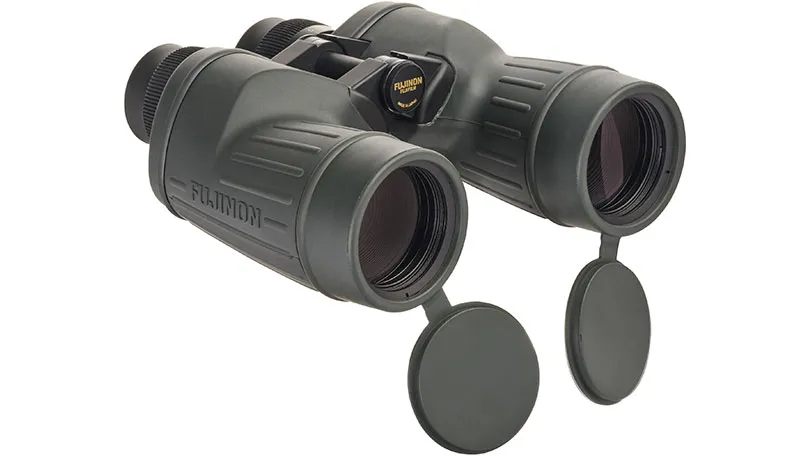
Fujinon Polaris 10x50 FMTR-SX
Why It Stands Out: The Fujinon Polaris series has earned legendary status among amateur and professional astronomers.
Key Features:
- Exceptional optical quality
- Fully waterproof construction
- Outstanding edge-to-edge sharpness
- Excellent low-light performance
Best For:
- Serious stargazers
- Long observing sessions
- Premium performance
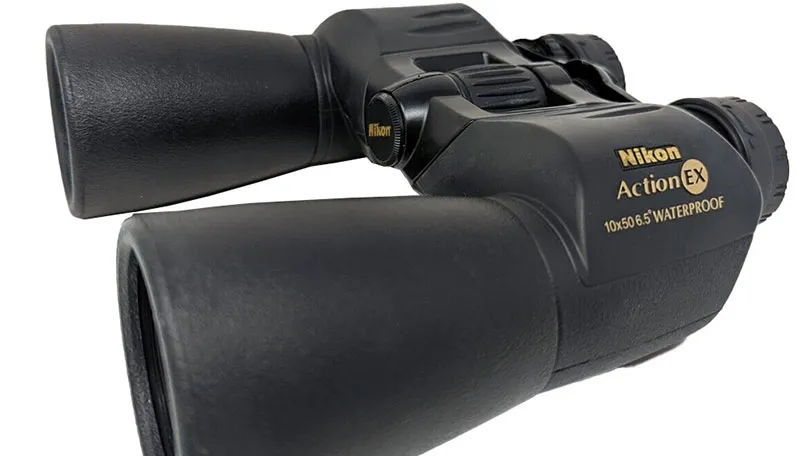
Nikon Action Extreme 10x50
Why It Stands Out: Nikon's Action Extreme series delivers excellent performance at a reasonable price.
Key Features:
- Fully multi-coated optics
- Waterproof design
- Comfortable eye relief
- Bright night-sky images
Best For:
- Beginners
- Intermediate observers
- Budget-conscious buyers
Oberwerk Deluxe 15x70
Why It Stands Out: Oberwerk has become a favorite among astronomy enthusiasts due to its quality control and optical performance.
Key Features:
- Large 70mm aperture
- Sharp optics
- Strong build quality
- Excellent contrast
Best For:
- Deep-sky exploration
- Dark-sky locations
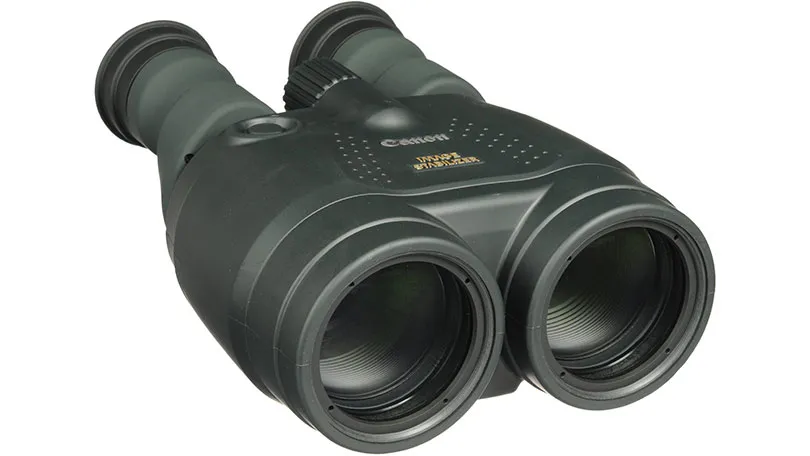
Canon 15x50 IS
Why It Stands Out: Canon's Image Stabilization technology changes the stargazing experience completely.
Key Features:
- Built-in image stabilization
- High-quality optics
- Sharp lunar detail
- Comfortable handheld use
Best For:
- Travelers looking for lightweight and easy-to-carry optics often prefer compact binoculars that deliver excellent performance without adding extra weight to their gear. Our collection of Travel & Compact Binoculars includes portable models that are ideal for sightseeing, hiking, wildlife observation, and casual stargazing while on the move.
- Users who prefer handheld viewing
Many astronomers consider this one of the most comfortable astronomy binoculars available.
Vortex Kaibab HD 18x56
Why It Stands Out: Vortex combines premium glass with rugged construction.
Key Features:
- HD optical system
- High magnification
- Excellent contrast
- Durable build
Best For:
- Moon observation
- Bright deep-sky objects
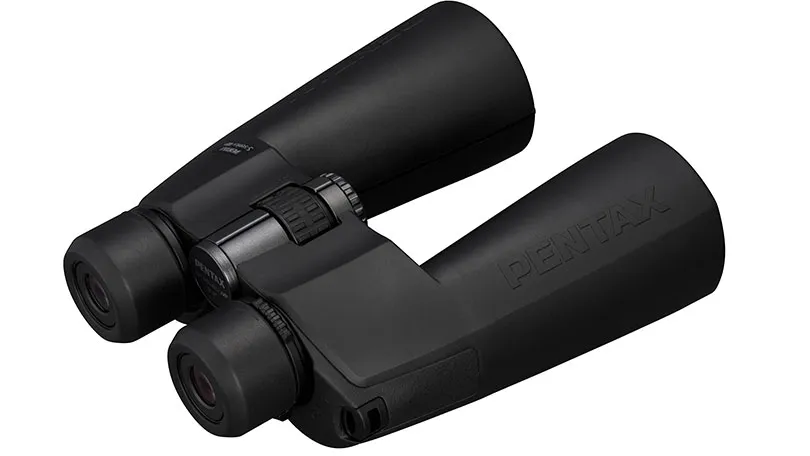
Pentax SP 20x60 WP
Pentax offers impressive optical performance and weather protection. Key Features:
- Waterproof construction
- Sharp optics
- Long eye relief
- Excellent lunar performance
Best For:
- Intermediate observers
- Outdoor enthusiasts
APM 16x70 ED
ED glass significantly improves image quality by reducing chromatic aberration. Key Features:
- ED optics
- Large aperture
- Excellent color correction
- Sharp stars
Best For:
- Advanced users
- Deep-sky enthusiasts
Swarovski NL Pure 12x42
Why It Stands Out: Swarovski produces some of the finest optics in the world.
Key Features:
- Exceptional image quality
- Wide field of view
- Outstanding contrast
- Premium coatings
Best For:
- Luxury buyers
- Wide-field astronomy
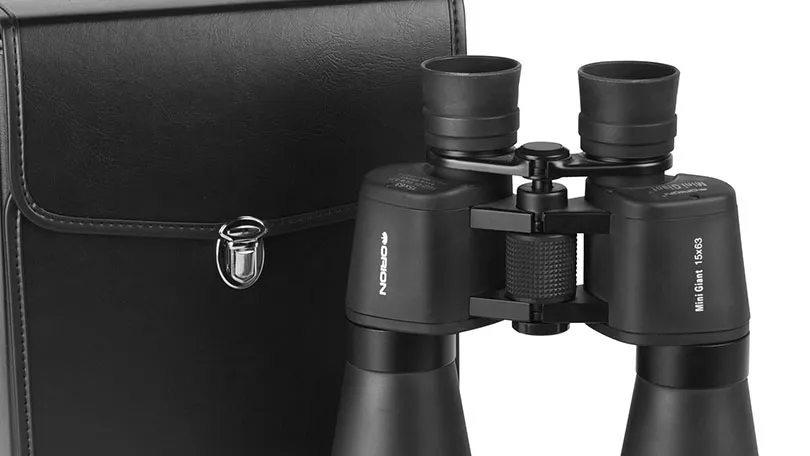
Orion Mini Giant 15x63
Why It Stands Out: A long-time favorite among amateur astronomers.
Key Features:
- Good balance of size and power
- Bright images
- Comfortable ergonomics
- Excellent value
Best For:
- General astronomy enthusiasts can benefit from a wide range of optical instruments. Still, dedicated Astronomy Binoculars are often the best choice for exploring the Moon, star clusters, nebulae, and other deep-sky objects. Their large light-gathering capability and wide field of view make them ideal for both beginners and experienced stargazers.
- Star cluster observation
Which Binocular Size Is Best for Astronomy?
Many beginners ask which binocular size provides the best balance between brightness and usability.
Best Handheld Choices
- 8x42
- 10x42
- 10x50
These are considered good binoculars for stargazing because they offer bright views without requiring a tripod.
Best Deep-Sky Choices
- 15x70
- 20x80
- 25x100
These larger models collect far more light and reveal fainter celestial objects.
Best Travel Options
If portability matters most, consider:
- 8x32
- 10x32
- 10x42
These binoculars are lightweight while still providing satisfying astronomical views.
Best Budget Binoculars for Stargazing
You do not need to spend thousands of dollars to enjoy astronomy.
Some of the best budget binoculars for stargazing include:
- Nikon Action Extreme 10x50
- Celestron SkyMaster 15x70
- Orion Scenix 10x50
- Pentax SP 10x50
These models offer excellent value and strong optical performance for beginners. Similarly, if your budget is extremely limited, some of the best cheap binoculars for stargazing can still provide enjoyable views of the Moon, bright planets, and major star clusters when used under dark skies.
Recommended Binoculars from Dubai Telescope
If you are looking for reliable binoculars backed by expert support, our collection at Dubai Telescope includes models suitable for both beginner and advanced stargazers. You can explore our complete binocular selection here:
Below are some of our most popular binoculars for astronomy and night-sky observation:
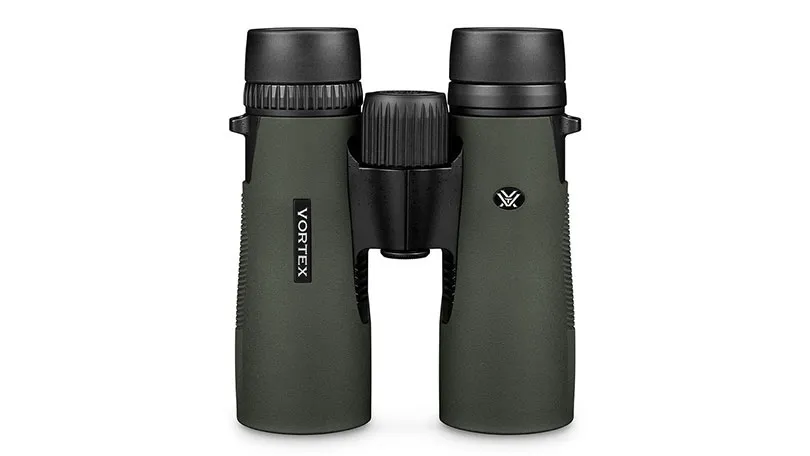
Vortex 10x42 HD Diamondback
The Vortex 10x42 HD Diamondback is one of the best all-around binoculars for users who want a combination of daytime versatility and nighttime performance.
Key Features:
- HD optical system for improved clarity
- Fully multi-coated lenses
- Bright and sharp night-sky views
- Comfortable handheld design
- Durable waterproof construction
For astronomy, this binocular excels at wide-field viewing. Large star clusters such as the Pleiades (M45), the Double Cluster, and major constellations appear crisp and bright. The HD glass helps improve contrast and maintain sharpness across the field of view. Best For:
- Beginners
- Casual astronomy
- Wide-field stargazing
- Travel and outdoor use
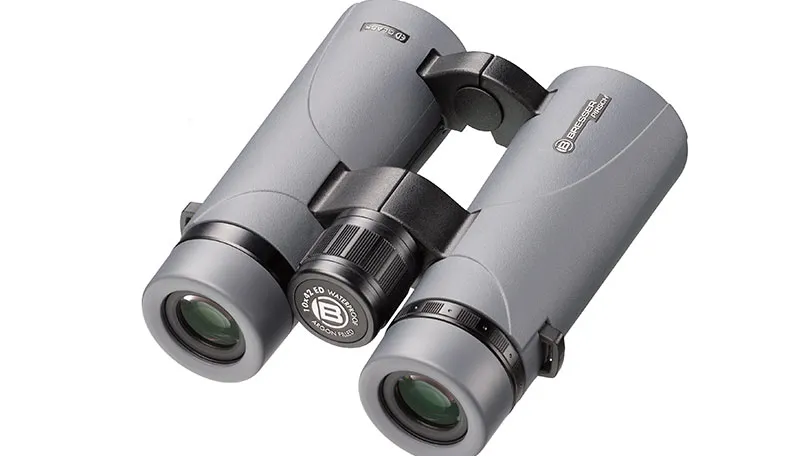
Bresser Pirsch 10x42
The Bresser Pirsch 10x42 offers excellent optical quality for users seeking an affordable yet capable astronomy binocular. Key Features:
- Phase-coated prisms
- Fully multi-coated optics
- Bright image quality
- Lightweight construction
- Waterproof design
Although originally designed for nature observation, its high-quality optics perform very well under dark skies. Bright star fields appear sharp, and lunar details are easily visible. Best For:
- General astronomy
- Camping trips
- Beginner observers
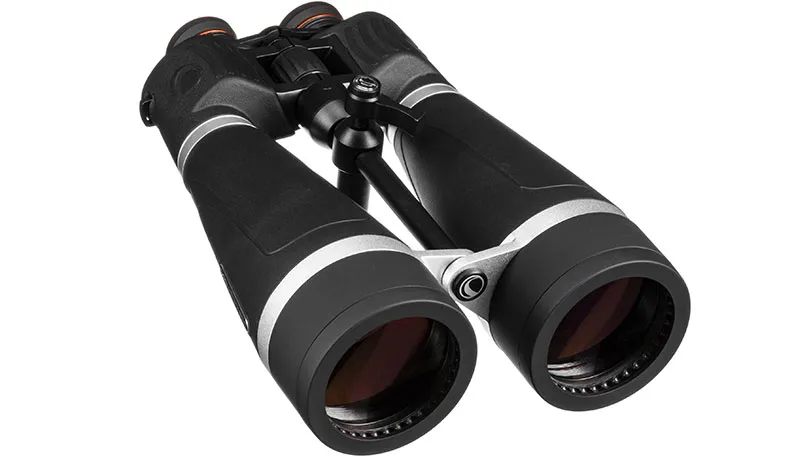
Celestron SkyMaster Pro 20x80
The Celestron SkyMaster Pro 20x80 is a true astronomy binocular designed specifically for serious night-sky observing.
Key Features:
- Massive 80mm objective lenses
- 20x magnification
- Exceptional light gathering
- Tripod compatible
- Enhanced deep-sky performance
This model can reveal lunar craters, bright nebulae, globular clusters, and numerous deep-sky targets that smaller binoculars simply cannot show.
Best For:
- Dedicated astronomy
- Deep-sky observing
- Dark-sky locations
Among all binoculars discussed in this guide, this is one of the strongest performers for celestial observation.
Celestron SkyMaster 25x70
The Celestron SkyMaster 25x70 is another astronomy-focused giant binocular. Key Features:
- Powerful 25x magnification
- Large 70mm aperture
- Bright celestial views
- Tripod-ready design
The higher magnification allows observers to see more detail in the Moon and bright deep-sky objects while maintaining impressive light-gathering ability. Best For:
- Experienced observers
- Lunar observation
- Deep-sky exploration
Shuntu 10x42 P2 ED
The Shuntu 10x42 P2 ED combines modern ED glass technology with a versatile handheld design. Key Features:
- ED glass elements
- Reduced chromatic aberration
- Sharp stellar images
- Bright optical performance
The ED optics help reduce color fringing around bright stars and the Moon, producing cleaner and more natural images. Best For:
- Astronomy beginners
- Mixed daytime and nighttime use
- Wide-field sky observation
Vortex 10x42 Triumph
The Vortex 10x42 Triumph is an affordable entry-level binocular that still performs surprisingly well under dark skies.
Key Features:
- Lightweight design
- Fully coated optics
- Durable construction
- Affordable price point
For users entering astronomy on a budget, this binocular offers excellent value while maintaining respectable brightness and image quality.
Best For:
- New stargazers
- Budget-conscious buyers
- Outdoor enthusiasts
Vortex 10x32 Diamondback
The Vortex 10x32 Diamondback is the most compact model on this list. Key Features:
- Lightweight body
- Compact dimensions
- Excellent portability
- Sharp daytime performance
Although its 32mm aperture gathers less light than 42mm or larger models, it remains useful for casual astronomy sessions, especially under dark skies. Best For:
- Travel
- Quick observing sessions
- Portable astronomy
Why Buy from Dubai Telescope?
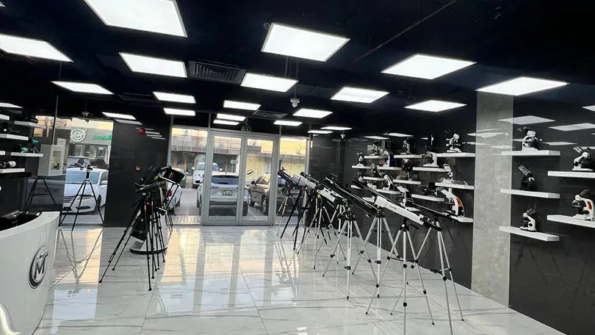
Choosing quality optics is important, but choosing the right supplier matters just as much. For more than 25 years in Iran and 15 years in Dubai, we have helped astronomy enthusiasts, nature observers, photographers, and professionals find reliable optical equipment that meets their needs.
In Iran, we are recognized through Dubaitelescope.com, while in Dubai, we are known through Magic Shop. Our experience allows us to carefully select products from trusted global brands and provide customers with dependable solutions for astronomy and outdoor observation.
In addition to astronomy binoculars, we also offer specialized products such as the Best Binoculars with Rangefinder for users who need precise distance measurement alongside premium optical performance.
Whether you are searching for your first astronomy binocular or upgrading to a more advanced model, our team can help you choose equipment that matches your budget, observing goals, and experience level.
Final Thoughts
Finding the Best Binoculars for Stargazing depends on your observing style, budget, and experience level. If your goal is casual astronomy and portability, models such as the Vortex 10x42 HD Diamondback, Bresser Pirsch 10x42, and Shuntu 10x42 P2 ED provide excellent handheld performance.
If you are serious about exploring deep-sky objects, larger binoculars such as the Celestron SkyMaster Pro 20x80 and SkyMaster 25x70 deliver brighter views dramatically and reveal details that smaller models cannot.
The good news is that there has never been a better time to enter astronomy. Modern optics are brighter, sharper, and more affordable than ever before. By choosing one of the Best Binoculars for Stargazing, you can begin exploring the Moon, star clusters, nebulae, and countless celestial wonders from your own backyard.
FAQ
For handheld use, 10x magnification is often ideal because it balances detail, brightness, and stability.
Yes. They are excellent for wide-field viewing, constellations, star clusters, and general night-sky observation.
Binoculars larger than 15x70 generally benefit from a tripod because higher magnification increases image shake.
Yes. You can see Jupiter's moons, the phases of Venus, and Saturn's bright appearance, although telescopes reveal much more detail.
For deep-sky astronomy, yes. Their larger aperture gathers significantly more light and reveals fainter objects.
Most beginners achieve the best balance of performance and comfort with 10x42 or 10x50 binoculars.

No Comments