

A telescope is your window to the cosmos, but not all telescopes are created equal. The right one can reveal Saturn’s rings, Jupiter’s moons, and distant galaxies in stunning detail, while the wrong choice may leave you frustrated with blurry or dim views.
Key factors like aperture size, optical quality, and mount stability determine what you’ll see and how enjoyable your stargazing experience will be.
Whether you're a beginner or an experienced astronomer, investing in the best telescope for viewing planets and galaxies ensures you get the most out of every night under the stars.
For crisp planetary views and deep-sky observations, focus on these essential features:
- Aperture (Diameter of the Lens/Mirror): A larger aperture (e.g., 6+ inches) gathers more light, making faint galaxies and planetary details clearer.
- Focal Length & Magnification: Longer focal lengths (1000 mm+) provide higher magnification for planets, while shorter ones offer wider views of galaxies.
- Mount Type: A sturdy equatorial or motorized mount keeps celestial objects steady in your eyepiece, even at high magnifications.
- Optical Design: Refractors deliver sharp planet views, reflectors excel for galaxies, and compound telescopes (like Schmidt-Cassegrains) offer versatility.
What You Can See with a Telescope: From Planets to Galaxies
A telescope opens up a whole new world of celestial wonders, allowing you to explore everything from our solar system’s planets to distant galaxies. With even a moderate-sized telescope, you can see:
- The Moon: Craters, mountains, and valleys in stunning detail.
- Planets: Jupiter’s cloud bands and four largest moons, Saturn’s iconic rings, Mars’ polar ice caps, and Venus’ phases.
- Deep-sky objects: Star clusters like the Pleiades, nebulae such as the Orion Nebula, and even bright galaxies like Andromeda (M31).
For more advanced telescopes (8-inch aperture or larger), the views become even more spectacular:
- Fainter galaxies like the Whirlpool Galaxy (M51) and the Sombrero Galaxy (M104).
- Detailed planetary features, including Jupiter’s Great Red Spot and Saturn’s Cassini Division.
- Globular clusters (e.g., Hercules Cluster, M13) are filled with thousands of stars.
- Nebulae with intricate structures, such as the Lagoon Nebula (M8) and the Dumbbell Nebula (M27).
How to Choose a Telescope for Viewing the Night Sky
Choosing the right telescope for exploring the night sky depends on your goals, budget, and experience level. Aperture size (the diameter of the telescope’s lens or mirror) is the most important factor; larger apertures gather more light, making distant stars, planets, and galaxies clearer.
Magnification power matters, but too much zoom without enough aperture leads to blurry images. Also, consider the mount type: a sturdy equatorial mount helps track celestial objects smoothly, while a simpler alt-azimuth mount is easier for beginners.
If you want sharp views of planets like Jupiter and Saturn, a refractor telescope with good optics is ideal. For deep-sky objects like galaxies and nebulae, a reflector telescope with a large aperture works best.
Compound telescopes (like Schmidt-Cassegrains) offer a balance of portability and power. Budget-friendly options exist, but investing in quality optics ensures better performance. Finally, think about portability, will you carry it to dark-sky locations?
Start with a user-friendly model, and as your skills grow, you can upgrade to more advanced telescopes.
Planetary Viewing vs. Galaxy Hunting: What Makes Them Different?
When using the best telescopes for viewing planets and galaxies, it’s important to understand that these two types of celestial observation have different requirements.
Planetary viewing focuses on bright, nearby objects like Jupiter, Saturn, and Mars, which need high magnification and sharp contrast to see details like rings, moons, and surface features.
A telescope with a long focal length and quality optics works best for this. On the other hand, galaxy hunting involves observing faint, distant objects like Andromeda or the Whirlpool Galaxy, which require large aperture sizes to gather as much light as possible.
The best telescopes for viewing planets and galaxies must balance these needs. For planets, refractor or compound telescopes often perform well due to their crisp, high-contrast images. Meanwhile, reflector telescopes with wide apertures are ideal for deep-sky objects like galaxies and nebulae because they capture more light.
Mount stability also plays a key role; planetary observers benefit from precise tracking, while galaxy hunters need sturdy setups to avoid vibrations during long exposures.
Ultimately, choosing the best telescopes for viewing planets and galaxies depends on your priorities. If you love detailed planetary views, prioritize high magnification and clarity. If deep-space exploration excites you, focus on aperture size and light-gathering power.
Some advanced telescopes offer versatility, making them great for both purposes, but understanding these differences ensures you get the best experience from your stargazing sessions!
The Best Time and Conditions to Observe Planets and Galaxies
To get the most out of your Best Telescopes for Viewing Planets and Galaxies, timing and conditions play a huge role. The best time to observe planets is during opposition (when a planet is closest to Earth) or when they are high in the sky at night.
For galaxies, moonless nights with minimal light pollution are ideal, as faint deep-sky objects become more visible. Seasons also matter; winter skies often offer clearer views due to stable atmospheric conditions.
Optimal conditions include dark, clear skies away from city lights. Use apps or star maps to check weather forecasts and light pollution levels before planning your session. A stable mount on your Best Telescopes for Viewing Planets and Galaxies will help reduce vibrations, ensuring sharper images.
Additionally, allow your telescope to acclimate to outdoor temperatures for 30+ minutes to prevent thermal distortions.
For the best experience, patience and preparation are key. Planets like Jupiter and Saturn are brightest around midnight, while galaxies like Andromeda are best viewed in autumn. Investing in a quality filter can enhance details on planets and reduce glare.
Whether you're a beginner or an expert, using the Best Telescopes for Viewing Planets and Galaxies under the right conditions will make your stargazing unforgettable.
Which Planets Look Best Through a Telescope?
When using the best telescopes for viewing planets and galaxies, some planets stand out more than others due to their size, brightness, and atmospheric features. Jupiter is a favorite, with its colorful cloud bands and four largest moons (Io, Europa, Ganymede, and Callisto) visible.
Saturn, with its iconic rings, offers one of the most breathtaking sights, especially in medium to high-powered telescopes. Mars reveals surface details like polar ice caps and dark markings during its closest approach to Earth.
Venus shows phases like the Moon, while Uranus and Neptune appear as small blue-green disks but require stronger magnification.
For the best experience, choose telescopes with a good aperture (at least 70mm for refractors or 130mm for reflectors) to capture fine details. The best telescopes for viewing planets and galaxies provide sharp, high-contrast images, especially when paired with quality eyepieces and filters.
Planets like Jupiter and Saturn are bright and easy to find, making them ideal for beginners, while Uranus and Neptune challenge more experienced observers. Whether you're a casual stargazer or a dedicated astronomer, the right telescope will bring these distant worlds into stunning clarity.
The Best Telescopes for Viewing Planets and Galaxies
Finding the best telescopes for viewing planets and galaxies can transform your stargazing experience. Below are five top-rated options that deliver exceptional clarity, whether you're observing Jupiter's cloud bands or distant galaxies.
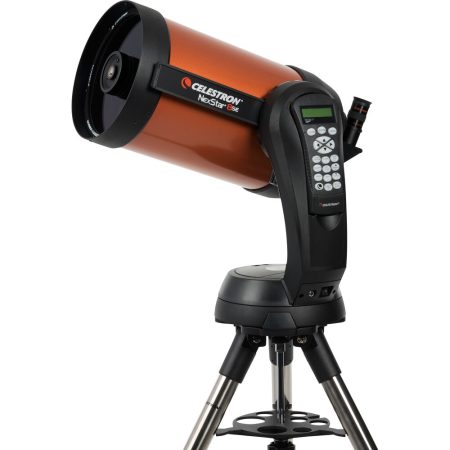
1. Celestron NexStar 8SE (Best Overall)
Why it's great:
- The 8-inch aperture provides bright, detailed views of planets and deep-sky objects
- Computerized GoTo mount automatically locates 40,000+ celestial objects
- Easy to use, perfect for beginners and intermediate astronomers
Best for: Those who want premium performance without extreme complexity
2. Orion SkyQuest XT8 (Best Budget Dobsonian)
Why it's great:
- The large 8-inch mirror offers excellent light-gathering for galaxies and nebulae.
- Simple, sturdy Dobsonian mount – no setup frustration
- Great value compared to computerized telescopes
Best for: Beginners who want big views without a big price tag
3. Sky-Watcher Evostar 90 (Best Refractor for Planets)
Why it's great:
- Crisp, high-contrast views of Jupiter, Saturn, and the Moon
- Lightweight and portable, ideal for travel or quick setup
- Low maintenance (no mirrors to collimate)
Best for: Planetary observers who prioritize sharp, color-accurate images
4. Meade LX90-ACF (Best for Advanced Users)
Why it's great:
- Advanced Coma-Free (ACF) optics for distortion-free views
- GPS alignment for precise tracking of planets and galaxies
- Durable construction for long-term use
Best for: Serious astronomers who want professional-grade performance
5. Zhumell Z130 (Best Portable & Affordable)
Why it's great:
- Compact yet powerful 5-inch reflector design
- Wide-field views are great for both planets and star clusters
- Includes quality eyepieces for immediate use
Best for: Beginners and travelers who need a capable, easy-to-carry scope
Can You See Other Galaxies with an Amateur Telescope?
Yes, you can see other galaxies with an amateur telescope, but the experience depends on your equipment and viewing conditions.
The best telescopes for viewing planets and galaxies (those with at least a 6-inch aperture) can reveal distant galaxies like Andromeda (M31), Triangulum (M33), and the Whirlpool Galaxy (M51) as faint, fuzzy patches.
However, unlike planets, galaxies won’t appear highly detailed—instead, you’ll see their core brightness and general shape. For the best results, use a telescope with good light-gathering ability and observe from a dark-sky location away from city lights.
If you’re using one of the best telescopes for viewing planets and galaxies, such as an 8-inch Dobsonian or a high-quality refractor, you’ll have a better chance of spotting these deep-sky objects. Galaxies are much fainter than planets, so patience and practice are key.
Start with brighter galaxies like Andromeda, which is visible even with binoculars, and gradually explore deeper space as you gain experience. A stable mount and low-power eyepieces will help maximize your viewing success.
What Telescope Specs Matter Most for Planet and Galaxy Viewing?
When choosing the best telescopes for viewing planets and galaxies, the most critical factor is aperture size, the diameter of the telescope’s main lens or mirror. A larger aperture (e.g., 6 inches or more) collects more light, allowing you to see fainter galaxies and sharper planetary details.
For example, Jupiter’s cloud bands or Saturn’s rings become much clearer with a bigger aperture. Another key feature is focal length, which determines magnification power.
A longer focal length (1000 mm+) provides higher magnification, ideal for planets, while a shorter one offers wider views for galaxies.
Equally important is the mount type; a sturdy equatorial or computerized GoTo mount helps track celestial objects smoothly, essential for long observation sessions.
Optical quality also plays a big role: refractor telescopes deliver crisp, high-contrast views of planets, while reflectors excel at deep-sky galaxy viewing. If you want versatility, compound telescopes (like Schmidt-Cassegrains) offer a great balance.
Remember, the best telescopes for viewing planets and galaxies combine a large aperture, stable mount, and quality optics for the most breathtaking stargazing experience.
Beginner vs. Advanced Telescopes for Deep Sky Observing
When choosing between beginner and advanced telescopes for deep sky observing, the key differences come down to ease of use, optical performance, and budget.
Beginner telescopes are designed for simplicity, often featuring smaller apertures (70mm–130mm) and lightweight mounts. They are great for learning the basics of stargazing and can still provide impressive views of the Moon, Jupiter’s moons, and Saturn’s rings.
However, they may struggle with faint galaxies and nebulae due to limited light-gathering power. On the other hand, advanced telescopes (150mm aperture and above) offer superior resolution and brightness, making them ideal for spotting distant galaxies, star clusters, and planetary details.
These models often include computerized tracking (GoTo mounts) and high-quality optics, but they require more expertise to operate and maintain.
If you’re looking for the Best Telescopes for Viewing Planets and Galaxies, here’s how to pick based on experience level:
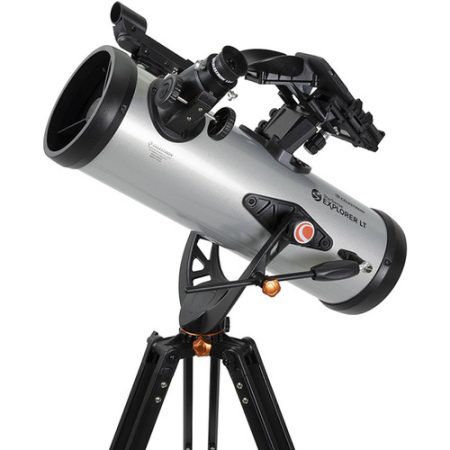
- For Beginners: Models like the Celestron AstroMaster 130EQ or Orion StarBlast 4.5 offer a balance of affordability and performance.
- For Intermediate Users: The Sky-Watcher Classic 150P Dobsonian provides a larger aperture without complexity.
- For Advanced Astronomers: High-end options like the Celestron NexStar 8SE or Meade LX90-ACF deliver professional-grade views with advanced tracking.
The Best Telescopes for Viewing Planets and Galaxies depend on your skill level and observing goals, whether you’re just starting or ready to explore deep-space wonders in stunning detail.
FAQ
1. Can I See Galaxies with a Budget Telescope?
Yes, but with limitations. Budget telescopes (under $200) can show bright galaxies like Andromeda (M31), but with faint, fuzzy details.
2. What’s the Best Telescope for Viewing Saturn’s Rings?
A mid-range refractor or reflector works well.
3. Can I Use a Telescope for Both Planets and Galaxies?
Yes! But the best telescope depends on your priorities:
- For planets (Jupiter, Saturn, Mars): Higher magnification + good contrast
- For galaxies & nebulae: Larger aperture (8" or more) to gather faint light.
4. How Important Is Aperture Size?
Extremely important! Aperture determines:
- Brightness (more light = better galaxy views)
- Detail (larger aperture resolves finer features)
Minimum recommendations:
- Planets: 70 mm+ (refractor) or 114 mm+ (reflector)
- Galaxies: 150mm (6") or larger
No Comments