

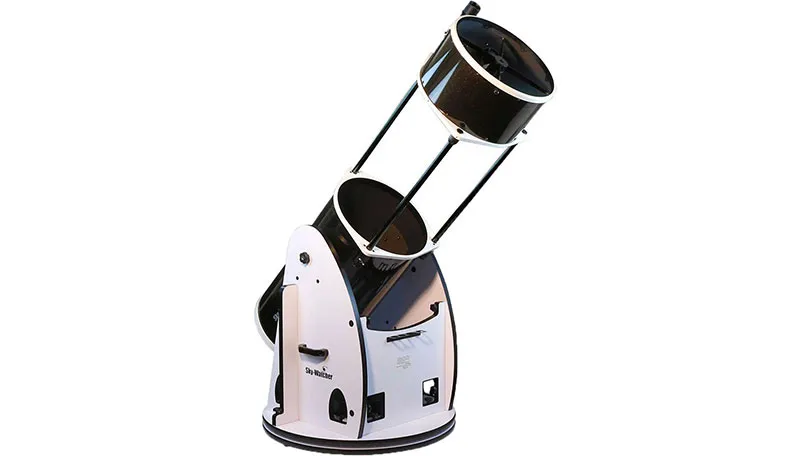
There is something unforgettable about standing beneath a clear night sky and realizing that the faint glow above you is not just a pattern of distant lights, but a universe filled with craters, planets, star clusters, nebulae, and galaxies waiting to be explored. Dobsonian Telescopes give beginners a remarkably direct way to begin that journey.
With their large light-gathering mirrors, stable bases, and easy point-and-view design, they make it possible to enjoy bright views of the Moon, detailed planetary observing, and impressive deep-sky objects without the complexity or high cost often associated with advanced telescope systems.
The Dobsonian design became popular in the 1960s through American amateur astronomer John Dobson, who helped make large-aperture telescopes more affordable and accessible to everyday skywatchers.
By combining a Newtonian reflector tube with a simple, low-cost alt-azimuth wooden mount, he created a practical telescope that could collect plenty of light while remaining easy to use and transport. For a broader understanding of how different designs compare, you can also explore Types of Telescopes to see where Dobsonian models fit within the main telescope categories.
In this article, we will explain what a Dobsonian telescope is, how it works, why it remains so popular, and which models may be worth considering for your first astronomy adventure.
What is a Dobsonian Telescope?
A Dobsonian telescope is a type of Newtonian reflector telescope mounted on a simple alt-azimuth base. It was popularized by John Dobson in the 1960s, who wanted to make astronomy more accessible to everyone. Instead of using complex equatorial mounts, the Dobsonian design focuses on simplicity and stability. You can explore Dobsonian Telescopes for more models.
The key idea is straightforward: a large optical tube is placed on a rotating wooden or composite base that allows smooth movement up, down, left, and right. This makes it easy to point the telescope at any part of the sky without technical difficulty.
Inside the telescope, a primary mirror collects light from distant objects and reflects it to a secondary mirror, which then directs the image to the eyepiece. This simple but effective optical system allows users to observe faint deep-sky objects such as galaxies, nebulae, and star clusters.
How It Works in Simple Terms
The working principle of a Dobsonian telescope can be broken down into three simple steps:
Light Collection
In a Dobsonian telescope, the process begins with the primary mirror, which is the largest and most important optical component. This mirror is located at the bottom of the telescope tube and is designed to collect as much incoming light as possible from distant objects in space.
Because stars, galaxies, and nebulae are extremely far away, their light is very faint by the time it reaches Earth. The large surface area of the primary mirror allows the telescope to gather more of this weak light compared to smaller optical systems. As a result, the telescope can reveal objects that are not visible to the naked eye, making faint deep-sky objects appear brighter and more detailed.
Reflection
After the primary mirror collects the light, it reflects it toward a smaller secondary mirror placed inside the telescope tube. This secondary mirror is positioned at an angle so that it can redirect the incoming light without blocking too much of it. The reflection process is crucial because it changes the direction of the light path, allowing the image to be moved from the bottom of the telescope tube to the side where the eyepiece is located.
This clever design keeps the structure simple while still maintaining high optical performance. Even though the system is mechanically simple, the precision of the mirror alignment ensures that the image remains sharp and clear.
Viewing
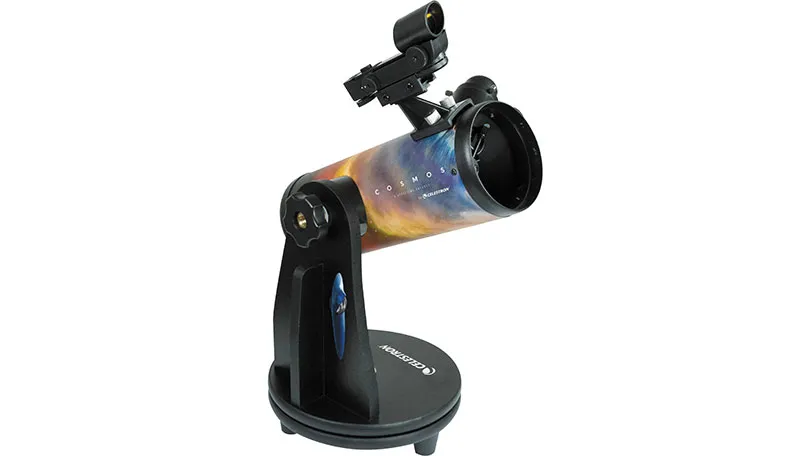
Once the light reaches the secondary mirror, it is directed into the eyepiece, which is the part of the telescope where you place your eye to observe the sky. The eyepiece magnifies the focused light, transforming it into a detailed image that the human eye can see clearly.
By changing eyepieces with different focal lengths, users can adjust the level of magnification depending on what they want to observe, whether it is a wide view of star clusters or a closer look at planets like Jupiter and Saturn. This step is where all the previous light-gathering and reflection processes come together, allowing the observer to experience the final, magnified view of the universe.
Key Components of a Dobsonian Telescope
| Component | Description |
|---|---|
| Primary Mirror (Main Mirror) | The largest optical part of the telescope. It collects light from distant celestial objects and reflects it to the secondary mirror. Its size determines how bright and detailed the image will be. |
| Secondary Mirror | A smaller angled mirror inside the tube that redirects the collected light from the primary mirror toward the eyepiece for viewing. |
| Optical Tube (OTA) | The main cylindrical structure that holds and aligns all optical components. It also protects the mirrors from dust and physical damage. |
| Eyepiece | The lens you look through. It magnifies the image formed by the mirrors and determines the level of zoom and field of view. |
| Alt-Azimuth Mount (Dobsonian Base) | A simple and stable base that allows smooth movement in two directions: up-down (altitude) and left-right (azimuth). It makes the telescope very easy to operate. |
| Focuser | A mechanical adjustment tool that moves the eyepiece slightly to sharpen and clarify the image for better viewing. |
| Finder Scope / Red Dot Finder | A small aiming device used to help locate celestial objects in the sky before observing them through the main telescope. |
Why These Telescopes Are So Popular
The popularity of Dobsonian designs comes from their balance between performance and simplicity. Many beginners choose them because they offer large aperture sizes at a relatively low cost compared to other telescope types.
Another important reason is ease of use. There is no complicated setup, no polar alignment, and no heavy electronic systems required. You simply place the telescope on a flat surface, point it at the sky, and start observing.
This is one of the main reasons why Dobsonian Telescopes have become a standard recommendation for amateur astronomers who want maximum visual performance without technical complexity.
Our Experience and Product
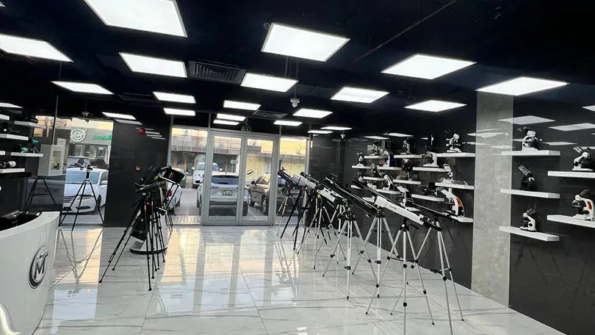
With over 25 years of experience in Iran and 15 years of active service in Dubai, we have worked closely with astronomy enthusiasts who want reliable and high-quality optical instruments. In Iran, we operate under the name dubaitelescope.com, and in Dubai, we are known as Magic Shop.
Over the years, we have seen changes in the market. Well-known brands like Orion and Meade, which were once highly popular among beginners and professionals, have gradually been discontinued in many product lines. This has created a gap in the market, especially for users looking for reliable entry-level and advanced telescopes.
Instead of leaving customers without options, we focus on offering high-quality alternatives that meet or exceed expectations. Our goal is simple: help you find the right telescope for your needs without confusion or unnecessary complexity. Whether you are replacing an old model or starting fresh, we ensure you have access to trusted optical performance and durable designs.
Recommended Dobsonian Telescopes
You can explore more models directly from our collection here: Dobsonian Telescopes.
1. Celestron FirstScope 76mm Reflector Telescope
This is an excellent entry-level telescope for beginners and children. It is compact, lightweight, and very easy to use. Despite its small size, it provides clear views of the Moon’s craters and bright planets like Jupiter and Saturn. It is ideal for those who are just starting their astronomy journey.
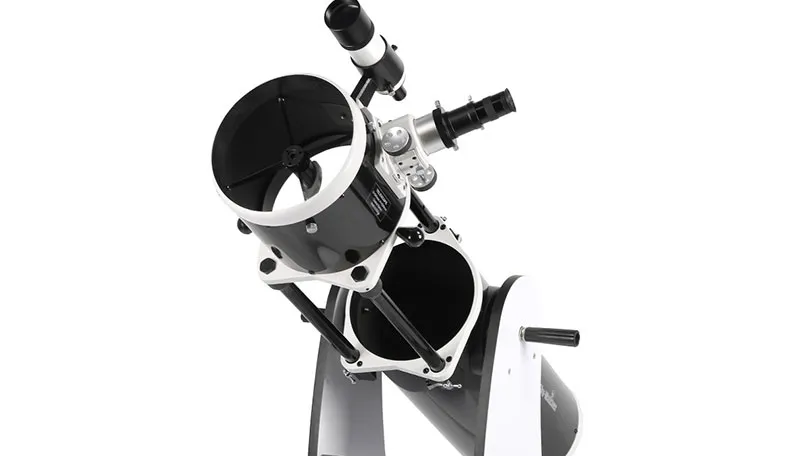
2. Sky-Watcher 12 Collapsible Dobsonian Telescope
This model is designed for serious sky watchers who want deep-sky performance. With its large 12-inch aperture, it gathers a significant amount of light, allowing you to see faint galaxies, nebulae, and star clusters with impressive detail. The collapsible design also makes it easier to transport compared to traditional large telescopes.
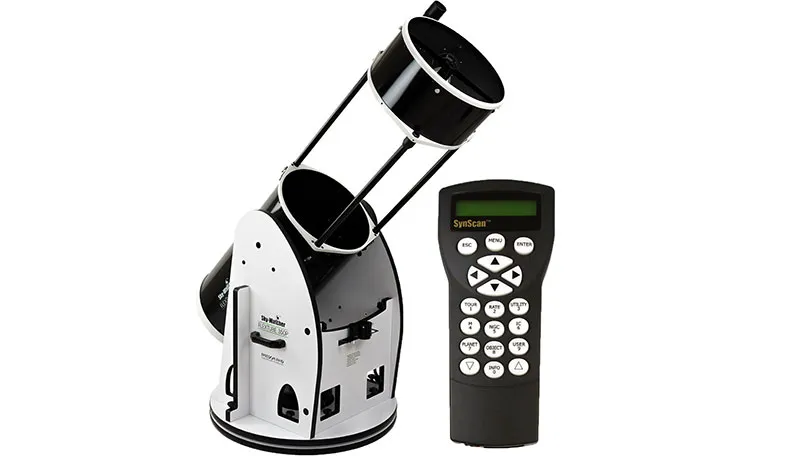
3. Sky-Watcher 350P FlexTube 14-inch Dobsonian Telescope
This is a powerful, advanced telescope for experienced users. The 14-inch aperture provides outstanding light-gathering capability, making it ideal for observing deep-space objects in high detail. The FlexTube design allows for easier storage and setup without sacrificing optical performance.
Each of these models reflects the strength and reliability that modern Dobsonian Telescopes can offer, whether you are a beginner or an advanced observer.
Why Choosing the Right Telescope Matters
Selecting the right telescope depends on your experience level, budget, and observing goals. Beginners should start with smaller apertures that are easy to handle, while advanced users may prefer larger models for deep-sky observation. You can explore a wide range of options in our collection of Telescopes to find the model that best fits your needs.
A good telescope should not only provide clear images but also be easy to use consistently. Many users lose interest in astronomy because of complicated equipment, which is why simplicity plays a major role in long-term enjoyment.
Conclusion
Dobsonian Telescopes are one of the most practical and powerful options for anyone interested in exploring the night sky. Their simple design, large aperture, and ease of use make them ideal for both beginners and experienced astronomers. Whether you are observing the Moon, planets, or distant galaxies, these telescopes provide an excellent balance between performance and affordability.
If you are looking for a reliable way to start or upgrade your astronomy experience, a Dobsonian telescope is one of the best choices you can make.
FAQ
Yes, they are very beginner-friendly due to their simple design and easy setup.
Yes, you can clearly observe planets like Jupiter, Saturn, and Mars depending on aperture size.
No complex alignment is needed; they are manually operated and very easy to use.
They use a simple mount and large mirrors, offering strong performance at a lower cost compared to many other telescope types.

No Comments