

Description
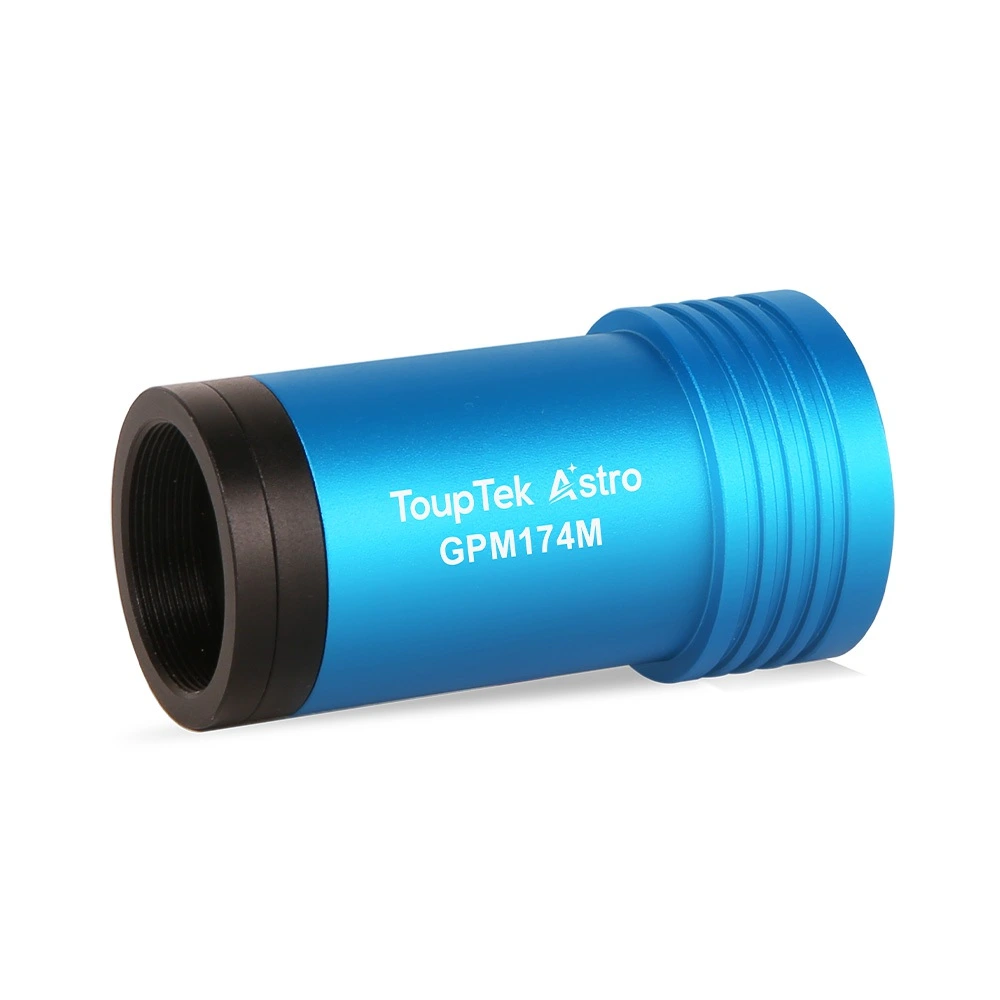
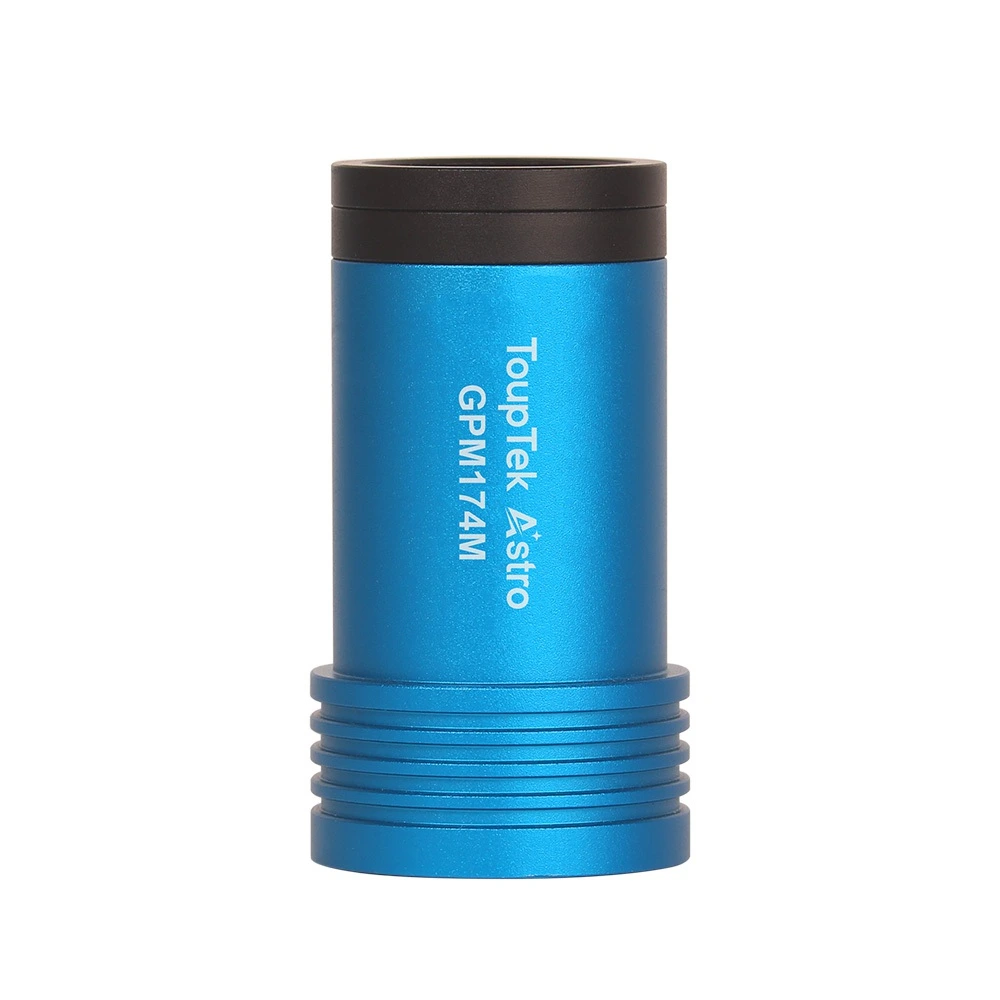
GPM174M Guide Camera
GPM174M camera possesses an exceptionally strong capability to capture faint signal (with a high QE value at 500nm). It also has a large sensor format, high full well capacity, high sensitivity, and low readout noise among other advantages. This results in outstanding performance in planetary photography, as well as in solar and lunar photography.
Sony IMX249 Sensitivity
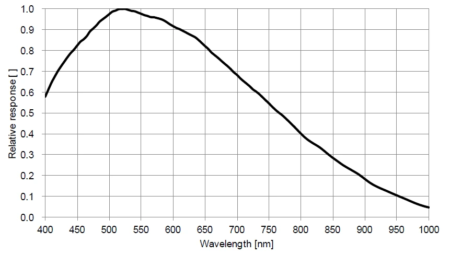
The sensor G Sensitivity of GPM174M is 825mv with 1/30s. Its spectral sensitivity is shown inFigure 1. The sensitivity is measured with a excitation LED light source with a color temperature of 3200 K, an IR cut filter CM500(t =1.0 mm) is placed between the LED light source and the sensor receiving surface to irradiate substantially parallel light.
12bit ADC and ROI
Table 2 shows the frame rate of GPM174M in 12/8bit mode, USB2.0 data transfer interface at different resolutions:
| Bit & Interface
FPS Resolution |
12bit ADC | 8bit ADC |
| USB2.0 | USB 2.0 | |
| 1920*1200 | 8.5 | 16.2 |
Table 2 GPM174M Frame Rate at Different Resolution/Data Bit/Data Transfer (USB2.0)
Frame Buffer
GPM174M camera has a built-in frame buffer, which helps maintain the stability of data transmission, and effectively reduce the amp-glow caused because image data can be temporarily buffered without being sent hastily to the receiver. Ensure that each camera can still achieve its maximum frame rate when multiple cameras are operating simultaneously.
Binning
GPM174M supports software to digital binning from 11 to 88 in either stacking or averaging method.
Power and Cooling System for Precise Temperature Regulation
The camera operates via a USB 2.0 interface. Upon establishing a connection with the host system using the USB 2.0 cable, the device is primed for operation.
Camera Performance Analysis
Camera performance can be evaluated with e-/ADU, Read Noise, Full Well and Dynamic Range.
e-/ADU: The sensors found in cameras used for vision applications have pixels that convert incoming photons into electrons. Gain on a CCD /CMOS camera represents the conversion factor from electrons (e-) into digital counts, or Analog-Digital Units (ADUs). Gain is expressed as the number of electrons that get converted into a digital number, or electrons per ADU (e-/ADU).
Read Noise: Read Noise is the most important reference to measure the performance of a camera. Lower read noise usually means better SNR and better quality of image. Read Noise is created within the camera electronics during the readout process as the electrons are subjected to the analog to digital conversion, amplification and processing steps that enable an image to be produced.
Full Well: The electrons are held in each pixel and are converted into electrical charge which can be measured to show the amount of light that has fallen on each pixel. The maximum electrical charge possible is termed "full well capacity". Under the same conditions such as noise and A/D converter quality, the greater full well capacity a sensor has, the wider dynamic range the sensor has. As there is a limit to the depth to which pixels can be made, the full well capacity is often proportional to the frontal area of the light gathering element of the pixel.
Dynamic Range is the ratio between the maximum output signal level and the noise floor at minimum signal amplification (noise floor which is the RMS (root mean square) noise level in a black image). The noise floor of the camera contains sensor readout noise, camera processing noise and the dark current shot noise. Dynamic range represents the camera’s ability to display/reproduce the brightest and darkest portions of the image and how many variations in between. This is technically intra-scene dynamic range. Within one image there may be a portion that is in complete black and a portion that is completely saturated.
For the GPM series camera, the Gain Value is in xxx% mode. Here xxx is used as the x axis (Gain Value) for the description of the camera performance

Read noise is the most important reference to measure the performance of a camera. Lower read noise usually means better SNR and better quality of image.
Camera setting used for performance analysis is shown below:
- Full resolution
- RAW 12-bit mode
Figure 3 shows the curves of the camera analysis data in Table 3
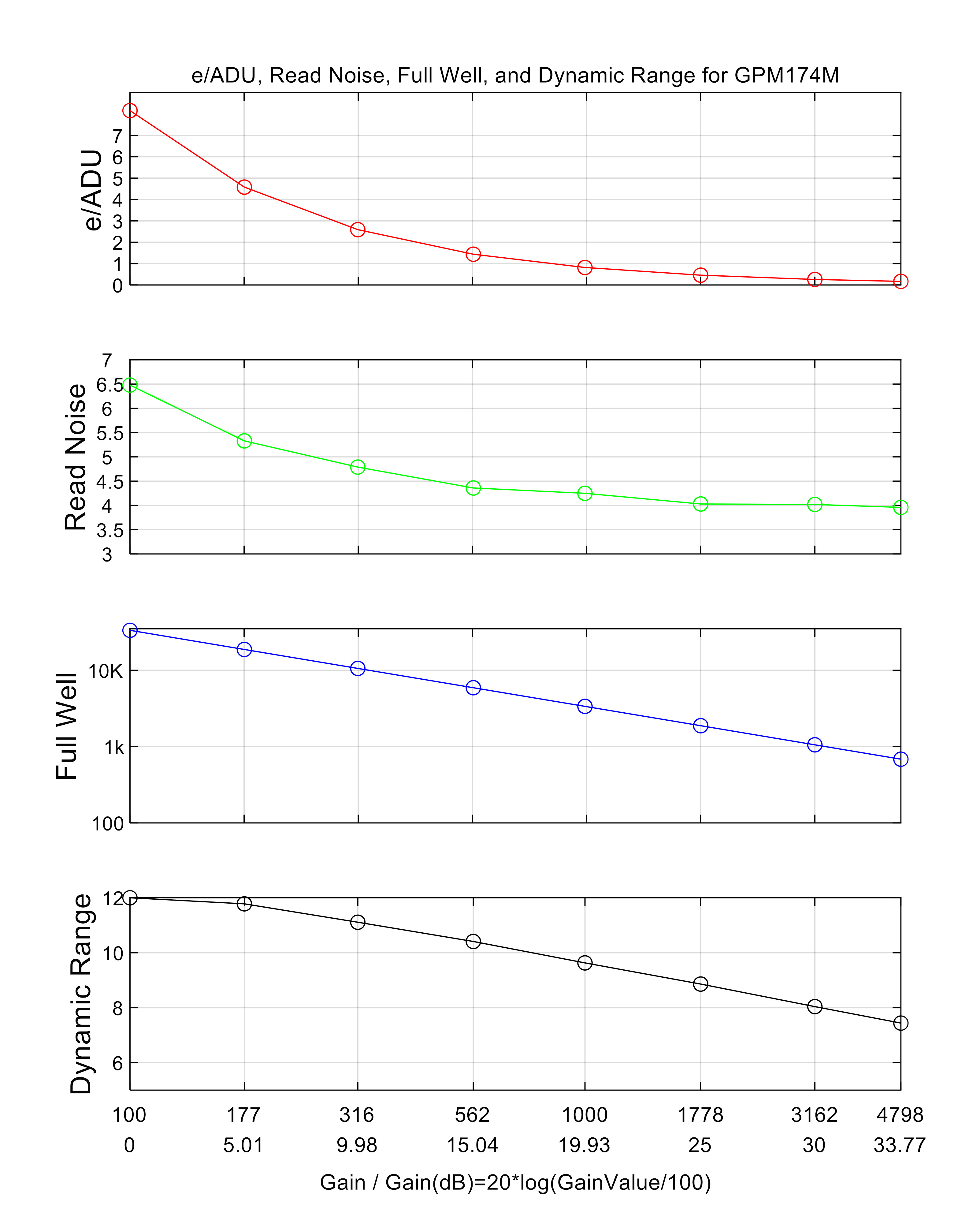 Figure 2 e/ADU, Read Noise, Full Well and Dynamic Range for GPM174M
The camera analysis data is shown in Table 3:
| Sensor Analysis Data | ||||||||
| Gain Value | 100 | 177 | 316 | 562 | 1000 | 1778 | 3162 | 4798 |
| Rel Gain (dB) | 0.00 | 5.01 | 9.98 | 15.04 | 19.93 | 25.00 | 30.00 | 33.77 |
| e-/ADU | 8.16 | 4.58 | 2.59 | 1.44 | 0.82 | 0.46 | 0.26 | 0.17 |
| Read Noise (e-) | 6.48 | 5.33 | 4.79 | 4.36 | 4.25 | 4.03 | 4.02 | 3.96 |
| Full Well (ke-) | 33.43 | 18.77 | 10.59 | 5.92 | 3.37 | 1.88 | 1.06 | 0.68 |
| Dynamic Range (stop) | 12 | 11.78 | 11.11 | 10.41 | 9.63 | 8.86 | 8.04 | 7.44 |
Table 3 Camera Analysis Data
Product Package and Connections
Packing List
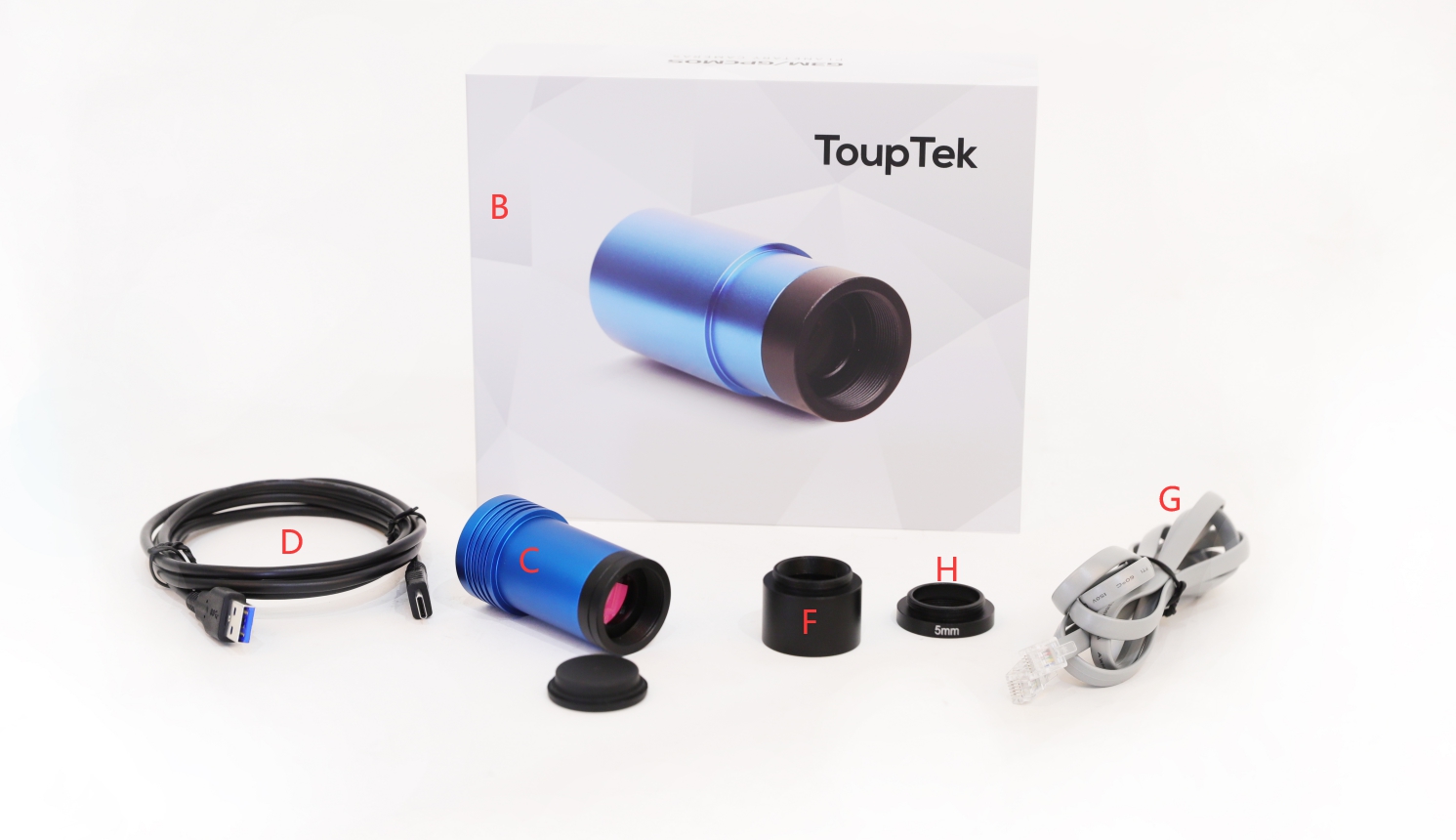 Figure 4 Packing Information of GPM174M
| Standard Camera Packing List | |
| A | Carton L:50cm W:30cm H:30cm (20pcs, 12~17Kg/ carton, 0.045m3), not shown in the photo |
| B | Gift box L:15cm W:15cm H:10cm (0.8~1.0Kg/ box) |
| C | One GPM series camera with a Type-C-Mount(inner) |
| D | High-speed USB3.0 A male to C male connectors cable /2.0m |
| F | 1.25-inch nosepiece |
| G | ST4 guide cable /2.0m |
| H | CS-mount ring |
Camera Dimension and Its Mount
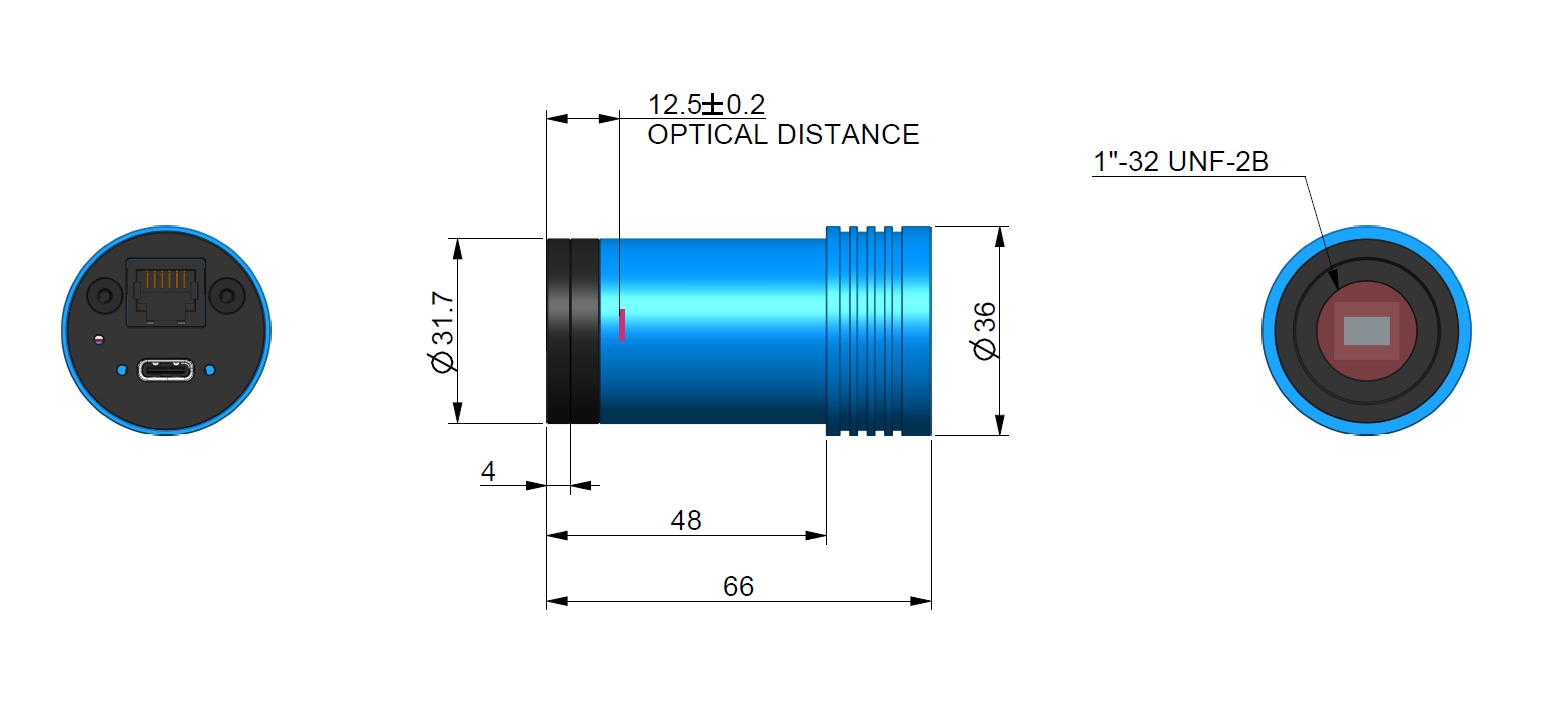 Figure 5 Dimension and Mount of GPM174M and 1.25’’ extender
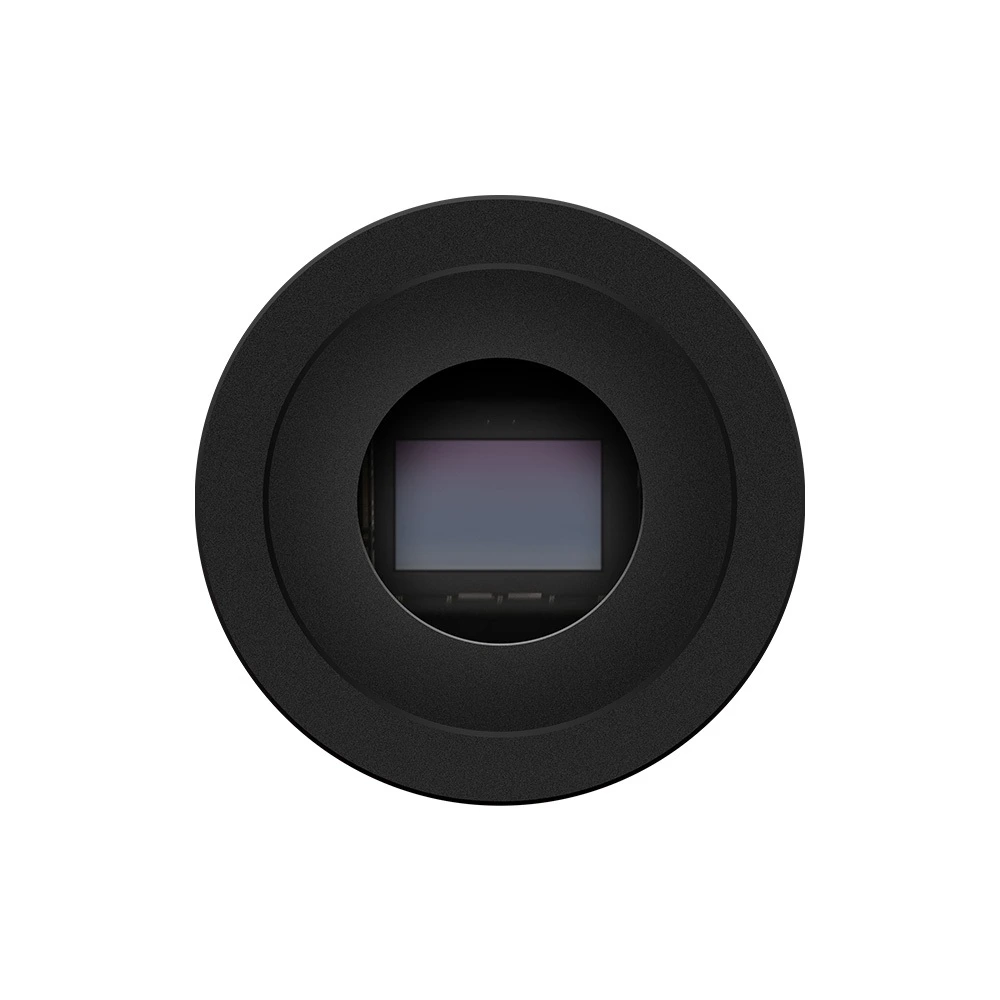
The GPM series body, made from tough, alloy, ensures a heavy duty, workhorse solution. The camera is designed with a high-quality IR-CUT or AR to protect the camera sensor and block the IR elimination the reflection light. No moving parts included. These measures ensure a rugged, robust solution with an increased lifespan when compared to other industrial camera solutions.
| Item | Specification |
| 1 | Directly with 1.25’’ telescope; |
| 2 | GPM + 1.25’’ extender with 1.25’’ telescope |
| 3 | Standard C adapter connects to industrial C-mount adapter lens. |
Camera Outline and Interface
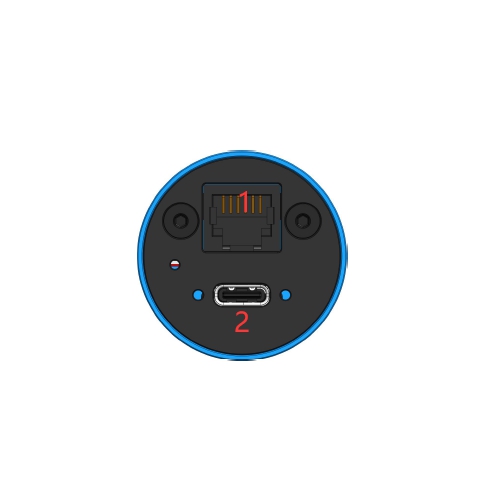
| Item | Specification |
| 1 | A built-in ST4 auto guider port for the easy connection of the auto guider. |
| 2 | USB2.0 interface, Type C |
Camera Specifications
| Sensor | Sony IMX 249 back illuminated sensor | |
| Diagonal | 13.31 mm | |
| Image Resolution | 2.3 mega pixels (1920*1200) | |
| Pixel Size | 5.86mm ´ 5.86mm | |
| Image Area | 11.3mm ´ 7.03mm | |
| Max FPS at Resolution | 12bit | 8bit |
| 8.5 FPS @ 1920*1200 | 16.2 FPS @ 1920*1200 | |
| Shutter Type | Global shutter | |
| Exposure Time | 0.42ms – 1000s | |
| Gain | 1x – 480x | |
| SNR | 45 dB | |
| Dynamic Range | 72.0 dB | |
| Read Noise | 6.48 – 3.96 e- | |
| QE Peak | >89% | |
| Full Well | 33.4ke- | |
| ADC | 12bit | |
| Frame Buffer | Built-in | |
| Connection Port | USB2.0 Type C | |
| Camera Adaptor | Standard 1.25’’ for telescope connection, and standard C adapter for industrial lens | |
| Protect Windows | IR-cut filter/AR-window | |
| Spectral Range | 380-1100nm (with AR protect window) | |
| Capture/Control SDK | Windows/Linux/macOS/Android Multiple Platform SDK(Native C/C++, C#/VB.NET, Python, Java, DirectShow, Twain, etc.); | |
| Recording System | Still picture and movie | |
| Camera Dimensions | Diameter 37mm * height 72.4mm | |
| Camera Weight | 70 gram | |
| Back Focus Distance | Back Focus Distance is 8.5mm,17.5mm with C adapter, 12.5 with CS adapter | |
| Cooling: | Passive cooling | |
| Supported OS | Microsoft® Windows® XP / Vista / 7 / 8 /10 (32 & 64 bit)
OSx(Mac OS X) Linux |
|
Reviews
0.0 Average Rating Rated (0 Reviews)