

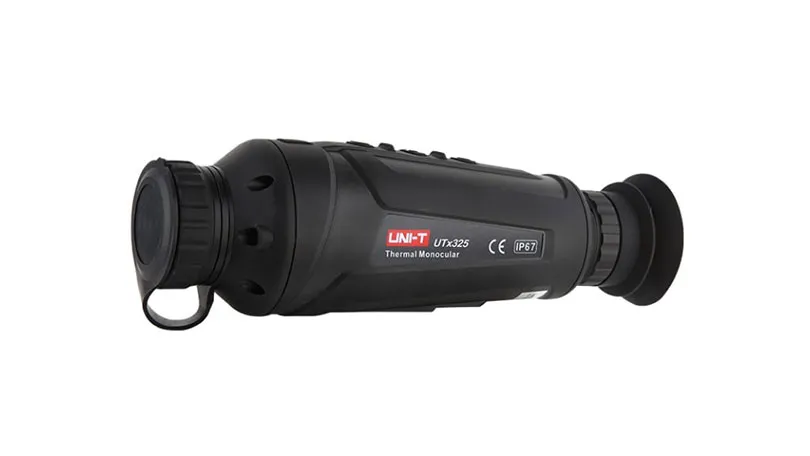
Monoculars may look modern and compact today, but their idea goes back to the early days of handheld optical tools, when travelers, sailors, hunters, and explorers needed a simple way to bring distant views closer. Unlike binoculars or large spotting scopes, a monocular was designed to be light, quick to use, and easy to carry, making it a practical companion for outdoor observation.
Today, this small optical device has become a smart choice for anyone who wants clear long-distance viewing without extra weight.
Choosing the right monocular can make wildlife watching, travel, marine viewing, sports events, and landscape observation sharper and more enjoyable. A good model should feel comfortable in your hand, focus easily, gather enough light, and stay reliable in real outdoor conditions.
In this guide, you will get familiar with monoculars and learn what to look for when choosing the best monocular for long-distance viewing so that you can make a smarter and more confident choice.
Why Choose a Monocular for Long-Distance Viewing?
A monocular provides magnified vision through a single optical tube. It is usually lighter, smaller, and easier to carry than binoculars. For many users, that is the main reason to buy one. You can keep it in a pocket, backpack, glove box, travel bag, or boat kit and use it quickly when you need a closer view.
If you are still comparing both options, this Monocular vs Binocular guide can help you understand which one fits your viewing needs better.
For long-distance viewing, the main things to consider are magnification, lens size, optical coating, prism quality, focus system, weather protection, and weight. Higher magnification brings distant subjects closer, but it can also make the image harder to keep steady.
A larger objective lens gathers more light, but it can make the unit heavier. That is why the best choice is not always the strongest magnification. The right choice depends on how and where you plan to use it.
If you want a simple travel optic, an 8x or 10x model is often enough. If you want more reach for mountains, coastline, hunting, or open desert views, a 12x, 13x, 15x, or variable zoom model may be better. For very high magnification, using a tripod or a stable surface is a smart idea.
How to Choose the Best Monocular for Long Distance
Before looking at the product list, it helps to know what the numbers mean. A model listed as 10x42 has 10x magnification and a 42mm objective lens. The first number shows how much closer the object appears. The second number shows the size of the front lens.
A larger lens can gather more light and produce a brighter image, especially in early morning, sunset, cloudy weather, or shaded areas. Here are the most important buying points:
- Magnification: For handheld use, 8x to 10x is comfortable for most buyers. For a stronger reach, 12x to 15x is useful, but the handshake becomes more visible. A tripod helps a lot with powerful models.
- Objective lens size: A 25mm lens is very portable, but not as bright as a 42mm or 50mm lens. For long-distance outdoor use, 42mm and 50mm lenses are often better.
- Glass and coatings: Look for fully multi-coated lenses, BaK-4 prisms, ED glass, or phase-corrected prisms when possible. These features can improve brightness, color, contrast, and sharpness.
- Weather protection: If you use the optic outdoors, waterproofing and fog-proofing matter. Rain, humidity, dust, and temperature changes can affect cheap optics quickly.
- Focus comfort: A smooth focus wheel helps you move from near to far subjects easily. One-handed focus is also useful when hiking, traveling, or watching moving wildlife.
- Size and weight: A powerful monocular is useful only if you are willing to carry it. For daily use, balance is important.
A long-range monocular should not only bring the subject closer. It should also keep the image clear, steady, and bright enough to use comfortably.
Best Monoculars for Long-Distance Viewing
The best monoculars for long-distance viewing are:
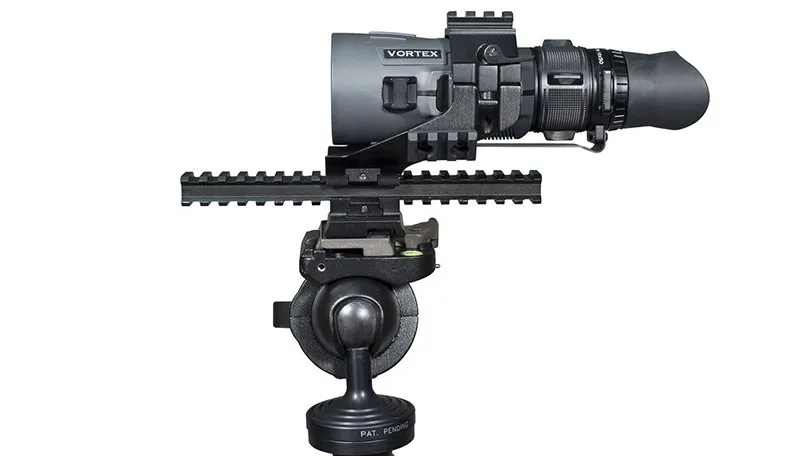
1. Vortex Recon R/T 15x50
The Vortex Recon R/T 15x50 is one of the strongest choices for serious long-distance viewing. It is designed for field observation, hunting, surveillance, and range estimation. Its 15x magnification gives more reach than common 8x and 10x monoculars, while the 50mm objective lens helps gather more light for distant subjects.
This model is not just about power. It also includes a ranging reticle, which is useful for estimating distance when you know the size of the target. That makes it more advanced than a simple travel monocular. The optical system is built for clarity, contrast, and outdoor durability. It is also waterproof, fogproof, shockproof, rubber-armored, and tripod-adaptable.
This is a strong choice if you need detail at a distance and do not mind carrying a slightly larger monocular. For buyers who want the best monocular for long distances with tactical-style features, this is one of the most capable options on the market.
- Best for: hunting, range estimation, open landscapes, field work
- Main strength: 15x power with professional outdoor build
- Possible drawback: higher price and less pocket-friendly size
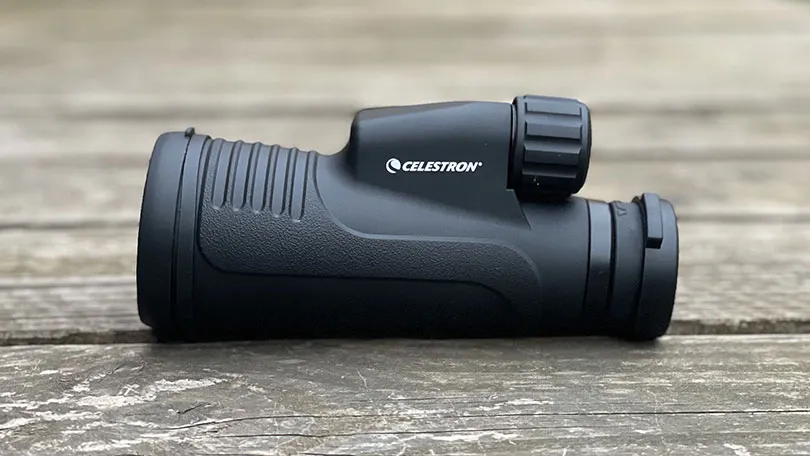
2. Celestron Outland X 10-30x50
The Celestron Outland X 10-30x50 is a smart pick for users who want flexible magnification. At 10x, you can scan wider views. At 30x, you can zoom closer to faraway subjects. This makes it feel like a small spotting scope in monocular form.
Its 50mm objective lens helps with brightness, and the BaK-4 prism with multi-coated optics supports better contrast and resolution. The model is tripod adaptable and often comes with a small table-top tripod, which is very useful at higher zoom settings. At 20x or 30x, handheld viewing can become shaky, so support is recommended.
This is a good option for wildlife watching, coastline viewing, mountain views, and outdoor observation from a fixed place. It is not the smallest model, but the extra size gives you much more viewing flexibility.
- Best for: users who want a strong zoom
- Main strength: 10-30x magnification range
- Possible drawback: best used with steady hands or tripod support
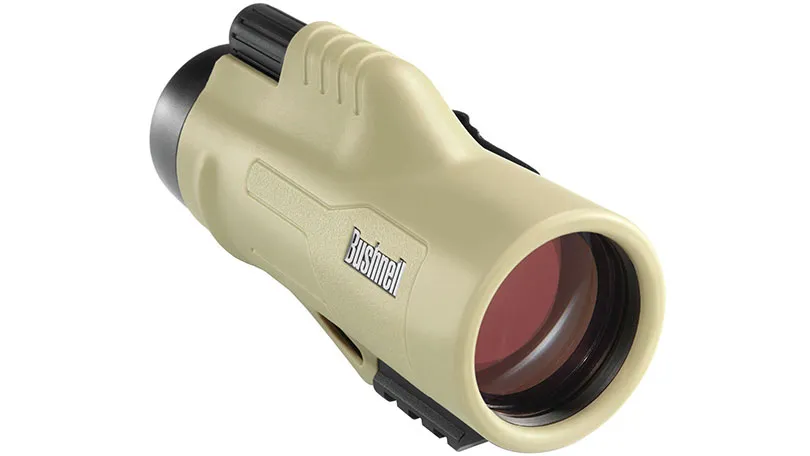
3. Bushnell Legend Ultra HD 10x42
The Bushnell Legend Ultra HD 10x42 is a very practical outdoor monocular for users who want sharp optics in a rugged body. Its 10x magnification is strong enough for distance but still manageable for handheld use. The 42mm lens gives a good balance between brightness and portability.
This model is well known for ED Prime glass, fully multi-coated optics, BaK-4 prism quality, and weather protection. It is suitable for hiking, wildlife viewing, hunting, travel, and general nature observation. If you want one optic that can handle different outdoor situations, it is a safe and proven option.
The Bushnell Legend Ultra HD is not a tiny pocket model, but it is still compact enough for serious outdoor users. It works especially well when you want better image quality than basic budget monoculars can offer.
- Best for: rugged outdoor use
- Main strength: clear 10x42 optics with ED glass
- Possible drawback: not as small as compact travel models
4. Hawke Endurance ED 10x42
The Hawke Endurance ED 10x42 is a strong option for buyers who care about clarity and color. ED glass helps reduce color fringing, which can appear around high-contrast subjects such as birds, tree branches, bright sky, boats, or mountain edges. Fully multi-coated lenses and BaK-4 roof prisms also support a brighter and sharper view.
This model is a good fit for birdwatching, wildlife viewing, hiking, travel, and general long-distance outdoor observation. It is waterproof and fogproof, so it can handle wet or humid conditions. The size is comfortable enough for regular field use, and the 10x magnification gives useful reach without becoming too difficult to hold.
If you want a clean view and a reliable body, this is one of the best balanced choices in the mid-to-premium range.
- Best for: clean image quality
- Main strength: ED glass and strong outdoor protection
- Possible drawback: 10x may not be enough for users who want extreme zoom
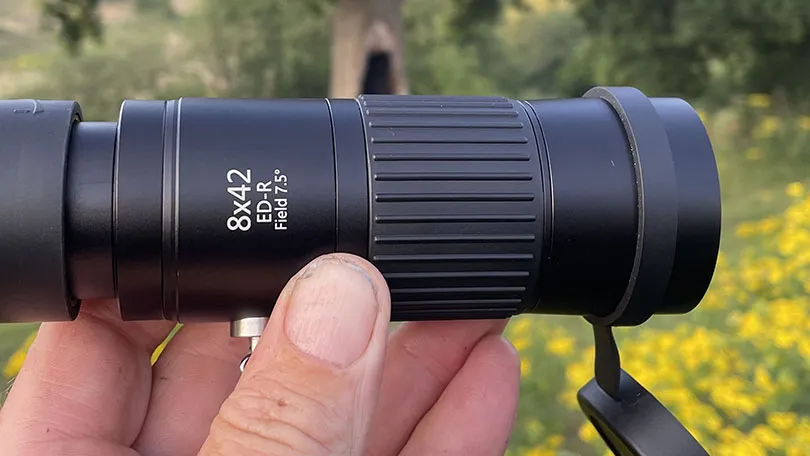
5. Opticron Explorer WA ED-R 8x42
The Opticron Explorer WA ED-R 8x42 is a good all-round monocular for buyers who want comfort, brightness, and a wide field of view. The 8x magnification is easier to hold steady than 10x or 15x, which is important for long viewing sessions. The 42mm lens gives better brightness than small pocket models.
This is not the most powerful model in the list, but it is very easy to use. It is a strong choice for scanning landscapes, watching wildlife, following moving subjects, or using the optic while walking. Its ED optics and wide-angle design make it more enjoyable than many basic monoculars.
A good monocular is not always about the highest number. Sometimes the clearest handheld image is more useful than extra magnification. That is why this model deserves a place in any guide to long-distance viewing.
- Best for: balanced daily outdoor use
- Main strength: wide, comfortable, steady view
- Possible drawback: less reach than 10x, 12x, or 15x models
6. Vortex Solo 10x36
The Vortex Solo 10x36 is a compact and durable monocular made for users who want a simple optic that is always easy to carry. It has 10x magnification, a 36mm objective lens, fully multi-coated optics, and a rubber-armored body. It is waterproof, fogproof, and shockproof, making it a dependable outdoor tool.
This is a practical option for hiking, backpacking, camping, and hunting. It is also useful as a backup optic in a car, boat, or travel bag. The 36mm lens is smaller than 42mm or 50mm models, so it will not be as bright in low light, but it keeps the unit more portable.
For many buyers, the Solo 10x36 is a smart middle ground: stronger than small 8x pocket optics, but easier to carry than heavy high-power models.
- Best for: outdoor users who value portability
- Main strength: durable and easy to carry
- Possible drawback: not as bright as 42mm or 50mm options
7. ZEISS Mono 10x25 T*
The ZEISS Mono 10x25 T* is a premium compact option for people who want excellent optical quality in a very small body. It offers 10x magnification with a 25mm lens, making it suitable for travel, events, hiking, and quick daytime viewing.
ZEISS is known for high-quality coatings, and the T* coating is designed to improve contrast and clarity. Because this model has a smaller lens, it is best for daylight use rather than low-light viewing. However, the image quality is impressive for its size.
This is not the best choice if your only goal is maximum power. But if you want a pocket-sized optic from a premium brand, it is a very attractive option.
- Best for: premium pocket viewing
- Main strength: high-quality optics in a small design
- Possible drawback: small 25mm lens limits low-light brightness
8. Leica Monovid 8x20
The Leica Monovid 8x20 is another premium travel monocular. It is small, elegant, sharp, and easy to carry. With 8x magnification, it is very steady in the hand, and the 20mm lens keeps the size extremely compact.
One special feature is its close-focus lens, which allows users to observe nearby details such as insects, plants, textures, or small objects. That gives it more versatility than many simple pocket monoculars. For long-distance viewing, it works best in daylight and for users who prefer optical quality over high magnification.
This is a luxury choice, not a budget choice. It is ideal for travelers, collectors, and people who want a refined optic that feels premium in the hand.
- Best for: premium travel and close observation
- Main strength: excellent build quality and close-focus ability
- Possible drawback: expensive and not very powerful
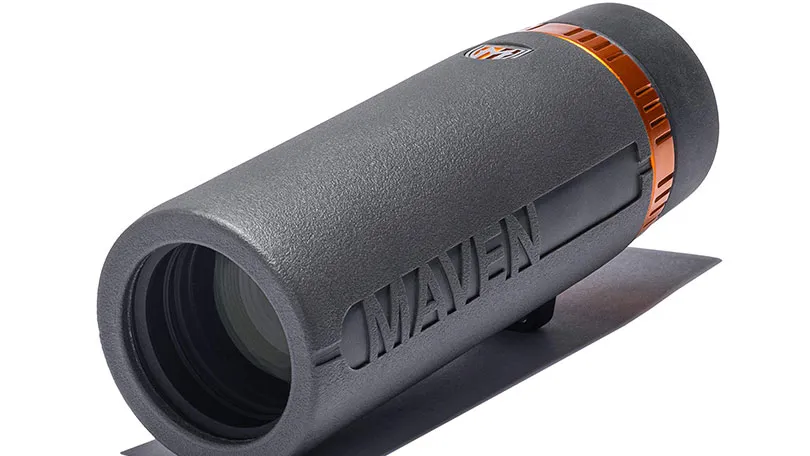
9. Maven CM.1 8x32
The Maven CM.1 8x32 is a lightweight, well-built monocular with ED glass, fully multi-coated lenses, phase correction, and waterproof/fogproof protection. It is designed for users who want quality optics without carrying a large device.
Its 8x magnification is steady and user-friendly. The 32mm lens gives more brightness than tiny 20mm or 25mm models, while keeping the body compact enough for travel and hiking. It is a good choice for casual wildlife viewing, outdoor walks, and quick observation.
This is not the strongest model for extreme distance, but it gives a clean and comfortable view. For users who prefer simple, lightweight quality, it is a smart option.
- Best for: lightweight outdoor quality
- Main strength: ED glass and easy handling
- Possible drawback: 8x magnification is moderate
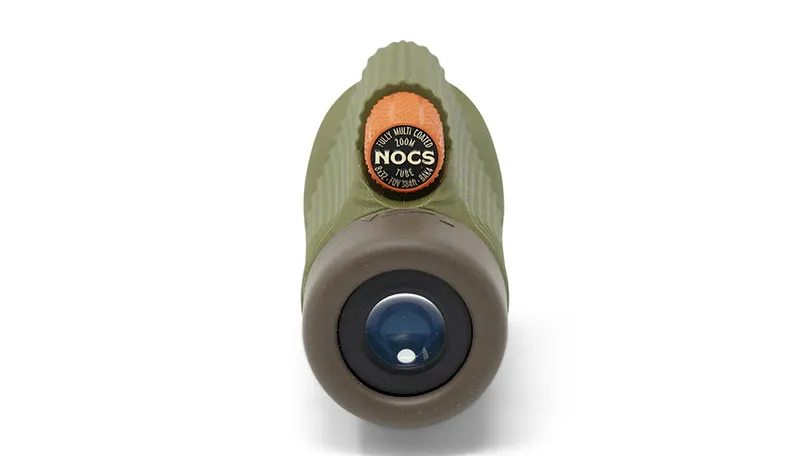
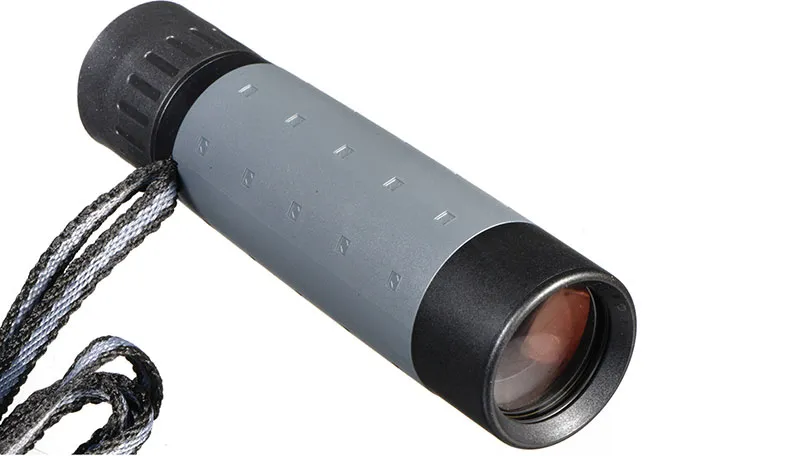
10. Nocs Provisions Zoom Tube
The Nocs Provisions Zoom Tube is a fun, modern, travel-friendly monocular for casual outdoor users. It is designed to be lightweight, colorful, and easy to use. It is not the most technical or most powerful optic in this list, but it works well for hiking, camping, birding, travel, and everyday outdoor viewing.
This is a good choice for people who want something simple and stylish rather than a tactical or heavy-duty model. It can also be a good starter optic for beginners who want to explore nature without spending too much.
A compact monocular like this is especially useful when the main goal is convenience. You can keep it close and use it quickly whenever you see something interesting.
- Best for: casual outdoor use
- Main strength: light, simple, and beginner-friendly
- Possible drawback: not designed for serious long-range work
| Rank | Product | Best For | Key Strength |
|---|---|---|---|
| 1 | Vortex Recon R/T 15x50 | Long-range field use | Strong 15x power and a ranging reticle |
| 2 | Celestron Outland X 10-30x50 | Maximum zoom | Variable 10-30x zoom with tripod support |
| 3 | Bushnell Legend Ultra HD 10x42 | Rugged outdoor use | ED glass and strong weather protection |
| 4 | Hawke Endurance ED 10x42 | Clear daily outdoor viewing | ED glass and waterproof build |
| 5 | Opticron Explorer WA ED-R 8x42 | Balanced all-round use | Wide field and strong optical value |
| 6 | Vortex Solo 10x36 | Hiking and hunting | Compact, tough, and easy to carry |
| 7 | ZEISS Mono 10x25 T* | Premium pocket viewing | Excellent optics in a small body |
| 8 | Leica Monovid 8x20 | Premium travel use | Elegant, sharp, and very portable |
| 9 | Maven CM.1 8x32 | Lightweight quality | ED glass and durable design |
| 10 | Nocs Provisions Zoom Tube | Casual outdoor fun | Simple, colorful, and travel-friendly |
Best Monoculars Available at Dubai Telescope
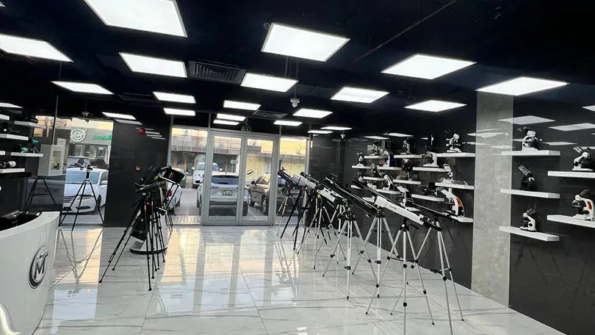
Dubai Telescope also offers practical monocular options for outdoor buyers in the UAE and beyond, especially for those who want local availability, reliable support, and clear product guidance before making a choice. You can also explore our guide to the Best Monoculars to compare suitable options for different viewing needs.
With 25 years of successful experience in Iran under the name dubaitelescope.com and 15 years of activity in Dubai as Magic Shop, we understand that buying optics is not only about choosing a product, but about finding the right tool for your real needs.
Whether you need a monocular for travel, wildlife watching, marine use, safari, hiking, or long-distance observation, our goal is to help you choose a useful, durable, and suitable model with confidence.
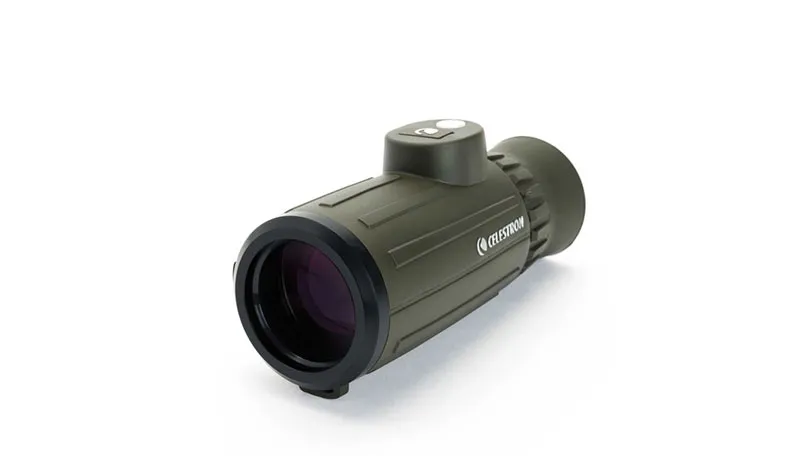
1. Celestron Oceana 8x42 Monocular
- The Celestron Oceana 8x42 is a practical outdoor monocular for marine use, travel, safari, and general viewing.
- It offers 8x magnification and a 42mm objective lens, giving users a bright and steady image.
- The 8x power is easier to control than stronger magnifications, especially when used handheld or on a boat.
- It comes with fully multi-coated optics and BaK-4 prism quality, helping improve brightness, clarity, and image sharpness.
- The monocular is waterproof and fogproof, making it suitable for marine environments and changing outdoor conditions.
- Its rubber-covered body gives better grip and extra protection during outdoor use.
- A built-in compass helps users check direction while observing boats, landscapes, or distant outdoor targets.
- The reticle can help estimate distance, making it more useful than a basic monocular.
- It is not the most powerful monocular, but it is stable, comfortable, and easy to use.
- Best for: marine use, travel, safari, and outdoor observation.
- Why buy it: stable 8x view, built-in compass, reticle, waterproof build, and reliable outdoor performance.
2. LUXUN Portable 25x50 Pirate Telescope Monocular
The LUXUN Portable 25x50 Pirate Telescope Monocular is a unique option for buyers who want strong magnification in a classic nautical-style design. Its 25x magnification can bring distant subjects closer, while the 50mm objective lens helps support a brighter view in good outdoor light.
However, this model is better suited for casual use than serious professional long-distance observation. Its pirate-style body gives it a fun, collectible, and gift-friendly look, making it a good choice for sightseeing, travel, coastal viewing, decorative use, and casual distance observation.
Because of its high magnification, the image can be harder to keep steady when used handheld, so it works best in calm conditions or with support from a stable surface.
- Best for: gifting, sightseeing, coastal viewing, travel, and casual distance observation.
- Why buy it: strong 25x magnification, 50mm lens, classic nautical design, and stylish gift-friendly appearance.
- Possible drawback: not the best choice for serious or professional long-distance viewing.
3. Celestron Cavalry 8x42 Monocular with Compass and Reticle
- The Celestron Cavalry 8x42 is a rugged outdoor monocular designed for users who need durability, easy handling, and reliable performance in different outdoor conditions.
- It features 8x magnification and a 42mm objective lens, giving users a bright and stable view for wildlife observation, safari, marine use, travel, sports, and outdoor navigation.
- The BaK-4 prism and fully multi-coated optics help improve image brightness, clarity, and contrast, making the viewing experience sharper and more comfortable.
- Its wide field of view makes it easier to find and follow moving subjects, especially animals, boats, or action in open landscapes.
- The monocular is built with waterproof protection and nitrogen purging, helping it resist moisture and fog in tough outdoor environments.
- It also includes a compass and reticle, which can be useful for direction finding and basic distance estimation during marine, hiking, or field use.
- Best for: Rugged outdoor use and marine viewing
- Why buy it: Compass, reticle, BaK-4 prism, fully multi-coated optics, waterproof, and fogproof body
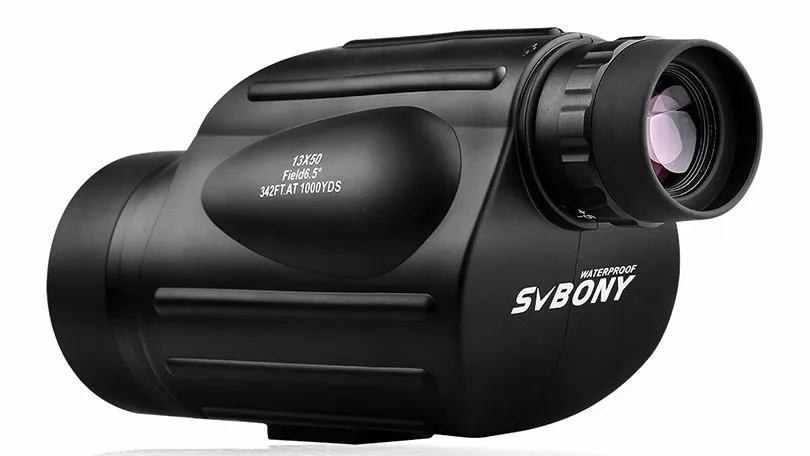
4. SVBONY SV49 13x50 Monocular
The SVBONY SV49 13x50 is one of the most interesting options for long-distance users because it gives more power than common 8x or 10x monoculars. Its 13x magnification helps bring faraway subjects closer, while the 50mm lens supports brighter viewing.
This model is designed for birdwatching, wildlife, scenery, travel, and outdoor use. It has waterproof and fogproof protection, durable external armor, and a single-hand focus design. For users who want stronger magnification without moving into a full spotting scope, it is a practical choice.
A 13x model can show more handshake than 8x or 10x, so it works best with steady handling. But if you need more reach in a portable format, the SVBONY SV49 is a strong value option.
- Best for: stronger long-distance viewing
- Why buy it: 13x power, 50mm lens, outdoor protection
What Magnification Is Best for Long-Distance Viewing?
For handheld use, 8x and 10x are the easiest to control. They give a clear and steady image for most outdoor activities. If you want more detail at long distance, 12x, 13x, or 15x can be better, but you need steadier hands. A 12x monocular can be a good middle ground between easy handling and stronger reach.
For very high power, such as 25x or 30x, you should use a tripod, table, wall, railing, or another stable support. Otherwise, the image may shake too much. That does not mean high zoom is bad. It simply means it needs the right setup.
If your main goal is birding, safari, travel, or general outdoor viewing, 8x42, 10x42, or 10x50 is usually a safe choice. If your main goal is open-distance viewing from one place, 13x50, 15x50, or 10-30x50 can be more useful.
Monocular vs Binoculars vs Spotting Scope
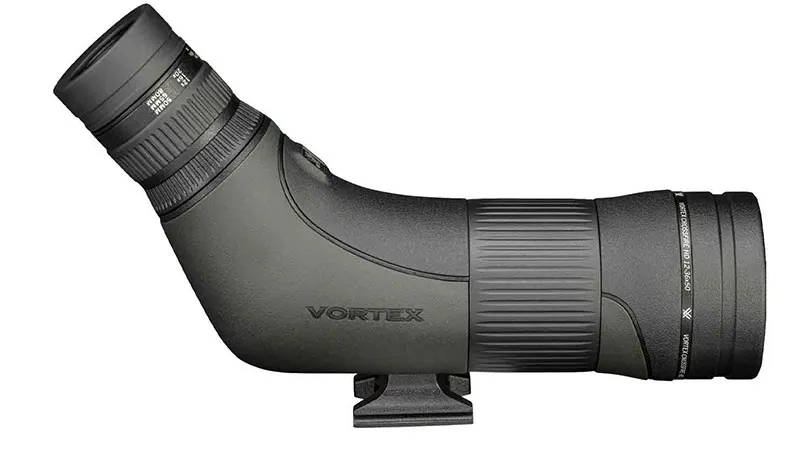
A monocular is best when you want portability. Binoculars are better when you want a more relaxed two-eye view and wider depth. A spotting scope is better when you need very high magnification for long sessions.
A monocular telescope is a good middle option. It gives more reach than the naked eye, but it is easier to carry than most spotting scopes. For travel, hiking, casual wildlife viewing, marine use, and sports, many users prefer a monocular because it is simple and quick.
For very serious birding, astronomy, or target viewing, a spotting scope may still be better. But for most people who want a portable distance-viewing tool, a monocular is easier to own and use.
Can You Use a Monocular at Night?
Standard optical monoculars need some light. They work well during the day, and larger lenses can also work at dawn or dusk. But they do not create light on their own. If you want to see in the darkness, you need a digital or infrared night vision monocular.
For normal outdoor buyers, a 42mm or 50mm lens is better for low-light viewing than a 20mm or 25mm lens. That is why models like 8x42, 10x42, 13x50, and 15x50 are more useful in dim conditions than tiny pocket optics.
Best Uses for Long-Distance Monoculars
A good monocular can be used in many ways:
- Watching wildlife from a safe distance
- Birdwatching in parks, forests, lakes, and open fields
- Viewing mountains, coastlines, boats, and landscapes
- Safari and desert observation
- Sports events and outdoor concerts
- Hiking and camping
- Marine navigation and boating
- Travel and sightseeing
- Security and field observation
- Quick observation from home, balcony, or car
A monocular for hunting should be rugged, weather-resistant, easy to focus, and strong enough for field viewing. A monocular for bird watching should offer good sharpness, natural color, and a comfortable field of view.
Final Buying Advice: Which Monocular Should You Choose?
| Buyer Need | Recommended Models | Why It Works Best |
|---|---|---|
| Strongest long-distance performance | Vortex Recon R/T 15x50 / Celestron Outland X 10-30x50 | These models offer higher magnification and better reach for viewing distant details. |
| Rugged all-around outdoor use | Bushnell Legend Ultra HD 10x42 / Hawke Endurance ED 10x42 | Good choices for hiking, wildlife watching, travel, and general outdoor viewing. |
| Premium pocket viewing | ZEISS Mono 10x25 / Leica Monovid 8x20 | Compact, lightweight, and sharp enough for high-quality travel use. |
| Local Dubai Telescope options | Celestron Cavalry 8x42 / SVBONY SV49 13x50 | Practical picks for buyers who want useful monoculars with local availability and support. |
| Steady handheld use | 8x42 or 10x42 monoculars | These sizes usually offer the best balance between power, brightness, and stability. |
| Stronger detail at longer range | 13x50 or 15x50 monoculars | Better for open landscapes, marine use, safari, and distant outdoor subjects. |
| Maximum zoom | 10-30x50 monoculars | Useful when you need flexible magnification, but they work best with a tripod or steady support. |
Conclusion
A monocular is one of the easiest ways to enjoy long-distance viewing without carrying heavy equipment. The right model can help you see wildlife, landscapes, boats, birds, sports action, and outdoor details more clearly.
For most buyers, the best choice is the one that balances magnification, brightness, comfort, and durability.
If you want premium performance, choose a trusted global model with strong optics and weather protection. If you want practical local options, Dubai Telescope offers monoculars for travel, marine use, safari, gifting, and stronger distance viewing.
From 8x42 stable models to 13x50 and 25x50 higher-power choices, there is a good option for different outdoor needs. In the end, the best monocular for long distance should help you see more clearly, carry less weight, and enjoy every view with confidence.
FAQ
For most users, 8x to 10x is best for handheld use. If you want a stronger reach, 12x to 15x can work well, but you need steadier hands.
A 50mm lens usually gathers more light, so it can give a brighter image. But it also makes the monocular bigger and heavier.
A zoom monocular is useful when you want flexible magnification. However, the image can become less steady at higher zoom, so a tripod is helpful.
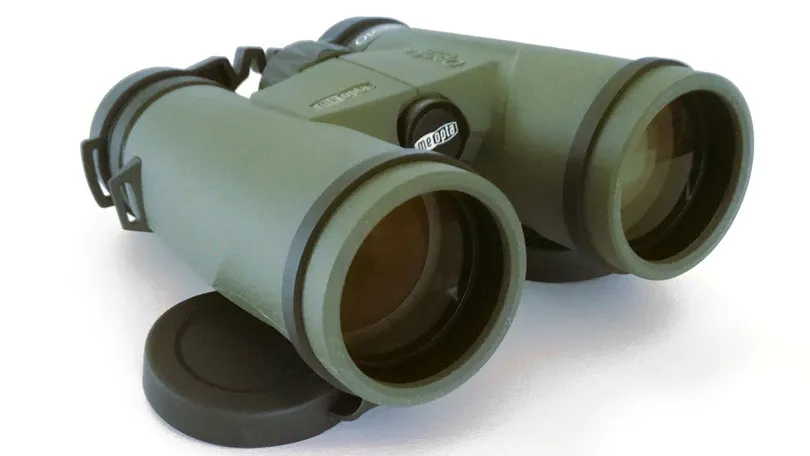
The Celestron Oceana 8x42 and Celestron Cavalry 8x42 are good marine-friendly choices because they include waterproof protection and navigation features.
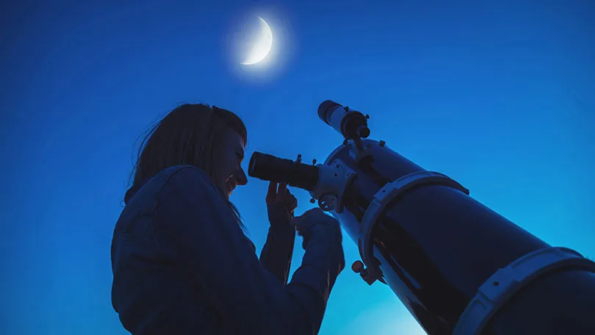
You can use a monocular for quick views of the Moon and bright sky objects, but a telescope or astronomy binocular is better for serious stargazing.
A monocular is lighter and easier to carry. Binoculars are more comfortable for long viewing because you use both eyes. Choose based on portability and comfort.

No Comments