

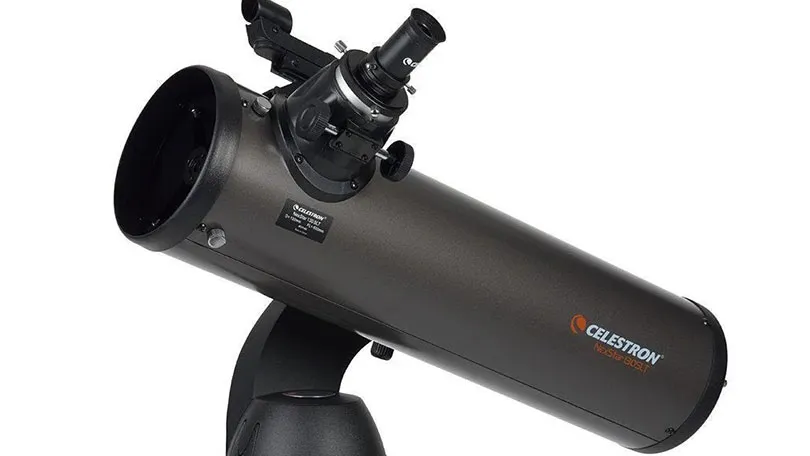
Choosing a telescope for your home should feel like opening a small door to the universe, not getting lost in a maze of technical terms. Whether you want to place it on a balcony, terrace, rooftop, or backyard, the right telescope can turn an ordinary night into a close-up view of the Moon’s craters, Saturn’s rings, Jupiter’s moons, bright star clusters, and even distant nebulae.
But with refractors, reflectors, Dobsonians, GoTo mounts, and smart telescopes all promising amazing views, knowing where to start can feel confusing.
This guide makes the choice easier by focusing on what matters most: what you want to see, how much space you have, and how simple you want the setup to be. Below, you will find a clear buying guide, 10 strong global telescope choices, and 10 suitable telescope options available from DubaiTelescope for home observing.
By the end, you will have a better idea of how to choose the best telescope for home and which model can match your sky, your space, and your level of experience.
How to Choose the Best Telescope for Home
- Check the aperture first: Aperture is the size of the main lens or mirror. A larger aperture gathers more light and gives brighter, clearer views of the Moon, planets, star clusters, and some deep-sky objects.
Choose a Beginner-Friendly Size
For simple home use, beginners can start with:
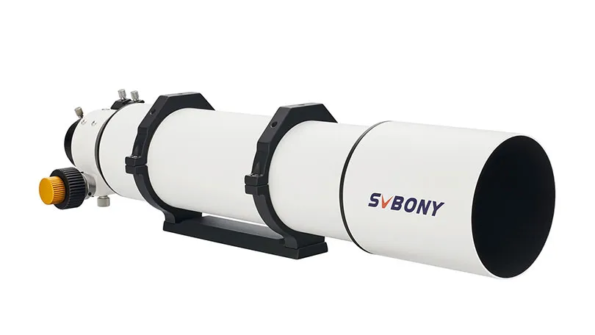
- 70mm to 100mm refractor telescopes
- 114mm to 130mm reflector telescopes
- 90mm to 127mm Maksutov-Cassegrain telescopes
Go Bigger if You Have Enough Space
If you have a backyard or more storage space, a 6-inch or 8-inch telescope can show much more detail.
Pay Attention to the Mount
A stable mount makes the telescope easier and more enjoyable to use.
- Alt-azimuth mounts are simple for beginners.
- Dobsonian mounts are stable and easy for visual observing.
- Equatorial mounts are useful for tracking the sky, but need more practice.
- GoTo and smart telescopes can help you find objects automatically.
Think About Portability
A large telescope can show more, but it may be too heavy or hard to set up. For many home users, a compact telescope that is easy to carry and use is often the better choice.
Match the Telescope to Your Main Target
- For the Moon and planets, Maksutov-Cassegrain or Schmidt-Cassegrain telescopes are great.
- For wide views of star fields, short refractors or Newtonian reflectors work well.
- For galaxies and nebulae, a larger aperture is better, especially under darker skies.
- For easy city imaging, smart telescopes are a beginner-friendly option.
Remember Solar Safety
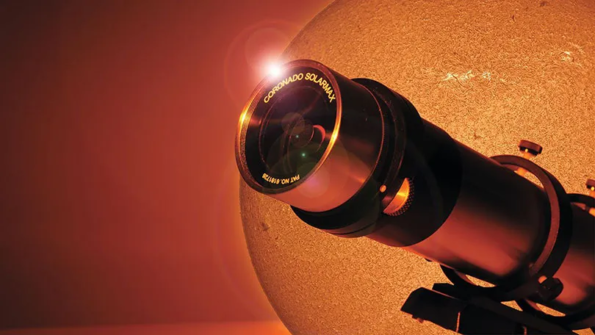
Never look at the Sun through a telescope unless a proper solar filter is securely attached to the front of the telescope. Sunglasses, normal eyepieces, or handheld eclipse glasses are not safe for telescope solar viewing.
Choose What You Will Actually Use
The best telescope for home is not always the biggest or most expensive one. It is the telescope that fits your space, budget, and experience, and that you can set up and enjoy without stress.
10 Best Telescopes for Home
Choosing the perfect home telescope depends entirely on what you want to see, your budget, and how much storage space you have. Before comparing specific models, it can also help to understand the main Types of Telescopes and how each design works for home viewing.
To help you navigate the options, here is a curated list of the 10 best telescopes for home use, categorized by user level and primary interest.
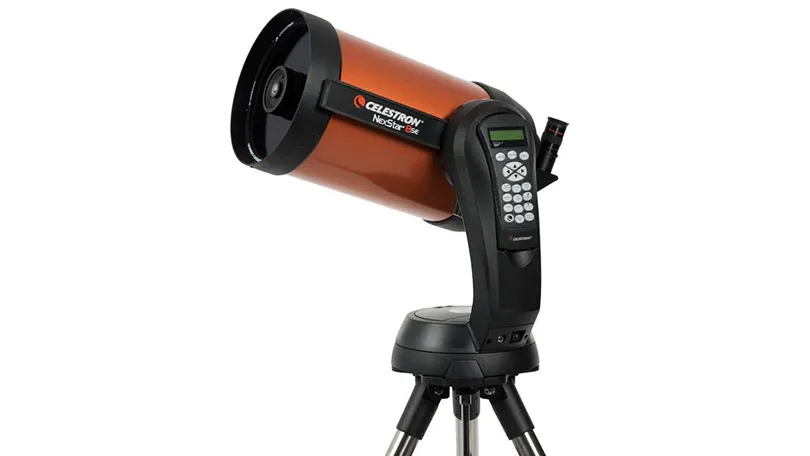
1. Celestron NexStar 8SE Computerized Telescope
The Celestron NexStar 8SE is one of the strongest all-around telescopes for home users who want serious visual performance without building a full observatory. Its 8-inch Schmidt-Cassegrain optical tube gathers enough light for impressive lunar detail, clear views of Jupiter and Saturn, and better performance on deep-sky objects than smaller beginner scopes.
The computerized GoTo mount helps locate and track thousands of objects, which is useful if you do not know the night sky well. It is more expensive than simple beginner telescopes, but it gives room to grow. For home users with a balcony, rooftop, garden, or backyard, it offers a strong mix of aperture, portability, and automation.
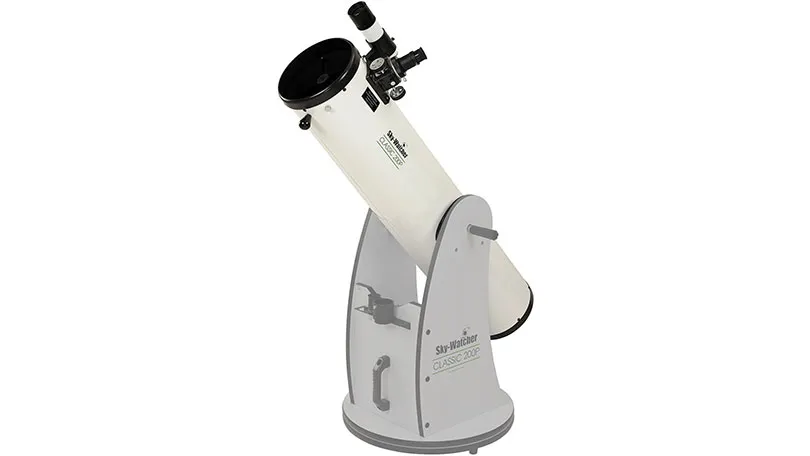
2. Sky-Watcher Classic 200P / 8-Inch Dobsonian
An 8-inch Dobsonian is often recommended because it gives a lot of aperture for the money. The Sky-Watcher Classic 200P is a strong choice for visual observers who care more about clear views than electronics.
Its simple Dobsonian mount is stable and easy to move by hand. From home, it can show the Moon in excellent detail, reveal Saturn’s rings, show Jupiter’s cloud bands, and bring brighter nebulae and star clusters into view. The main trade-off is size. It needs more storage space than a small refractor or compact catadioptric telescope.
If you have a backyard and want powerful visual astronomy at home, this type of telescope is hard to beat.
3. Celestron StarSense Explorer DX 130AZ
The Celestron StarSense Explorer DX 130AZ is ideal for beginners who want help finding objects without using a fully motorized GoTo mount. It uses a smartphone app to guide you across the sky. You follow the arrows on the screen, move the telescope manually, and then observe when the app confirms the target is centered.
If you are comparing easy starter models, you can also explore our guide to the Best Telescopes for Beginners to find more simple and practical options.
The 130mm Newtonian reflector gives enough light-gathering power for the Moon, planets, star clusters, and some brighter deep-sky objects. It is easier to understand than an equatorial telescope and more interactive than a fully automated system. For many modern beginners, it is a very practical home telescope.
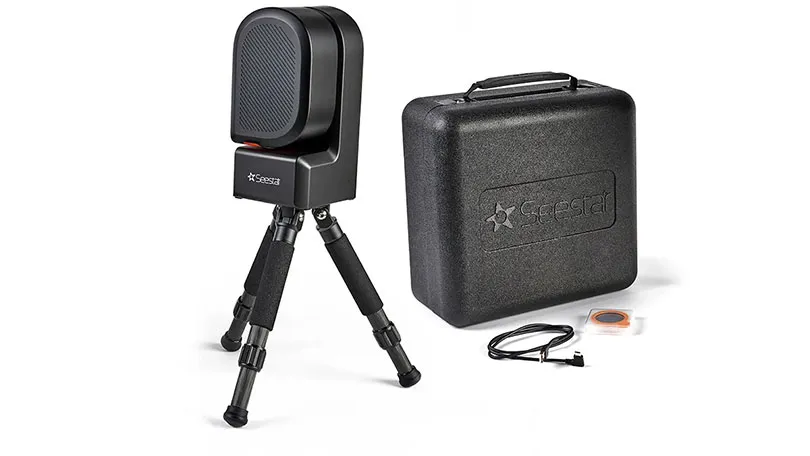
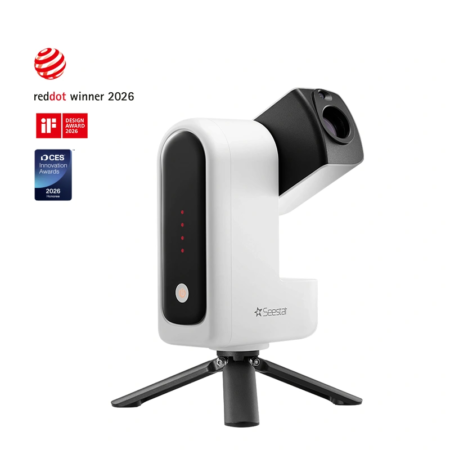
4. ZWO Seestar S50 Smart Telescope
The ZWO Seestar S50 is a smart telescope made for people who want simple astrophotography from home. Instead of looking through an eyepiece, you control it with a phone or tablet. The telescope aligns, tracks, captures, and stacks images automatically.
This makes it useful for city users who want to see colorful nebulae and galaxies on a screen, especially when normal visual observing is limited by light pollution. It is not a traditional telescope experience, and it is not the best option for people who want direct eyepiece viewing. But for easy imaging, family use, and sharing night-sky views, it is one of the most popular smart telescope choices.
5. ZWO Seestar S30 / S30 Pro Smart Telescope
The Seestar S30 and S30 Pro are compact smart telescope options for users who want a smaller, more portable imaging system. They are designed to make deep-sky imaging easier with automatic tracking, stacking, and app control.
These models are especially attractive for home users who live in apartments or cities and do not want to manage a traditional telescope, mount, camera, guide scope, and laptop. They are best for wide-field targets such as nebulae, large galaxies, the Moon, and star fields.
The main limitation is that they do not replace a large visual telescope for high-magnification planetary viewing.
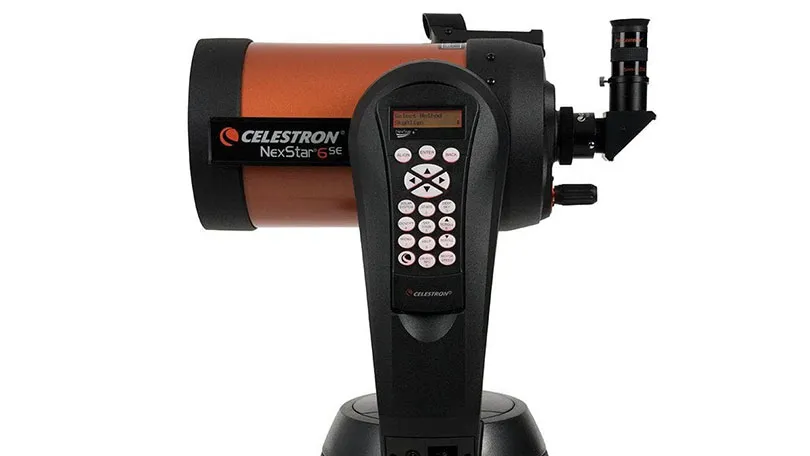
6. Celestron NexStar 6SE Computerized Telescope
The Celestron NexStar 6SE is a smaller and more manageable alternative to the 8SE. Its 6-inch Schmidt-Cassegrain optical tube gives strong performance on the Moon, planets, double stars, and many bright deep-sky objects.
The GoTo mount helps beginners find targets quickly, while the compact tube and single fork-arm design make it easier to store and carry than many larger telescopes.
For home users who want quality optics, computerized tracking, and a telescope they can still move without too much effort, the 6SE is a smart middle-ground option. It is powerful enough to stay useful as your astronomy skills grow.
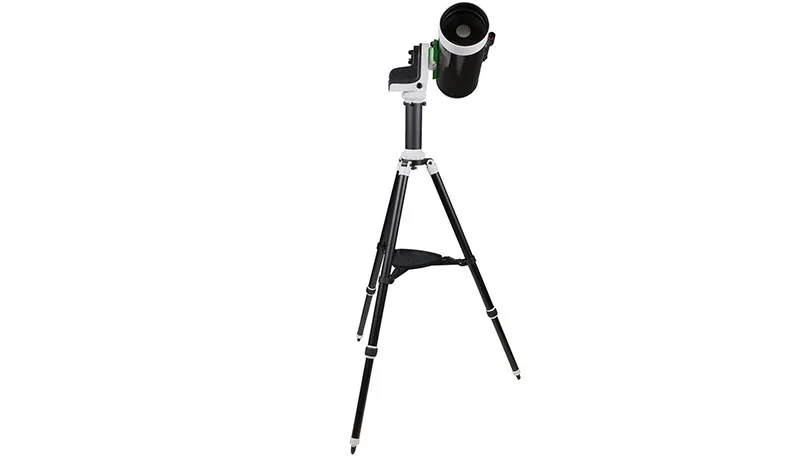
7. Sky-Watcher Skymax 127
The Sky-Watcher Skymax 127 is a compact Maksutov-Cassegrain telescope with a long focal length, making it especially good for the Moon and planets. It is a strong choice for home users who want sharp, high-contrast views from a small optical tube.
Because the tube is compact, it is easier to store in an apartment or carry to a balcony, terrace, or rooftop. It is not the best telescope for sweeping wide-field views, and faint galaxies will not look dramatic through it. But for lunar craters, Saturn’s rings, Jupiter’s bands, and double stars, it is a very practical home telescope.
8. Celestron AstroMaster 130EQ
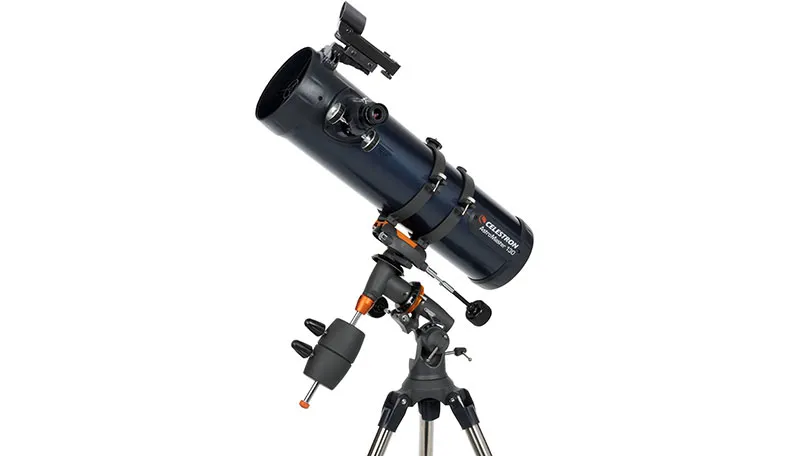
The Celestron AstroMaster 130EQ is a budget-friendly reflector for people who want to learn the basics of astronomy with a larger aperture than small refractors. Its 130mm mirror gives bright views of the Moon, planets, and brighter deep-sky objects.
The equatorial mount helps users learn how the sky moves, though it takes more practice than a simple alt-azimuth mount. This model is best for beginners who enjoy learning manually and do not mind spending time understanding setup and alignment. For the price, it gives good aperture and a real introduction to classic telescope use.
9. Celestron Inspire 100AZ
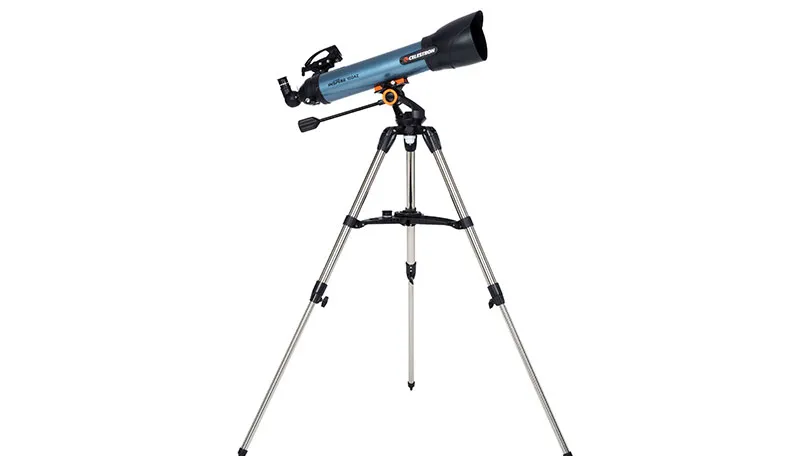
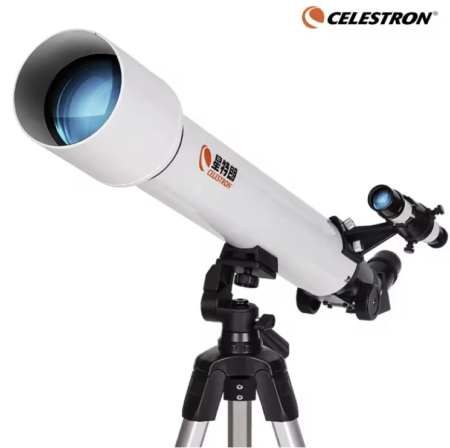
The Celestron Inspire 100AZ is a beginner-friendly refractor that works well for easy observing from home. As a Refractor Telescope, it is simple to maintain because it usually does not need mirror alignment.
The 100mm aperture gives better brightness than smaller 60mm or 70mm beginner scopes, while the alt-azimuth mount keeps movement simple.
It is a good choice for the Moon, planets, bright star clusters, and casual family observing. It is not designed for advanced deep-sky imaging, but it is easy to set up and use. For beginners who want a clean, simple telescope with less maintenance, this is a comfortable option.
10. Celestron Origin Intelligent Home Observatory
The Celestron Origin is a premium smart home observatory for users who want a modern, app-controlled astronomy experience. It combines optics, mount, camera, computer, autofocus, dew control, and live image processing into one system.
Instead of spending time learning traditional astrophotography equipment, users can place it outside, connect through the app, and watch images build on a phone or tablet. It is expensive, but it is designed for people who want the most convenient path into deep-sky imaging from home.
For families, serious hobbyists, and customers who want high-end automation, it is one of the most advanced home astronomy systems available.
Our Suggested Home Telescopes from Dubai Telescope
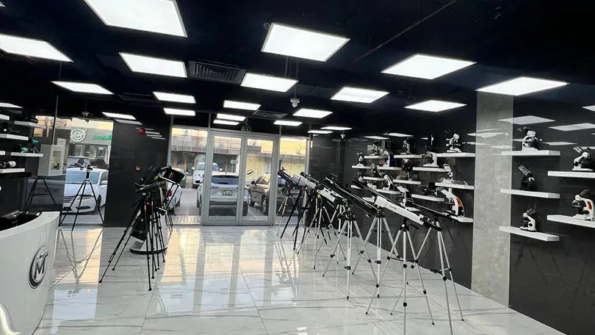
With 25 years of successful sales and activity in Iran and 15 years in Dubai, we understand that customers do not just need a telescope; they need the right telescope for their space, budget, and viewing goals. In Iran, we are known as dubaitelescope.com, and in Dubai, we are known as Magic Shop.
If you want to start observing from home, upgrade your current setup, or choose a gift for someone who loves the night sky, we can help you fill that need with quality products, trusted brands, and practical guidance.
You can also explore our guide to Brands of Telescopes to compare popular names and choose a telescope that fits your needs with more confidence.
1. Celestron FirstScope 76mm Reflector Telescope
The Celestron FirstScope 76mm is a simple tabletop reflector and a good first telescope for children, families, and casual beginners. It is small, light, and easy to place on a table, balcony surface, or outdoor stand. You move the tube by hand, so there is no complicated alignment or setup.
It is best for the Moon, basic planetary viewing, and learning how telescopes work. It will not compete with larger telescopes for deep-sky brightness, but it is affordable, easy to store, and friendly for first-time users at home.
2. Celestron 70mm Travel Scope Refractor Telescope
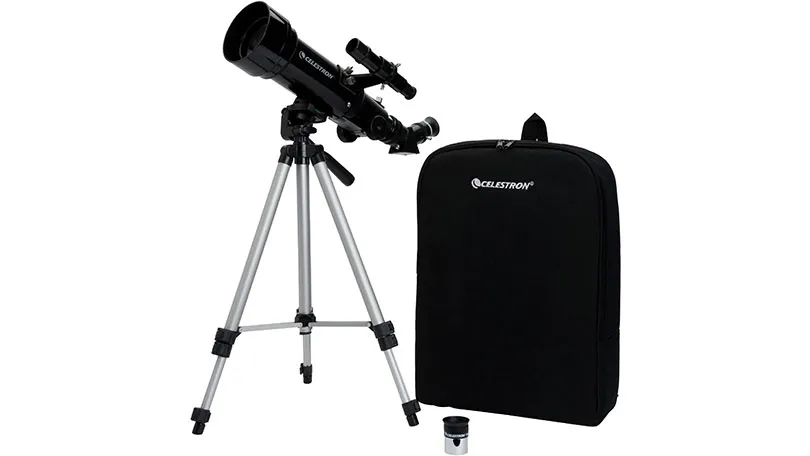
The Celestron 70mm Travel Scope is a lightweight refractor that works well for both sky and daytime viewing. It includes a backpack, tripod, eyepieces, diagonal, and finderscope, making it a useful starter kit. For home users, it is easy to carry outside for quick Moon viewing or bright planet observation.
It is also practical if you want one telescope for both astronomy and nature viewing. The 70mm aperture is modest, so expectations should stay realistic, but its portability and simple setup make it a good entry-level choice.
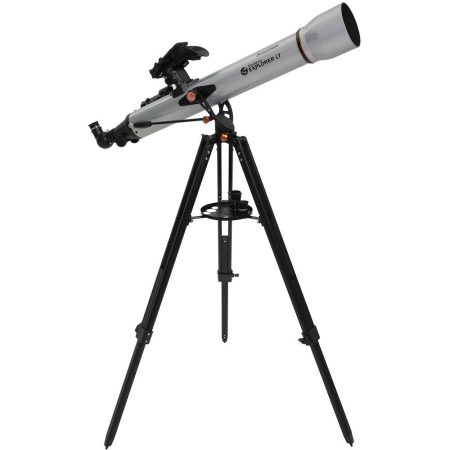
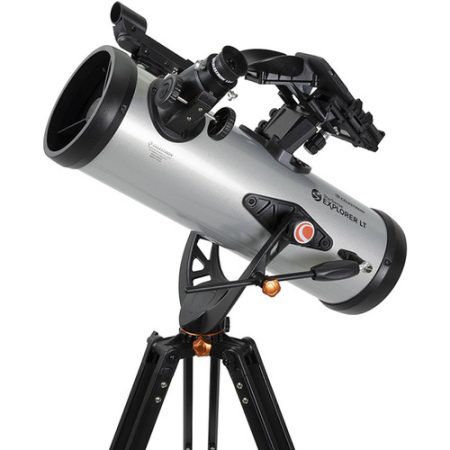
3. Celestron StarSense Explorer LT 80AZ Telescope
The Celestron StarSense Explorer LT 80AZ is a strong beginner refractor for people who want smartphone help. The app guides users to visible objects, which makes home observing much easier for beginners who do not know constellations or star names.
The 80mm refractor is suitable for the Moon, bright planets, star clusters, and brighter deep-sky objects. It is easier to maintain than reflector telescopes because there is no regular mirror collimation. If you want a simple telescope with modern guidance, this is a very friendly option for home use.
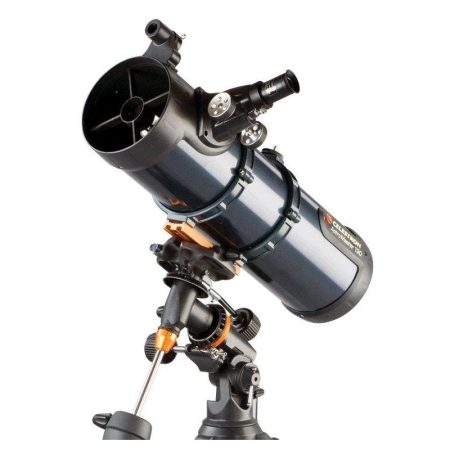
4. Celestron AstroMaster 130EQ Reflector Telescope
The Celestron AstroMaster 130EQ is a good choice for beginners who want more aperture and want to learn traditional telescope control. Its 130mm Newtonian reflector gives brighter views than small refractors, while the equatorial mount helps you follow objects as they move across the sky.
It is suitable for the Moon, planets, bright nebulae, and star clusters. It needs more learning than a simple alt-azimuth telescope, but it rewards users who want to understand astronomy more deeply. For the price, it offers strong value for home observation.
5. Celestron StarSense Explorer DX 130AZ Telescope
The Celestron StarSense Explorer DX 130AZ is one of the most practical home telescopes for beginners who want both aperture and guidance. The 130mm reflector gathers enough light for many popular night-sky targets, while the StarSense app helps you find them from your location.
The manual alt-azimuth mount is easier than an equatorial mount, and the app makes the learning process more enjoyable. This model is especially useful if you observe from a city or suburban area and need help knowing what is visible tonight.
6. Celestron NexStar 130SLT Computerized Telescope
The Celestron NexStar 130SLT is a computerized reflector with a 130mm optical tube and GoTo mount. It is designed for users who want the telescope to locate and track objects automatically. This is helpful from home because you can spend more time observing and less time searching.
It is suitable for the Moon, planets, star clusters, and many brighter deep-sky objects. Compared with fully manual models, it needs power and alignment, but it also gives a more guided experience. For beginners who like technology, it is a strong home option.
7. Sky-Watcher Skymax 127 OTA
The Sky-Watcher Skymax 127 OTA is a compact Maksutov-Cassegrain optical tube with a 127mm aperture and a long 1500mm focal length. This makes it especially strong for Moon and planet viewing. It is easy to store at home and is much smaller than many reflectors with similar focal performance.
It is ideal for users who already have a compatible mount or want to build a compact high-contrast setup. If your main interest is lunar detail, Saturn, Jupiter, and double stars, this telescope is a smart choice.
8. Celestron NexStar 6SE Computerized Telescope
The Celestron NexStar 6SE is a premium home telescope for users who want strong optics and computerized control in a manageable size. Its 6-inch Schmidt-Cassegrain design gives excellent views of the Moon and planets, while also opening the door to brighter deep-sky objects.
The GoTo system helps find and track objects, which is useful for beginners and intermediate observers. It is compact enough for home storage and powerful enough to keep you interested for years. For many customers, it is a balanced upgrade from basic beginner telescopes.
9. DwarfLab Dwarf III Smart Telescope
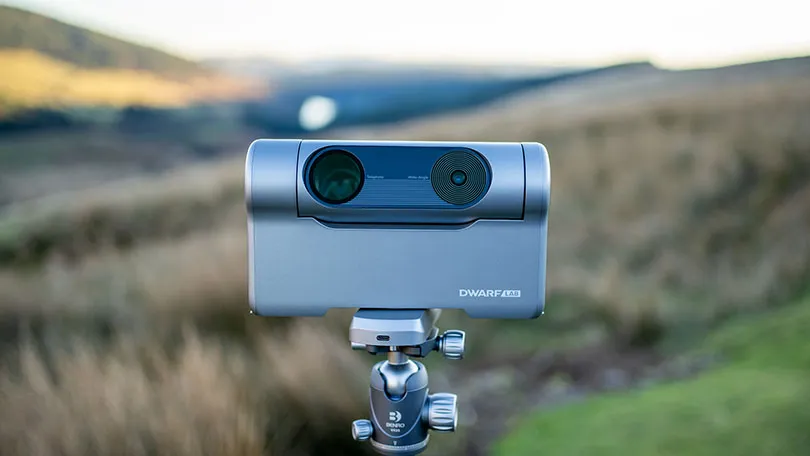
The DwarfLab Dwarf III is a compact smart telescope for users who want easy imaging from home. It combines optics, camera, tracking, filters, and app control in a portable device. This makes it useful for beginners who want to capture the Moon, nebulae, galaxies, and wide-field night scenes without building a complicated astrophotography setup.
It is also useful for daytime nature and wildlife observation. If you want a simple app-based astronomy and shareable images, this is a modern and convenient option.
10. Celestron Origin Intelligent Home Observatory
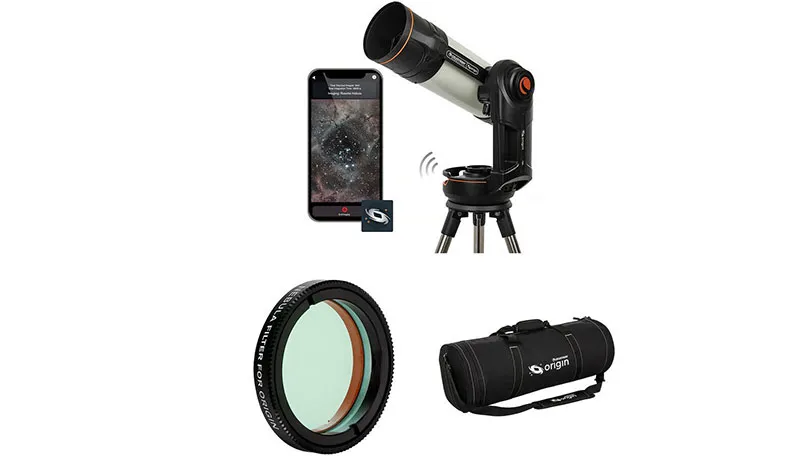
The Celestron Origin Intelligent Home Observatory is a high-end smart telescope for customers who want the easiest route into deep-sky imaging from home. It includes a fast 6-inch RASA optical system, built-in camera, autofocus, app control, live stacking, and automated alignment.
This is not a basic beginner telescope; it is a premium home observatory system. If you want to see detailed images on your phone or tablet and avoid the complexity of traditional astrophotography equipment, the Origin is one of the most complete choices available.
Which One Should You Choose?
- If you want the easiest and cheapest start, choose the Celestron FirstScope 76mm or Celestron 70mm Travel Scope. These are simple, light, and good for casual Moon viewing.
- If you want a beginner telescope with smartphone guidance, choose the StarSense Explorer LT 80AZ or DX 130AZ. These models help you find objects and reduce beginner frustration.
- If you want better visual performance for planets and deep-sky objects, choose the AstroMaster 130EQ, NexStar 130SLT, Skymax 127, or NexStar 6SE. These give more serious observing power.
- If you want simple astrophotography from home, choose a smart telescope such as the DwarfLab Dwarf III or Celestron Origin. These are better for screen-based imaging than traditional eyepiece viewing.
- If you have more space and want the strongest visual views, consider a larger Dobsonian or an 8-inch computerized telescope like the NexStar 8SE. A bigger aperture gives brighter and more detailed views, but it also needs more storage and setup effort.
Important Buying Tips Before You Order
- Do not buy based only on magnification. Many cheap telescopes advertise very high magnification, but aperture, optical quality, and mount stability matter much more. A clear 100x view is better than a blurry 300x view.
- Check where you will observe. A balcony with limited sky view needs a compact telescope. A backyard can handle a larger Dobsonian or computerized model. A rooftop may work well with a portable telescope that can be carried safely.
- Think about light pollution. From cities, the Moon, planets, bright stars, and some clusters are easier targets. Faint galaxies and nebulae look better from darker skies. Smart telescopes can help because they stack images over time and show more detail on a screen.
- Budget for accessories. A good eyepiece, Moon filter, red flashlight, phone adapter, star map app, or solar filter can improve the experience. If you want to observe the Sun, only use proper front-mounted solar filters made for telescope use.
- Choose a telescope you will actually use. The best telescope for home should fit your lifestyle. If you want a five-minute setup, do not buy something too heavy. If you want detailed deep-sky views, do not choose the smallest travel scope. Match the telescope to your real observing habits.
Conclusion
Home astronomy can turn any balcony, rooftop, garden, or backyard into a personal window to the universe. The right telescope helps you enjoy clear views of the Moon, planets, bright star clusters, and even deep-sky objects when conditions are suitable.
The best choice depends on your space, budget, and observing goals, whether you want a simple refractor for family use, a powerful reflector for deeper views, a GoTo telescope for easier object finding, or a smart telescope for effortless imaging.
By choosing the best telescope for home based on your real needs, you can start observing with more confidence, learn the night sky step by step, and enjoy a hobby that brings wonder, beauty, and discovery directly into your home.
FAQ
For most beginners, a 70mm to 100mm refractor, 130mm reflector, or compact computerized telescope is a good starting point.
Yes. You can see the Moon, Jupiter, Saturn, Venus, and Mars from home, especially when they are well placed in the sky.
A smart telescope is better for easy imaging and app control. A normal telescope is better if you want direct eyepiece viewing.
Apertures from 70mm to 130mm are good for many beginners. Larger apertures show more detail but need more space and setup.
Yes, but choose a compact and stable telescope. Avoid heavy models if your balcony has limited space or vibration.
Only with a proper front-mounted solar filter made for telescope use. Never look at the Sun through an unfiltered telescope.

No Comments